
The Quiet Struggle of Starting Alone in a Home Office
Imagine Sarah. She just landed her dream remote role after weeks of stressful interviews. She is excited, motivated, and ready to make a huge impact on her first day.
But on Monday morning, her inbox is completely empty. She has no login details for the company portal and no message from her manager. She sits alone in her room, staring at a blank screen and wondering if she actually has a job.
By Wednesday, she finally gets basic access but has no idea who to talk to next. No one has scheduled a welcome call or introduced her to the team. The silence is deafening and deeply discouraging for someone wanting to do their best work.
This is the painful reality of a broken remote onboarding setup. It breeds self-doubt, anxiety, and a feeling of complete isolation.
Within three weeks, Sarah starts looking for another job. She leaves before she even finishes her first minor project.
This story is not unique. Thousands of remote hires quit early because they feel completely abandoned.
When you do not welcome your team properly, you lose money, time, and trust. Your company's growth stalls, and your hiring costs skyrocket.
The mental toll on new hires is heavy too. They feel invisible, disconnected, and stressed about their performance.
We must change this. Remote workers deserve a clear, warm, and highly structured welcome.
Why Traditional Onboarding Fails in a Virtual Environment
Many companies try to copy their in-office onboarding checklists and paste them into Zoom. This is a massive mistake. In a physical office, a new hire can look around, ask a neighbor a quick question, and feel the energy of the room.
In a remote setting, that natural connection does not exist. If you do not actively build a bridge, your new hire remains on an island.
Without a clear structure, remote hires spend their first week feeling confused and useless. They do not know who holds what role, where files are kept, or how the team communicates.
This lack of clarity leads to early turnover. Let us look at the differences between common myths and what actually works.
Onboarding Myths vs. Onboarding Realities
Onboarding MythTrue RealityActionable FixOnboarding ends after the first week.Real integration takes at least ninety days.Plan a ninety-day roadmap with weekly milestones.Sending a laptop is enough tech setup.Hires need early access, login guides, and IT help.Deliver all equipment and passwords a week early.Remote hires want to be left alone to work.Isolation causes early resignations and low trust.Set up daily check-ins and casual team chats.
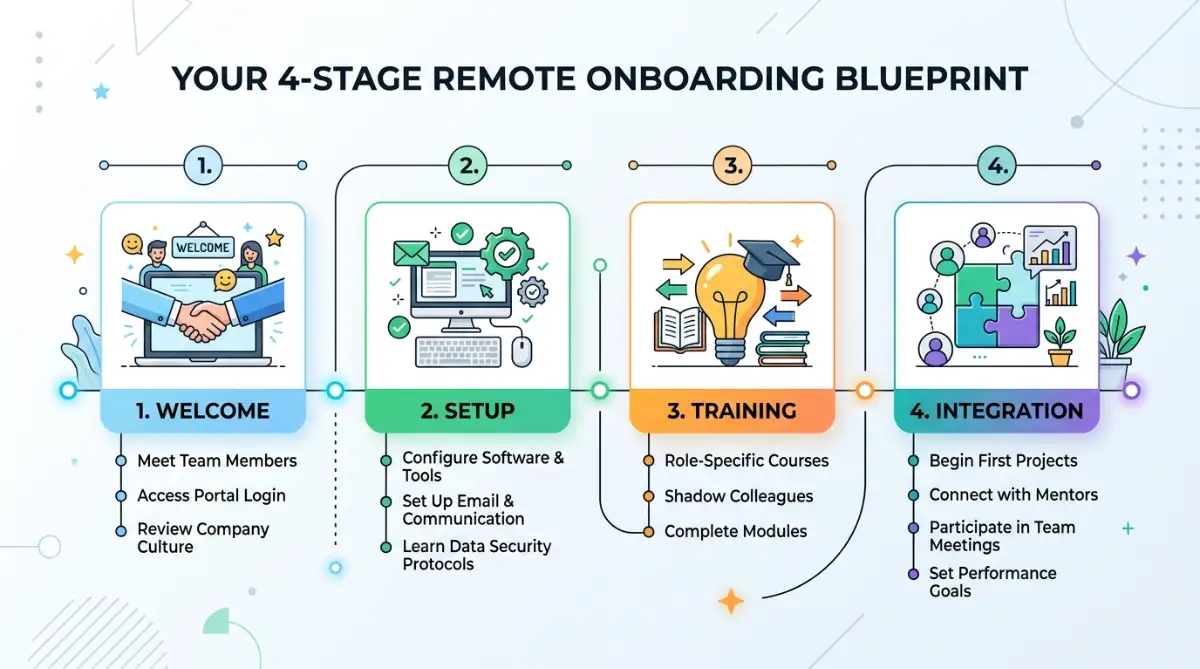
Your Step-by-Step Blueprint to Welcoming Remote Talent
Building a great onboarding system does not require expensive software. It requires empathy, organization, and clear communication.
Let us break down a practical process that you can implement today to keep your new hires happy and productive.
Phase 1: The Pre-Onboarding Warm Welcome (Days -7 to 0)
Onboarding starts the moment a candidate signs their offer letter. The period between signing the contract and the start date is when new hires feel the most anxiety.
You can ease this stress by staying in touch. Send a welcome package to their home address.
Include a handwritten note from the team and some company merchandise like a t-shirt or a coffee mug. This simple gesture makes the new job feel real and exciting.
Send their laptop and hardware so it arrives at least three days before their start date. Do not make them spend their first morning waiting for a delivery driver.
Also, send a simple email outlining what their first day will look like. Let them know exactly when to log on and who they will meet first. This removes the morning-of panic.
Phase 2: Zero-Friction Digital Workspace Setup
Nothing ruins a first day faster than spending hours trying to reset passwords. Your IT team should set up all email, Slack, and software accounts in advance.
Create a secure document with temporary login credentials. Share this safely through a password manager.
Write down a clear guide on how to log into the main systems. Keep this guide simple and free of confusing technical jargon.
Assign a specific person from your IT team to be available for a call on the first morning. If the new hire gets stuck, they should have a direct line to get help immediately.
This shows the new hire that your company is organized and values their time. It sets a professional tone from the very start.
Phase 3: Designing a Gentle and Engaging First Week
Do not dump thirty training videos on your new hire on day one. Their brain can only process so much information at once.
Instead, focus on connection and culture during the first forty-eight hours. Start day one with a warm, one-on-one welcome call with their manager.
Use this time to say hello, ask about their weekend, and walk through the weekly schedule. Keep work talk to a minimum.
After that, introduce them to the wider team on your main communication channel. Encourage team members to send welcoming messages and funny GIFs.
Schedule short, fifteen-minute meetups with key team members throughout the week. This helps the new hire put faces to names without feeling exhausted by long meetings.
Keep their tasks incredibly small. Let them celebrate a quick win by finishing a simple setup task or writing a short bio for the team directory.
Phase 4: Establishing a Peer Buddy System
One of the biggest struggles for remote workers is not knowing who to ask for help. They do not want to ping their manager for every tiny question.
This is why you must pair every new hire with a peer buddy. This buddy should be a peer on the same team or a closely related department.
The buddy is there to answer informal questions. These are questions like "How do I request a day off?" or "Which Slack channel should I use for sharing pet photos?"
Encourage the buddy to check in with the new hire every morning for the first two weeks. A simple "How are you doing today?" can make a massive difference.
This takes the pressure off the manager. It also helps the new hire build an organic work friendship quickly.
Phase 5: Setting Clear 30-60-90 Day Milestones
New hires want to know what is expected of them. If they do not have clear goals, they will feel anxious about their performance.
Create a structured plan that outlines what success looks like over their first three months. Break this plan down into manageable chunks.
- The First 30 Days (Learn): Focus entirely on absorbing knowledge, meeting the team, and understanding the company culture.
- The First 60 Days (Collaborate): Start assisting on small projects and participating actively in team brainstorming sessions.
- The First 90 Days (Own): Take full ownership of a specific task or project with minimal supervision.
Review these milestones together at the end of each month. This gives the new hire a sense of progress and security. They know exactly how they are doing and where to focus their energy.
Phase 6: Gathering Feedback to Improve Your System
Your onboarding process is a living system. It should constantly evolve based on real employee feedback.
Ask your new hires for honest feedback at the end of week one, week four, and week twelve. Ask specific questions that encourage detailed answers.
- "What part of the onboarding process felt confusing?"
- "Did you have all the tools you needed to start your work?"
- "How can we make our welcome experience better for the next person?"
Take this feedback seriously and update your checklists accordingly. When you listen to your team, you build a culture of trust and continuous improvement.
How to Document Knowledge for Self-Guided Learning
Remote workers must be able to find information on their own. If they have to wait hours for a response across different time zones, their progress stops.
You need a central, searchable knowledge base. Tools like Notion, Confluence, or Google Workspace work perfectly for this.
Keep this knowledge base organized and easy to navigate. Write down your company policies, communication rules, and team workflows.
Use simple language and screenshots to explain step-by-step processes. If a process is complex, record a short, three-minute screen-share video.
Ensure this database is updated regularly by your team. A knowledge base is only helpful if the information inside it is accurate.
When your documentation is strong, your new hires feel empowered to solve problems independently. This builds confidence and speeds up their integration.
Creating Space for Casual Social Connection
Remote teams do not have water coolers or lunchrooms to chat in. You must create virtual spaces for these casual interactions to happen.
Set up a dedicated Slack channel for non-work topics. This could be a channel for sharing book recommendations, recipes, or travel photos.
You can also use tools that pair team members randomly for short, virtual coffee chats. This allows new hires to meet colleagues they might not work with directly.
Host optional, low-pressure virtual team events. Avoid awkward Zoom games that feel forced and uncomfortable.
Instead, try a simple show-and-tell session or a casual end-of-week chat. Let your team guide the conversation naturally.
When employees build real personal connections, they feel happier at work. These bonds are the foundation of a strong, supportive company culture.
Checking the Health of Your Remote Workplace Culture
You must keep a close eye on how your team is feeling. High turnover is often a symptom of a deeper cultural issue.
Watch out for signs of burnout, such as late-night messages or low participation in team chats. Encourage your team to log off at the end of their working hours.
Managers should lead by example. If you send emails at midnight, your new hire will think they need to do the same to succeed.
Promote a healthy work-life balance from day one. Show your team that you value their well-being just as much as their output.
When your remote workplace culture is healthy, employees stay longer. They do not just stay for the paycheck; they stay because they feel respected and valued.
A Quick Checklist for Remote Managers
Use this simple checklist to keep your preparations on track before your next hire starts:
- Equipment ordered and delivery confirmed 3 days before start date.
- Welcome box sent to their home.
- Login credentials created and stored in a password manager.
- Week one calendar invites sent to the new hire and team members.
- Peer buddy assigned and notified of their role.
- 30-60-90 day goal document drafted and ready for review.
- Public welcome message drafted for Slack.
Wrapping Up Your Remote Setup
Creating a remote onboarding process from scratch takes effort, but the rewards are massive. By focusing on empathy, clear structure, and early communication, you build a foundation of trust.
Your new hires will feel welcomed, supported, and ready to contribute to your company's success. This directly leads to better retention rates and a happier, more cohesive team.
Start small by picking one phase of this guide to implement with your next hire. Listen to their feedback, refine your steps, and watch your remote team thrive.
Mastering the Art of Long-Term Remote Integration
Remote teams do not succeed by accident. They require active systems that keep people connected and focused over several months.
To build a highly productive remote team, you need to think beyond the first week of work. Let us explore the deep operational strategies that the best remote companies in the world use to keep their top talent.
Shifting to Asynchronous Communication Training
Most remote companies make the mistake of expecting instant replies on chat channels. This constant interruption hurts focus and causes heavy mental fatigue.
Instead, teach your new hires how to use asynchronous communication. Let them know that it is perfectly fine to reply to non-urgent messages within a few hours.
This change in expectations gives people the quiet time they need to do deep, meaningful work. It also builds trust, as employees realize they are not being watched every single minute of the day.
By utilizing resource-rich guides like the public GitLab Remote Playbook, you can easily design a communication policy that works across different time zones. This makes collaboration much easier for everyone involved.
When you remove the pressure of instant replies, you create a calm and productive work environment. Your team members will feel less stressed and more focused on their primary tasks.
This approach is highly beneficial for team members who work in different parts of the world. It allows them to work at their own pace without feeling left out of key discussions.
Documenting Workflows for Independent Problem Solving
New employees often feel paralyzed when they do not know how to complete a specific task. In a remote setup, waiting hours for a colleague to wake up in another time zone is highly frustrating.
You can prevent this by building a searchable company database. Write down every single process, from how to request time off to how to publish a new blog post.
When your internal documentation is clear, new hires can solve problems on their own. This self-reliance builds fast confidence and makes them feel capable from day one.
If you are currently setting up your organizational systems, you might find that avoiding simple brand design flops can make your internal documentation portals much more appealing to read. Keep your design clean, consistent, and highly visual.
Make sure your files are easy to search using simple keywords. This saves your team hours of wasted time spent looking for old documents.
Encourage your existing team members to update these guides whenever a process changes. This keeps your shared knowledge accurate and highly useful for future hires.
Creating Meaningful Non-Work Connections
People do not leave companies; they often leave environments where they feel completely alone. Because remote workers lack physical lunchrooms, you must build virtual spaces for casual chat.
Set up a weekly coffee matching system where team members get randomly paired for a brief chat. Keep these meetings completely optional and free of any work topics.
Let your team share pictures of their pets, discuss their favorite books, or swap recipe ideas. These small human moments build a warm sense of belonging.
When employees feel like they are working with real friends, they are much less likely to look for other job opportunities. These emotional connections are the secret foundation of long-term employee retention.
You can also create dedicated chat channels for specific hobbies. This helps people connect over shared interests outside of their daily tasks.
Building these social spaces requires very little effort but yields massive benefits for team morale. It shows your employees that you value them as complete human beings, not just workers.
Helping New Hires Understand Their Internal Value
A common reason remote employees quit early is because they do not see how their work contributes to the bigger picture. They feel like a small, isolated gear in a massive machine.
During the first month, explicitly connect their daily tasks to the main goals of the company. Show them how their role directly helps the organization succeed.
If you want your team to remain highly motivated, you must align their work with your target goals. Just like when you are studying target audience demographics to improve marketing, you need to understand what motivates your staff inside the business.
When a new hire clearly understands how their work makes a difference, they feel a deep sense of pride. This pride is a powerful driver of productivity and loyalty.
Share customer success stories with your new team members. Let them see how the product or service they are supporting is changing lives for the better.
This connection to the company's mission gives their work a deeper purpose. It makes them feel like they are part of something truly meaningful and exciting.
Integrating Culture Into the Onboarding Schedule
Culture is not a set of words written on a company website. It is the lived experience of how your team communicates, collaborates, and treats one another.
Introduce your core values through real-life examples during onboarding. Share stories of how team members recently put those values into action to help a client or a colleague.
According to in-depth studies published by the Harvard Business Review, structured socialization programs are key to helping newcomers adapt to a brand-new workspace culture. These programs make new hires feel secure and respected.
This level of care shows your new staff that your culture is real. It creates a welcoming environment where people want to show up and do their best work every day.
Do not just talk about your values; live them throughout the onboarding week. For example, if you value transparency, be completely open about the company's current challenges and future goals.
This honesty builds instant trust with your new hire. It shows them that you respect their intelligence and value their partnership.
The Power of 1-on-1 Feedback Loops
Do not wait for annual reviews to tell your remote employees how they are doing. Schedule regular, weekly 1-on-1 meetings to discuss their progress, questions, and well-being.
Use the first half of these meetings to listen to their experiences and challenges. Use the second half to offer gentle, constructive guidance on their performance.
These consistent touchpoints prevent small misunderstandings from growing into major issues. They show the new hire that you care about their career growth.
When employees receive clear, supportive feedback, they feel safe. This psychological safety is essential for creative thinking and long-term retention.
Use these calls to ask how they are adjusting to remote work. Ask if they need any additional support or tools to do their job comfortably.
This proactive approach shows your team that you are actively invested in their happiness. It creates a highly loyal workforce that feels valued and supported.
Aligning Expectations With Performance Standards
Clear expectations are the greatest gift you can give a new remote hire. When people do not know what is expected of them, they guess, which often leads to mistakes.
Write down a simple list of daily and weekly goals for their first two months. Review this list together regularly to make sure you are both on the same page.
Having clear goals removes the anxiety of not knowing if they are doing a good job. It allows them to focus their energy on executing their tasks.
Communicating Your Internal Value Offer
Just as you need a clear value proposition that drives sales for your customers, you also need to sell your company culture to your employees. Your internal values must show them why your business is the best place for their career.
Explain the unique opportunities, training programs, and remote perks they will enjoy by staying with your team. This continuous internal marketing reminds them of the benefits of their role.
When employees know their career is moving forward, they will not look for opportunities elsewhere. This approach ensures high engagement and stable growth.
Show them clear career paths within your organization. Let them know what skills they need to develop to earn a promotion or take on new responsibilities.
This forward-looking approach keeps your team excited about their future with your company. It turns a temporary job into a long-term career path.

Silent Traps That Destroy Remote Team Retention
Many business owners set up their remote onboarding systems with the best intentions. Yet, they often fall into hidden traps that drive their best hires away.
Let us examine the common mistakes that can quietly destroy your team retention. Recognizing these errors is the first step toward building a truly supportive workplace.
The Dangerous Trap of Information Overload
The most common mistake is trying to teach a new hire everything in their first three days. Sending dozens of documents and calendar invites only leads to extreme mental exhaustion.
When a new hire feels overwhelmed, they begin to doubt their own abilities. They start to worry that they cannot handle the demands of the job.
Instead of dumping all your resources at once, share information slowly over several weeks. Let them master one tool or process before introducing the next one.
This careful pacing keeps their confidence high and prevents early burnout. Remember, onboarding is a marathon, not a sprint.
Give them plenty of time to read through documents at their own pace. Do not expect them to remember every single detail immediately.
Encourage them to take breaks throughout the day to process what they have learned. This gentle approach makes the learning process much more enjoyable and effective.
Treating Remote Workers Like Office Workers
You cannot manage a remote team the exact same way you manage an in-office team. Expecting employees to sit at their desks for eight hours straight without moving is unrealistic and harmful.
Remote work requires a shift from tracking hours to tracking actual project results. Focus on the quality of their work rather than the exact minutes they spend online.
When you micromanage their time, you destroy their motivation and sense of freedom. Give your remote team the flexibility they need to balance their work and personal lives.
This level of trust is highly valued by remote workers. It is often the main reason they choose to stay with a company for many years.
Allow them to set their own working hours if their role permits it. This flexibility allows them to work when they are most productive and creative.
When you respect their autonomy, they will reward you with high-quality work and deep loyalty. Trust is the currency of successful remote management.
Neglecting the Social Connection
Another massive mistake is focusing entirely on work tasks and ignoring social relationships. If a new hire only interacts with their team during formal business meetings, they will quickly feel isolated.
This sense of loneliness is one of the top reasons remote employees quit within their first year. They do not feel like they are part of a real community.
Make sure to build social activities into your regular weekly schedule. Even simple things like a casual chat channel can help remote workers feel connected.
These small efforts go a long way in building a warm, friendly team environment. A connected team is a highly loyal and productive team.
Encourage your team to celebrate personal milestones, such as birthdays or work anniversaries. This shows your staff that you care about their lives outside of work.
These shared celebrations build a strong sense of community and shared purpose. They make remote work feel much less isolated and much more rewarding.
Skipping the Pre-Planning Phase Entirely
Starting a business without a plan is a recipe for disaster. This is true whether you are launching a startup or trying to integrate new team members.
Many business owners treat onboarding as an afterthought. They only start thinking about what the new hire will do on their very first morning.
If you do not plan their schedule in advance, they will spend their first week waiting for instructions. This lack of direction makes your business look disorganized and unprofessional.
Just as you must avoid misconceptions when writing your first business plan, you must also avoid treating onboarding like a casual task. Take the time to design a clear, written plan before their start date.
This plan should outline their daily activities, training sessions, and meeting schedules for at least the first two weeks. Share this plan with the new hire before their first day so they know what to expect.
This simple preparation shows your new employee that you value their time and are excited to have them join the team. It builds immediate confidence in your leadership.
Failing to Set Clear Success Metrics
A new hire cannot meet your expectations if they do not know what those expectations are. Working in the dark causes high stress and performance anxiety.
Never assume your new employee knows what a "good job" looks like in their role. Clearly define their key performance metrics during their first week.
Review these metrics regularly and offer supportive, constructive guidance. This keeps them aligned with your goals and helps them improve their skills.
When people know exactly what they are working toward, they feel secure. This clarity is essential for keeping your team happy and motivated.
Make sure these metrics are realistic and achievable for a new hire. Do not expect them to perform at the same level as an experienced employee right away.
Give them the time and support they need to reach their targets. This patient approach builds a strong foundation for long-term success.
Ignoring the New Hire's Feedback
Onboarding should always be a two-way conversation. If you never ask your new hires how they feel about the process, you will miss important areas for improvement.
Some managers ignore early warning signs of frustration, thinking the new employee will just adapt over time. This neglect often leads to a sudden resignation letter.
Check in with your new hires regularly and ask for their honest opinions. Use their feedback to make your onboarding process even better for the next person.
When employees see that you value their voice, they feel respected. This mutual respect is the key to building a strong company culture.
Make it easy for them to share their thoughts anonymously if they prefer. This ensures you receive completely honest and useful feedback.
Use this valuable information to continuously refine your onboarding systems. A process that evolves based on real feedback will always deliver the best results.
Your Action Plan for a Thriving Remote Workspace
Designing a remote onboarding process from scratch is an investment in your company's future. When you give your new hires a warm, structured, and organized welcome, you set them up for long-term success.
This level of care transforms the early weeks of a new job from a stressful test into an exciting journey. It builds a strong sense of trust and loyalty from the very first day.
Take Action Tomorrow Morning
Do not feel like you have to change your entire onboarding system overnight. Start by making small, highly impactful improvements to your current process.
First, make sure your next new hire has all their tech access ready at least two days before they start. Second, assign them a peer buddy to guide them through their first two weeks.
These simple actions will make a massive difference in how your new employee feels. They will immediately see that your company is organized, professional, and deeply caring.
If you are also working on launching a secondary income stream, keep in mind that many side hustles fail before launching because of a lack of simple structure. Applying these exact organizational principles to your main business and your side projects will ensure your long-term success.
Now is the perfect time to build a supportive remote environment. Take the first step today and watch your team retention rates soar.
Disclaimer
The information provided in this article is for educational and informational purposes only. It does not constitute professional human resources, legal, or business management advice. Always consult with a certified HR professional or legal expert to ensure your company policies comply with local labor laws and regulations. We do not guarantee specific retention rates or business outcomes from implementing these practices. Runs of our strategies are based on general remote work guidelines and industry observations.


