The Hidden Struggle of Managing a Modern Workload
Do you ever feel like you are running on a treadmill that never stops? You wake up with a long list of things to do, but by the end of the day, you have only checked off two items. This feeling of being constantly behind is not just a personal problem; it is a global issue.
Most of us spend hours fighting with our own schedules. We open our laptops and get hit by a wave of emails, messages, and notifications. This makes it almost impossible to focus on the work that actually matters.
We try to stay organized, but the old ways are not working anymore. The stress of having too much to do can keep you awake at night. It feels like you are drowning in a sea of small tasks while your big goals stay far away.
Many people try to fix this by working more hours. However, more hours do not always mean more work gets done. Often, it just leads to more exhaustion.
Why Traditional Productivity Advice Often Fails
Most people cannot find a solution because the world is moving faster than our old habits. We are often given advice that just doesn't fit our current reality. Here are some reasons why common solutions do not work:
- Information Overload: We are given too many tips and tricks that contradict each other.
- The Multitasking Trap: Many people believe doing three things at once is good, but it actually slows your brain down.
- Outdated Tools: Using a simple paper list is great, but it cannot help you manage complex digital data.
- Wrong Focus: People spend time "getting organized" instead of actually doing the work.
- Lack of Automation: We manually repeat the same tasks every day, wasting hours of precious energy.
How Constant Busyness Hurts Your Mental Peace
Living in a state of constant rush does more than just hurt your output. It slowly eats away at your confidence and happiness. When you can’t finish your tasks, you start to feel like you are not good enough.
- Lower Self-Esteem: Failing to meet your own deadlines makes you trust yourself less over time.
- Constant Anxiety: The "always-on" culture makes you feel like you are missing something important.
- Burnout: Your brain eventually shuts down because it cannot handle the non-stop pressure.
- Strained Relationships: When you are always "busy," you have less time and energy for the people you love.
- Loss of Creativity: A tired mind cannot come up with new or exciting ideas.
The Real Cost of Doing Everything Manually
We live in a time where we try to act like robots, but we are human. We have limited energy. Every time you manually copy data from one sheet to another, you use up mental "fuel."
Think about how much time you spend searching for a specific email or file. Think about the energy you waste trying to remember a password or a meeting time. These small moments add up to hours of lost life every single week.
The reality is that we are using 20th-century brains to handle 21st-century data. Without help, we will always feel tired and behind. This is why we need a new approach to how we handle our daily lives.
We need a system that thinks with us. We need tools that take the boring stuff off our plates so we can be human again. This is where modern smart technology changes the game for everyone.
Your Guide to Building a High-Efficiency Workflow
To stop the cycle of stress, we need to change how we work from the ground up. This is not about working harder. It is about using the right tools to handle the heavy lifting for us.
Let’s look at the first few steps you can take to rebuild your day. These steps are based on how our brains actually work best.
Step 1: Conduct a Personal Time Audit
Before you can fix your schedule, you need to know where your time is actually going. Most people think they know, but they are usually wrong. We often lose hours to "micro-distractions" that we don't even notice.
Spend three days tracking everything you do. Do not change your behavior yet; just watch it. You might find that you spend two hours a day just responding to "quick" messages.
Once you have this data, you will see your "time leaks." These are the areas where smart tools can help you the most. If you spend too much time writing emails, you know you need an AI writing assistant.
If you spend too much time organizing your calendar, you know you need an automated scheduler. Knowledge is the first step toward freedom. You cannot fix what you cannot see.
Step 2: Identify and Automate Repetitive Tasks
Look at your daily list and ask yourself: "Did I do this exact same thing yesterday?" If the answer is yes, that task should probably be handled by a machine.
Repetitive tasks are the biggest enemies of creativity. They make your brain go on autopilot, which leads to mistakes. AI is perfect for these jobs because it never gets bored and it doesn't make "tired" errors.
For example, think about summarizing long reports or articles. You could spend thirty minutes reading and taking notes. Or, you could let a tool do it in three seconds.
Think about organizing your files or sorting your inbox. These are chores that do not require your unique human talent. When you automate these, you save your energy for the big, important projects that only you can do.
Step 3: Create a Digital Second Brain
Our brains are for having ideas, not for holding them. When you try to remember everything, your brain gets cluttered. This makes it hard to think clearly about the task in front of you.
A digital second brain is a system where you store all your notes, ideas, and data. Modern tools use AI to link these pieces of information together. This means you don't have to remember where you saved a file.
You can simply ask your system a question, and it will find the answer for you. It’s like having a personal librarian who knows everything you have ever read or written.
This frees up your "mental RAM." When your mind is clear, you can focus 100% on what you are doing right now. This leads to what experts call a "flow state," where work feels easy and fast.
Improving Your Writing and Communication
Writing is a huge part of almost every job today. Whether it is a Slack message or a 20-page report, we spend a lot of time typing. Often, we get stuck staring at a blank screen, wondering how to start.
AI tools are amazing at getting you past that initial block. You can give them a few rough notes, and they can turn them into a clear, professional draft. This doesn't mean the tool does the thinking for you.
Instead, it acts like a partner. It provides a base that you can then polish and perfect. This can cut your writing time in half. It also helps you communicate more clearly with your team.
Clear communication means fewer meetings and fewer mistakes. When everyone understands the goal, things move much faster. AI can even help you change the tone of your message to make sure it is received well.
Revolutionizing Your Research Process
In the past, research meant spending hours on Google and clicking through ten different websites. You had to read through pages of text just to find one specific fact. This is a very slow way to learn.
Now, AI tools can act as a filter for the entire internet. You can ask a complex question and get a summarized answer with sources. This allows you to learn new topics in a fraction of the time.
Think about a project manager who needs to learn about a new industry. Instead of spending a week reading books, they can use AI to get a deep overview in one afternoon.
This speed of learning is a huge advantage. The faster you can understand a problem, the faster you can solve it. This is how high-achievers stay ahead without burning out.
Simplifying Meeting and Note-Taking
Meetings are often where productivity goes to die. We sit in a room for an hour, and then we forget half of what was said. Someone has to spend time writing up the notes and sending them out.
Modern AI tools can listen to your meetings and create a perfect transcript. They can also pull out the "action items" or the most important decisions made. This means everyone can focus on the conversation instead of taking notes.
If you miss a meeting, you don't have to watch a one-hour recording. You can just read a three-paragraph summary. This saves hours of time for everyone on the team.
It also ensures that nothing "falls through the cracks." When every task is recorded and assigned automatically, projects stay on track. This level of organization used to require a full-time assistant. Now, it just requires the right software.
Organizing Your Digital Space Automatically
A messy desktop or a cluttered inbox is like a noisy room. It makes it hard to focus. Most of us have thousands of unorganized files and emails. We tell ourselves we will clean them up "one day."
AI tools can now organize these spaces for you. They can recognize which files are related to which projects. They can sort your emails by priority, showing you the most important ones first.
Imagine opening your computer and seeing exactly what you need to work on. No searching, no scrolling, and no stress. This kind of clean digital environment is a game-changer for your focus.
When your tools work for you, you stop fighting against your computer. You start working with it. This shift in mindset is what leads to maximum efficiency.
Enhancing Creativity and Brainstorming
Many people think AI is only for boring tasks. Actually, it is a great tool for being more creative. When you are stuck on a problem, you can "talk" to an AI to get new perspectives.
You can ask it to play "devil's advocate" and find the flaws in your plan. You can ask it for ten different ways to solve a specific issue. Usually, one of those ideas will spark something in your own mind.
It is like having a brainstorming partner available 24/7. This helps you get over "creative blocks" much faster. You spend less time feeling stuck and more time taking action.
By using these tools, you are not replacing your brain. You are giving it more power. You are allowing yourself to think bigger and reach your goals faster than ever before.
Balancing Technology and Human Touch
While these tools are powerful, they work best when you are in charge. The goal is to use AI to handle the "robotic" parts of your job. This leaves you free to handle the "human" parts.
Human parts include things like empathy, leadership, and deep strategy. Machines cannot feel what your customers feel. They cannot inspire a team the way a leader can.
When you use AI to save time, use that extra time for these human things. Use it to talk to your team. Use it to think about the long-term future of your work. Use it to rest and recharge.
This balance is the secret to long-term success. People who use technology to stay human are the ones who truly win. They are efficient, but they are also happy and healthy.
Preparing for the Future of Work
The way we work is changing forever. The people who learn to use these tools now will have a huge advantage. It is like being the first person to use a computer when everyone else was still using a typewriter.
You don't need to be a tech expert to start. You just need to be curious. Start with one small tool for one small task. Once you see how much time it saves, you will want to try more.
The transition might feel a bit strange at first, but it is worth it. Soon, you will wonder how you ever worked without these assistants. Your stress levels will go down, and your results will go up.
Stay focused on the goal: more time for what matters. Efficiency is not about doing more work; it is about getting the right results with less effort. This is the promise of the AI age.
Building a Smarter Future with Advanced AI Methods
Now that you have the basics down, it is time to look at the advanced ways you can use these tools. Many people just scratch the surface of what is possible. If you want to see real results, you need to treat these tools like a team of experts rather than just a simple search engine.
The way you interact with technology determines how much value you get back from it. According to research published by Forbes, businesses that adopt smart automation see a huge rise in their overall output. You can achieve this too by changing a few small habits in your daily routine.
Using these tools is not about replacing your brain; it is about giving your brain a powerful upgrade. When you know how to talk to these systems, you get better answers and faster results. It is like learning a new language that helps you finish your work in half the time.
One of the best ways to start is by looking at your current software stack. You might already be using tools that have hidden features you haven't tried yet. For more insights on picking the right tech, you can check out this guide on choosing the right CRM software for your growing business needs.
Mastering the Art of Talking to Your Digital Assistants
The most important skill you can learn today is called "Prompt Engineering." This sounds fancy, but it just means being very clear about what you want. Most people give short, vague instructions and then wonder why the results are not great.
Imagine you are talking to a very smart intern who has never met you. If you say "write an email," they won't know the tone, the goal, or the person you are writing to. If you say "write a friendly email to my boss asking for a deadline extension on the marketing report," the result will be much better.
You should always provide three things: the role, the context, and the task. Tell the tool to act as an expert editor or a project manager. Give it the background information it needs to understand the situation.
Finally, tell it exactly what the finished product should look like. Do you want a bulleted list? Do you want a formal letter? Being specific saves you from having to do several rounds of edits. This simple change can save you hours of frustration every single week.
Creating a Seamless Workflow Between Your Tools
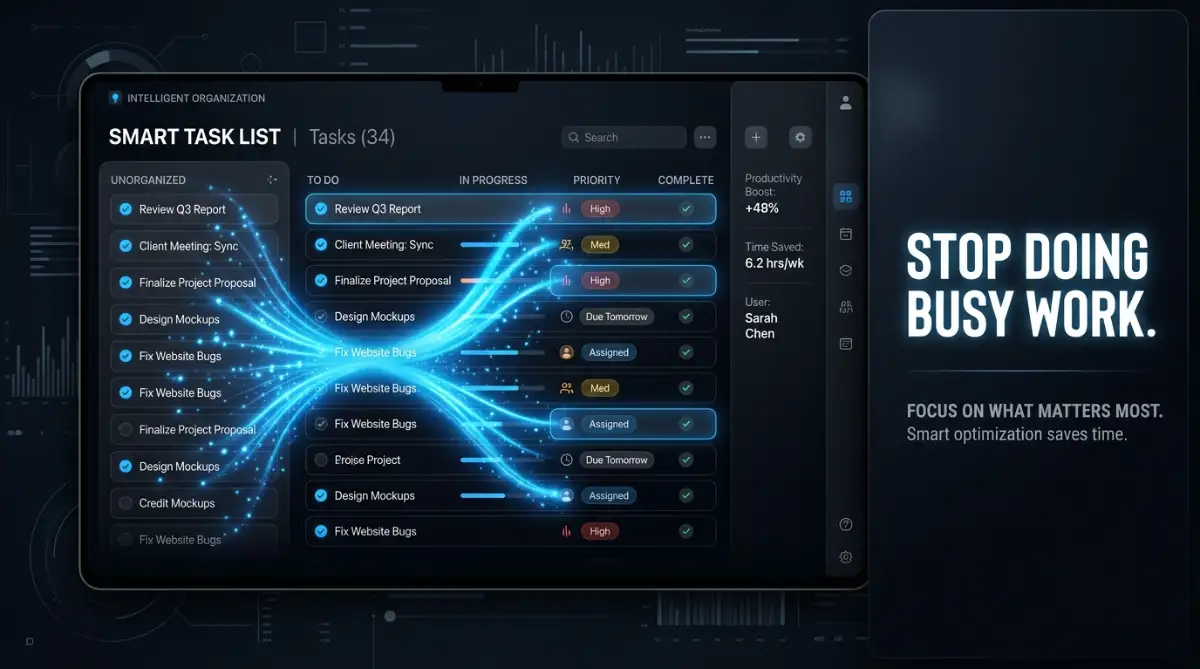
Once you have mastered individual tasks, the next level is to connect your tools together. You don't want to spend your day copying and pasting information from one app to another. This is where automation platforms come into play.
You can set up "triggers" that tell one app to do something when another app changes. For example, when you get a specific email, a tool can automatically summarize it and put that summary into your task manager. This creates a "flow" that happens while you sleep.
This kind of automation is especially helpful for keeping your digital assets safe and organized. If you are worried about security while using these cloud-based tools, it is a good idea to learn about securing business data with zero-trust tech to prevent any leaks.
By building these bridges between your apps, you reduce the "friction" in your workday. Friction is anything that slows you down or makes you think about the process instead of the work. When your tools talk to each other, the friction disappears, and your productivity goes through the roof.
Using Role-Play to Get Expert Advice
A very cool secret is to ask your AI tools to take on a specific persona. If you are stuck on a business problem, ask the tool to act like a world-class CEO. Ask it to look at your plan and find the five biggest risks.
This gives you a fresh perspective that you might not have considered. You can even ask it to act like your most difficult customer. This helps you prepare for tough questions before they even happen.
This method turns a simple chat into a powerful brainstorming session. It is like having a board of advisors available to you at any time of the day or night. You can use this for everything from planning a vacation to writing a business proposal.
Staying Consistent for Long-Term Success
The key to keeping these gains is to make them a habit. It is easy to get excited for one day and then go back to your old ways. You need a system to keep yourself on track.
- Review Your Tools Weekly: Spend ten minutes every Friday seeing which tools helped you and which ones were just a distraction.
- Keep a "Prompt Library": When you find a set of instructions that works perfectly, save it in a document so you can use it again.
- Limit Your Notifications: Use your tools to filter out the noise so you only see what is truly important.
- Practice Active Learning: Spend a few minutes each week reading about new updates to the tools you use most.
- Set Clear Boundaries: Use technology to get your work done faster so you can actually turn off your computer and rest.
Rest is actually a big part of being productive. If you are always "on," your brain will get tired and make mistakes. Use the time you save with AI to go for a walk, read a book, or spend time with family.
This balance ensures that you don't burn out. The goal is to build a life where you are in control of your time, not the other way around. When you use technology correctly, it serves you, and that is where the real magic happens.
If you are running a website alongside your other tasks, you know how stressful traffic spikes can be. Keeping your site up is part of being productive, and you can see how the right hosting keeps a website stable during busy times.

Avoiding the Traps That Slow You Down
Even with the best tools, it is easy to make mistakes that eat up your time. Many people fall into the trap of thinking more technology always means more work done. This is not always true.
Sometimes, we spend more time "setting up" our tools than actually doing the work. This is a form of procrastination that feels like being productive. You must be careful not to let your system become a burden instead of a help.
Trusting the Machine Too Much
The biggest mistake you can make is trusting everything the AI tells you without checking it. These tools are very smart, but they are not perfect. They can sometimes make up facts or give you wrong information that sounds very convincing.
Always read through the work before you send it to someone else. You are the final judge of quality. The AI is your assistant, but you are the boss. If you send out wrong information, it is your reputation on the line, not the machine's.
Think of it like a GPS in your car. It is great for giving directions, but you still need to look out the window to make sure you aren't driving into a lake. Use your human common sense at all times.
Getting Lost in "Tool Overload"
It is very tempting to try every new app that comes out. You see a cool video on social media and think, "I need that!" Before you know it, you have ten different subscriptions and no idea how to use them.
This creates mental clutter. Every new tool has a learning curve. If you are always learning a new tool, you are never actually doing your work. It is better to have three tools that you know perfectly than twenty tools that you barely understand.
Pick one tool for writing, one for organization, and one for automation. Stick with them for a few months before you even think about switching. Simplicity is the ultimate key to high performance.
Forgetting the Human Connection
In our quest for efficiency, we sometimes forget that work is about people. If you use AI to write every single message, your friends and coworkers might notice. They might start to feel like they are talking to a robot instead of you.
Don't let your communication become cold or distant. Use the time you save to have real conversations. Send a voice note or make a quick call instead of always using a generated text.
Your unique personality is your greatest asset. No machine can replicate your sense of humor or your personal stories. Use the tools to handle the data, but keep your heart in your interactions.
Neglecting Your Own Skill Growth
Some people worry that if they use AI, they will lose their own skills. This can happen if you let the tool do all the thinking for you. If you stop practicing your writing or problem-solving, your "mental muscles" will get weak.
Instead, use the tools to learn. If the AI suggests a better way to phrase a sentence, look at why it is better. If it solves a math problem, try to understand the steps it took.
This way, you are growing alongside the technology. You want to be a better version of yourself, not a person who is dependent on a machine. Stay curious and keep challenging yourself every day.
Using Poor Quality Inputs
As the saying goes, "garbage in, garbage out." If you give the tool a messy or confusing request, you will get a messy result. Many people blame the technology when the real problem was their instruction.
Taking an extra sixty seconds to write a clear prompt can save you thirty minutes of fixing the output later. Think before you type. Be clear about your goals and the constraints of the task.
If you don't tell the tool to keep it short, it might write five pages when you only needed one. If you don't tell it the target audience, it might use words that are too simple or too complex. Always give your instructions the attention they deserve.
Your New Productive Life Starts Today
We have covered a lot of ground today. From the basic struggle of being busy to the advanced secrets of automation, you now have a roadmap for success. The world is changing, but you are now ready to change with it.
Don't feel like you have to do everything at once. Pick one small thing from this guide and try it today. Maybe it is just using a more detailed prompt or setting up one simple automation.
The feeling of finally being in control of your time is one of the best feelings in the world. You will find that you have more energy for your hobbies and more peace of mind at night. You are no longer a slave to your inbox or your to-do list.
You have the power to work smarter and live better. The technology is here to help you, but you are the one who makes it happen. Believe in your ability to learn and adapt.
Take that first step now. Open your calendar or your task list and look at it with new eyes. You have the tools, you have the knowledge, and you have the drive. Go out there and make today your most productive day ever!
Key Takeaways for Immediate Results
To make things even easier, here is a quick summary of what you can do right now:
- Start a Time Audit: Track your tasks for three days to find your biggest time-wasters.
- Write Better Prompts: Give role, context, and clear instructions to every AI tool you use.
- Automate One Task: Use a simple connection to move data between your apps automatically.
- Review Your Toolset: Delete the apps you don't use and focus on the ones that bring real value.
- Stay Human: Use your saved time to build deeper relationships and focus on big-picture goals.
Your journey toward maximum efficiency is a marathon, not a sprint. Be patient with yourself as you learn these new habits. Over time, these small changes will add up to a completely different and much more successful life.
You are now equipped with the best strategies for the modern age. Use them wisely, stay consistent, and enjoy the freedom that comes with being truly productive. The future is bright, and it is yours to shape!