What Airlines Don't Tell You When They Sell Your Seat Twice
Have you ever showed up at the airport, bags packed, only to hear the gate agent say the flight is full? I thought buying a ticket meant I owned that seat. Nope. Airlines sell the same seat twice all the time, hoping someone stays home. But if you get bumped, they actually owe you big money. Let me show you exactly how I get cold, hard cash instead of those useless travel vouchers when my travel plans go sideways.
Imagine standing in line with your family, holding your bags, and feeling excited about your upcoming holiday. You have planned this trip for months, paid for your hotels, and arrived at the airport early. Suddenly, the gate agent announces that the flight is full and you cannot board.
Your heart sinks as you realize you are stranded, and your hard-earned vacation plans are falling apart. This is the painful reality of flight overbooking, a practice that leaves thousands of travelers feeling helpless and angry every single day.
Why does this happen to innocent people who paid for their tickets in good faith? It feels unfair because the airline took your money but refused to give you the service they promised.
The "Don't Get Fooled" Cheat Sheet
- Cash is King: Never accept a voucher first. The law says you’re entitled to cold, hard cash if you’re bumped involuntarily.
- Check-in Early: Set an alarm for the 24-hour mark. The last person to check in is usually the first one bumped.
- Keep Your Receipts: If you’re stuck overnight, keep every single receipt for food, water, and taxis. The airline has to pay you back.
- Status Matters: Even a free frequent flyer membership can lower your chances of being chosen for a bump.
My 3 Big Rules Before You Fly:
-
Set an alarm to check in exactly 24 hours before your flight so you are never the last one on the list.
-
If they bump you against your will, the law says they owe you actual cash, not a restrictive voucher.
-
Keep all your food and taxi receipts if you get stuck overnight—the airline has to pay you back for those unexpected costs.
The Hidden Math: Why Airlines Sell Seats They Do Not Have
Airlines do not overbook flights by mistake; they do it on purpose to maximize their profits. They use complex computer systems to predict how many passengers will fail to show up for the flight.
If their software predicts that five people will miss the flight, they will sell five extra tickets for that same plane. Most of the time, their math is correct, and the plane flies with every single seat filled to capacity.
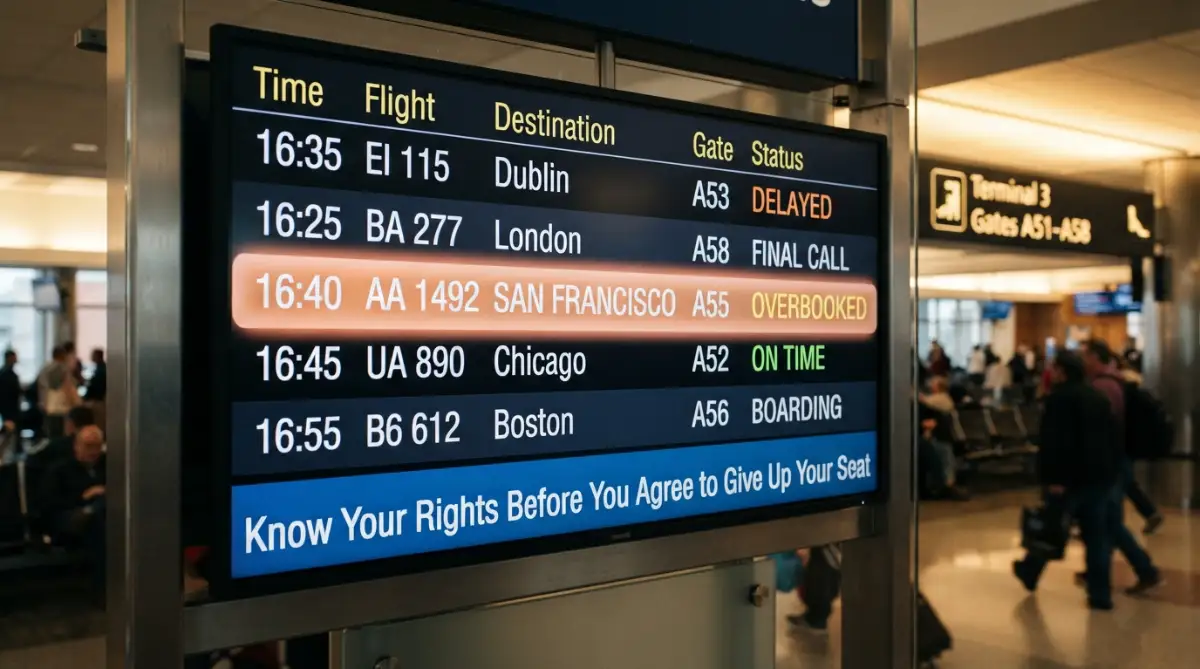
However, when everyone actually shows up, the airline faces a major problem. They suddenly have more passengers than physical seats on the aircraft, which leads to people getting bumped.
The Overbooking Math (Why You Lose):
-
The Plan: An airline has 100 seats but sells 105 tickets, betting 5 people will sleep in.
-
The Trap: If 102 people show up, 2 of you are getting left behind at the gate.
-
Your Move: Knowing this simple math helps you understand it is just a numbers game for them, so you should never feel bad asking for top dollar to give up your spot.
Understanding Voluntary vs. Involuntary Bumping
When a flight is oversold, the airline cannot just throw people off the plane immediately. They must follow a specific legal process, starting with a search for volunteers.
The airline must first ask passengers if anyone is willing to give up their seat in exchange for rewards. These rewards usually include travel vouchers, free meals, hotel stays, or cash.
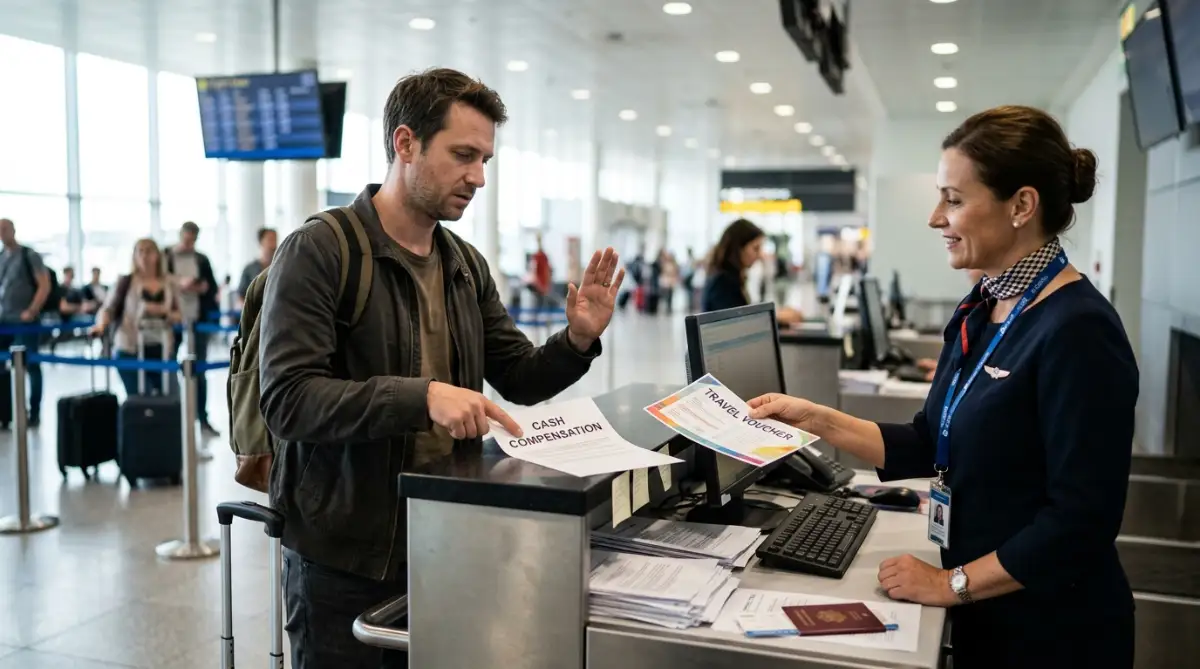
If you agree to this deal, you are giving up your seat voluntarily. This means you negotiate your own terms with the airline, and you waive your right to standard legal compensation.
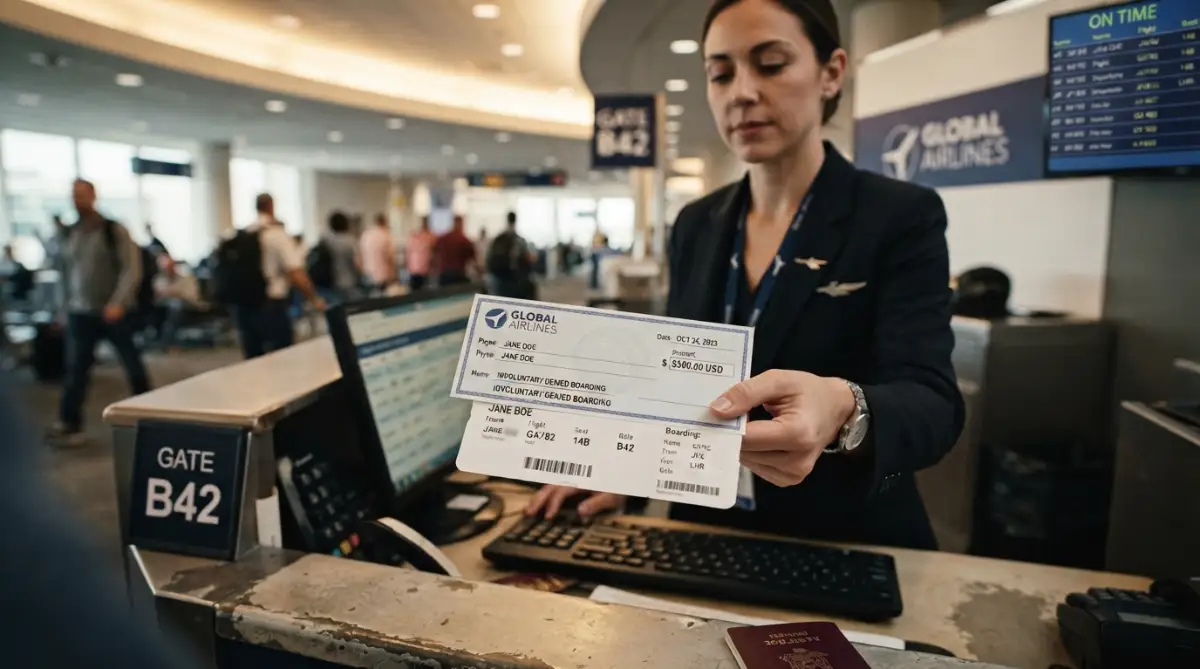
If not enough people volunteer, the airline will start choosing passengers to leave behind. This is called involuntary denied boarding, and it is highly regulated by aviation authorities.
If this happens to you, you have strict legal rights that protect your wallet and your travel plans. You did nothing wrong, so the law forces the airline to take care of you and pay you for the trouble.
Myth vs. Reality: The Truth About Overbooking
MythRealityAirlines must only give you a travel voucher if you are bumped.You are legally entitled to cash or a check, not just vouchers.Overbooking is illegal and airlines can be shut down for it.It is completely legal, but airlines must pay heavy penalties to affected passengers.If you accept a food voucher, you lose your right to cash compensation.Food vouchers are extra; they do not cancel your right to cash payments.
Your Legal Rights Under US DOT Rules
If you are flying within or from the United States, the Department of Transportation has very clear rules to protect you. These rules decide how much money the airline must pay you based on your delay.
If the airline can get you to your destination within one hour of your original arrival time, they owe you nothing. This often happens if they quickly book you on a competitor’s flight that leaves right away.
If your new flight arrives between one and two hours late, the airline must pay you 200% of your one-way ticket price. However, there is a legal cap on this amount, which is currently set at 800 USD.
If your delay is more than two hours, or if the airline fails to make any alternative travel arrangements for you, the payout doubles. The airline must pay you 400% of your one-way ticket price, up to a maximum cap of 1,650 USD.
For international flights departing from the US, the time limits are slightly different but still highly protective. If your alternative flight arrives between one and four hours late, you get 200% of your ticket price up to 800 USD.
If the international delay is more than four hours, you are entitled to 400% of your ticket price up to 1,650 USD. This money is yours to keep, and the airline must still get you to your final destination.
Your Legal Rights Under European Union Rules (EU 261)
The European Union has some of the strongest passenger protection laws in the world, commonly known as EU Regulation 261. These rules apply to any flight departing from an EU airport, as well as flights arriving in the EU on an EU-based airline.
Unlike the US system which uses ticket prices, the EU uses flat-rate cash amounts based entirely on the distance of your flight.
- For short flights under 1,500 kilometers, you are entitled to 250 EUR.
- For medium flights between 1,500 and 3,500 kilometers, you are entitled to 400 EUR.
- For long-haul flights over 3,500 kilometers, the airline must pay you 600 EUR.
Under EU law, the airline must also provide you with what is called a Duty of Care. While you wait for your new flight, they must give you free meals, drinks, and access to emails or phone calls.
If your new flight is scheduled for the next day, the airline must pay for your hotel room and your transport to and from the hotel. You should never have to pay for these basic needs out of your own pocket.
How Much Cash Can You Actually Get?
How to Negotiate Like a Pro When Asked to Volunteer
If the gate agent is asking for volunteers, do not jump at the very first offer they make. Airlines usually start with low offers, like a 100 USD voucher, because they want to save money.
Always ask if they can give you cash, a check, or a direct bank transfer instead of a travel voucher. Vouchers often come with annoying expiration dates, blackout dates, and hidden rules that make them hard to use.
If they can only offer vouchers, demand a much higher amount to make it worth your time. You can often negotiate the amount up to 1,000 USD or more if the plane is desperate to leave on time.
Before you agree to step off the plane, make sure you get a confirmed seat on the next available flight. Do not accept being put on a standby list, as you might end up waiting at the airport for days.
Never rely on verbal promises from an airline employee at a busy departure gate. If they promise you a hotel room, a food voucher, and a cash payment, ask them to write it down and sign it.
My Personal "Get It In Writing" Rule: I always tell the gate agent, "I am happy to help out and take the next flight, but I need you to print my new boarding pass and hotel voucher right now before I step away from this desk." If they say they will do it later, do not move. In the airport world, if it is not printed, it didn't happen!
What to Say to the Gate Agent (Copy This Script)
If you are being bumped, don’t just say "okay." Use these exact words:
- "I understand the flight is full. Am I being involuntarily denied boarding?"
- "Since this is an involuntary bump, I’d like my compensation in cash or check, not a travel voucher."
- "Can you please provide me with the written statement of my rights as required by the DOT/EU 261?"
- "I need a confirmed seat on the next flight before I leave this counter."
Early on, I made the mistake of grabbing the first voucher a gate agent offered just to get out of the stress as quickly as possible. I didn't realize until later that I had signed away my right to a much larger cash payout that would have actually covered my costs. Now, I always take a deep breath, stay calm, and politely negotiate for cash instead of those restrictive travel vouchers.
Step-by-Step Action Plan When You Are Involuntarily Bumped
If the airline forces you off the plane, you must stay calm and take immediate action to protect your rights.
Keep your boarding pass, bag tags, and ticket receipt in a safe place. Do not let the gate agent take your physical boarding pass without giving you a photocopy or a digital receipt.
Airlines are legally required to give you a written notice explaining your rights and how they calculate your compensation. Read this document carefully before you leave the gate area.
If you have checked bags, ask the airline staff what will happen to them. They must either retrieve your luggage from the plane or ensure it is safely forwarded to your new destination.
Under US rules, the airline must pay you on the spot at the airport on the day you are bumped. If they cannot do this, they must send you the payment within 24 hours of the incident.
Use your smartphone to take photos of the departure board, your boarding passes, and any announcements. Note down the names of the airline staff members you spoke with and the exact times of your conversations.
Want to see exactly how to handle a gate agent and claim your compensation like a pro? Click play to watch this step-by-step breakdown of how to protect your seat and your wallet when travel plans go sideways."
Smart Strategies to Avoid Getting Bumped in the First Place
While you cannot stop an airline from overbooking, you can take smart steps to make sure you are not the one left behind.
Most airlines open their online check-in 24 hours before the scheduled flight departure. Check in the very minute it opens, as airlines often bump the people who check in last.
Passengers who do not have an assigned seat on their boarding pass are always the prime targets for bumping. Spend a few extra dollars to choose your seat when you book your ticket.
Even if you only fly once a year, join the airline’s frequent flyer club for free. Airlines rarely bump their loyalty members because they want to keep their business.
Make sure you are at the departure gate well before the boarding process starts. If you are not at the gate when they call your group, they can cancel your reservation and give your seat to someone else.
How to File an Official Complaint Post-Flight
If the airline refuses to pay you at the airport, your battle is not over. You can still file an official claim from the comfort of your home.
Go to the airline's website and look for their customer service or feedback section. Write a short, polite email explaining exactly what happened, and attach copies of your boarding passes and receipts.
If the airline ignores your emails or refuses to pay, you can file a complaint with aviation watchdogs. In the US, you can file a complaint online with the Department of Transportation (DOT).
In the UK, the Civil Aviation Authority (CAA) handles these issues, while each EU country has its own National Enforcement Body. These government agencies will investigate the airline and force them to pay if they broke the law.
If you do not have the time to fight the airline yourself, there are professional online services that can help. These companies will handle the legal paperwork for you in exchange for a small percentage of your final payout.
Your Rights When Your Flight is Delayed or Canceled
Overbooking is not the only issue that can ruin your travel plans. Delays and cancellations also come with specific passenger protections.
If your flight is delayed due to mechanical issues or crew shortages, the airline is responsible. They must help you find food, water, and a place to sleep if the delay goes overnight.
If extreme weather forces the airline to cancel your flight, they do not have to pay you cash compensation. However, they must still rebook you on the next available flight without charging you extra fees.
Many premium credit cards and travel insurance policies offer built-in flight delay protection. Keep your receipts for food and hotel stays so you can claim the money back from your insurance provider later.
Advanced Gate Strategies for Smart Travelers
When you are standing at a busy departure gate, you need more than just hope to protect your seat. Most everyday travelers believe that getting bumped from a flight is completely random.
In reality, airlines use highly specific calculations to decide who stays on the ground and who gets to fly. Knowing how these systems work can help you stay ahead of the game and protect your travel plans.
Deciphering the Airline's Secret Passenger Selection Formula
Airlines do not throw darts at a board to pick who gets bumped. They use computer programs that look at several factors to rank every passenger on the plane.
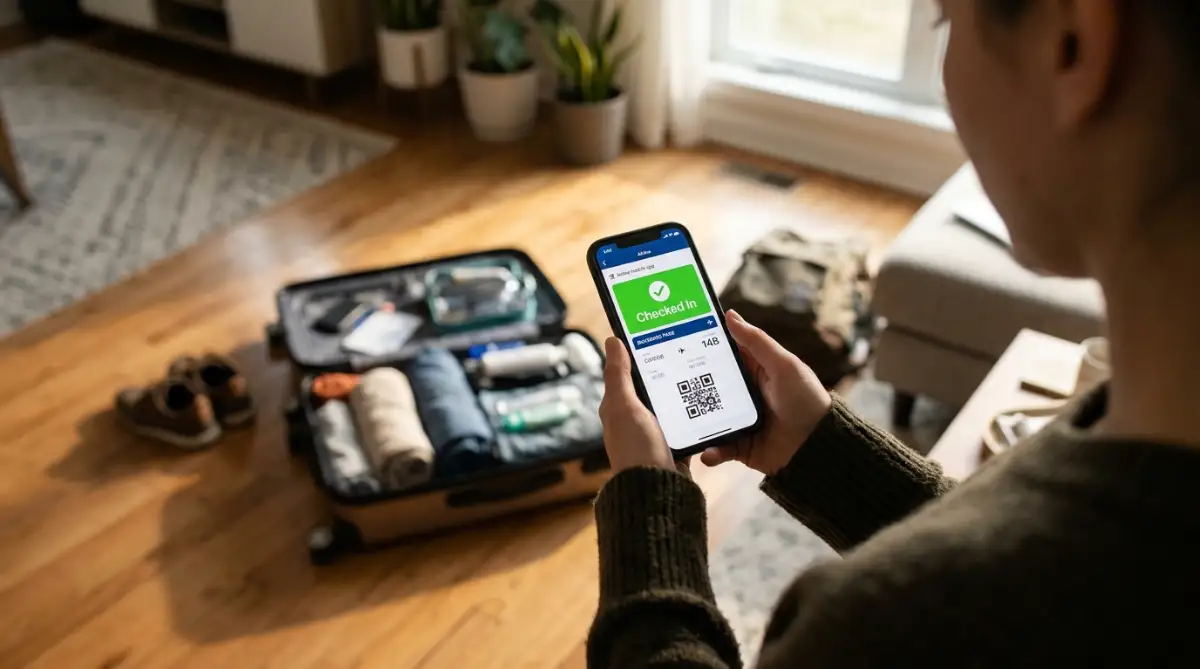
Your check-in time is one of the most important factors in this secret formula. Passengers who check in at the very last minute are almost always the first ones to be selected for involuntary bumping.
If you want to keep your journey simple, knowing how to pack a carry-on safely and stop paying airline fees can make a huge difference in your travel speed. Checking in early online from your phone keeps you off the bottom of the passenger list.
Why Your Ticket Class Matters More Than You Think
The price you paid for your ticket plays a massive role in whether you are allowed to board. Passengers who bought cheap, basic economy tickets are at a much higher risk of being bumped.
Airlines want to protect their high-paying customers who bought first-class, business-class, or flexible economy seats. If the plane is full, the computer will automatically target the lowest-paying passengers first.
This is why booking the cheapest ticket possible can sometimes backfire during peak holiday seasons. If you are traveling for an important event, paying a little extra for a standard economy ticket can buy you peace of mind.
The Power of Frequent Flyer Status
If you fly often, you should always join the airline’s loyalty club, even if it is a free basic account. Frequent flyer members are highly valued by airlines because they represent steady, long-term business.
The computer systems are programmed to avoid bumping loyalty members whenever possible. Even a low-level membership can act as a shield when the flight is oversold.
If you are not a member, you are seen as a one-time customer who is easier to replace. Joining a frequent flyer program takes only a few minutes and offers instant protection against overbooking.
Using Your Phone as a Legal Shield
Your smartphone is your strongest weapon when dealing with airline gate agents. The moment you hear that a flight is overbooked, open your phone and start gathering information.
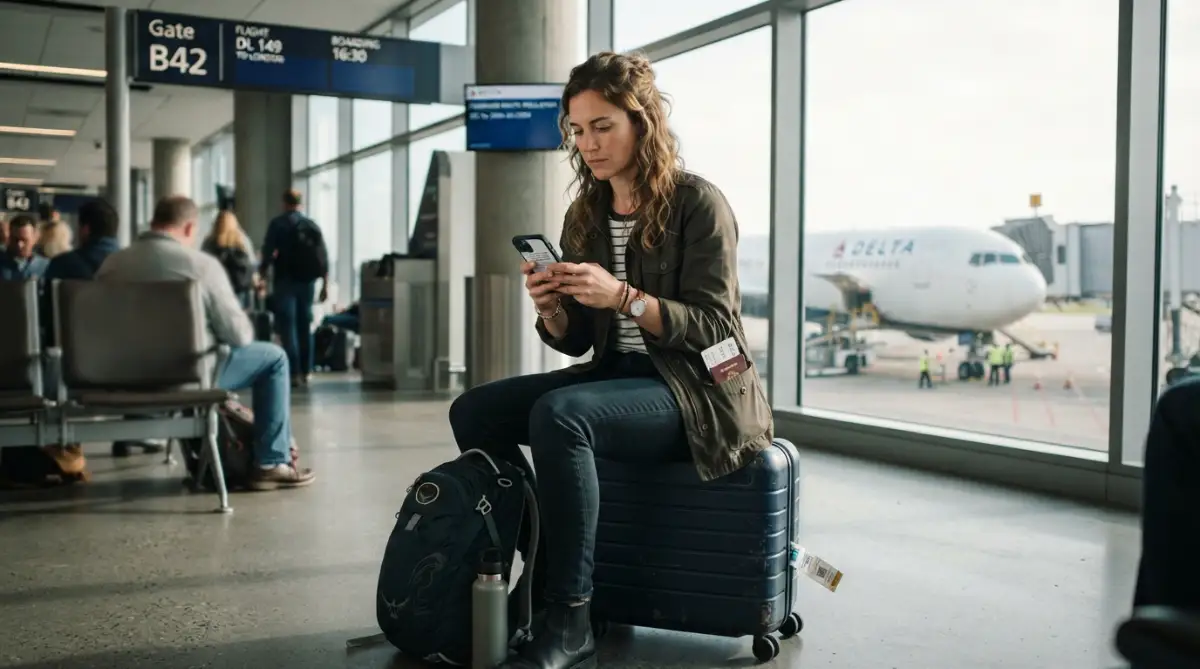
You should keep a copy of the official US DOT passenger bumping guidelines saved on your device for quick reference. Having these official government rules ready shows the airline staff that you know your rights.
You can also use your phone to record your conversations with the staff if the situation becomes difficult. Having video or audio proof can be incredibly helpful if you need to file an official complaint later.
How a Carry-on Bag Protects You from Bumping
Gate agents hate dealing with checked luggage because it makes their jobs much harder. If they bump a passenger who has checked bags, they must locate and remove those bags from the cargo hold.
This process takes a lot of time and can cause the entire flight to be delayed. Because of this, passengers with only carry-on bags are often preferred when space is tight.
If you have no checked bags, you can move quickly and negotiate with more freedom. Carrying less luggage makes you a more flexible traveler and protects you from being targeted by busy gate staff.
A Live Conversation with an Ex-Gate Agent
To help you understand how this works behind the counter, we spoke with a former airline employee. Here is what they had to say about overbooked flights.
Question: What is the biggest secret about overbooking that airlines do not want us to know?
Answer: We are often authorized to offer much more money than our first offer. If we start by offering a 200 USD voucher, we might actually be allowed to go up to 1,000 USD if the plane is about to depart.
Question: How can a passenger make sure they do not get selected for bumping?
Answer: Always show up early, get your seat assignment ahead of time, and be polite. If you are nice to the staff, we will do everything we can to keep you on the plane.
The Hidden Trap of Codeshare Flights
Many travelers do not realize that they booked a codeshare flight until they arrive at the airport. A codeshare flight is when you buy a ticket from one airline, but the actual plane is operated by a different partner airline.
This can create major confusion when a flight is overbooked. The airline operating the flight must follow the rules of their home country, which might be different from your ticket's country.
If you are flying on a European partner airline, you are still protected by the strict EU air passenger rights framework even if you bought your ticket from a US carrier. Always check which airline is physically flying the plane before you head to the airport.
Severe Pitfalls to Avoid When the Gate Gets Chaotic
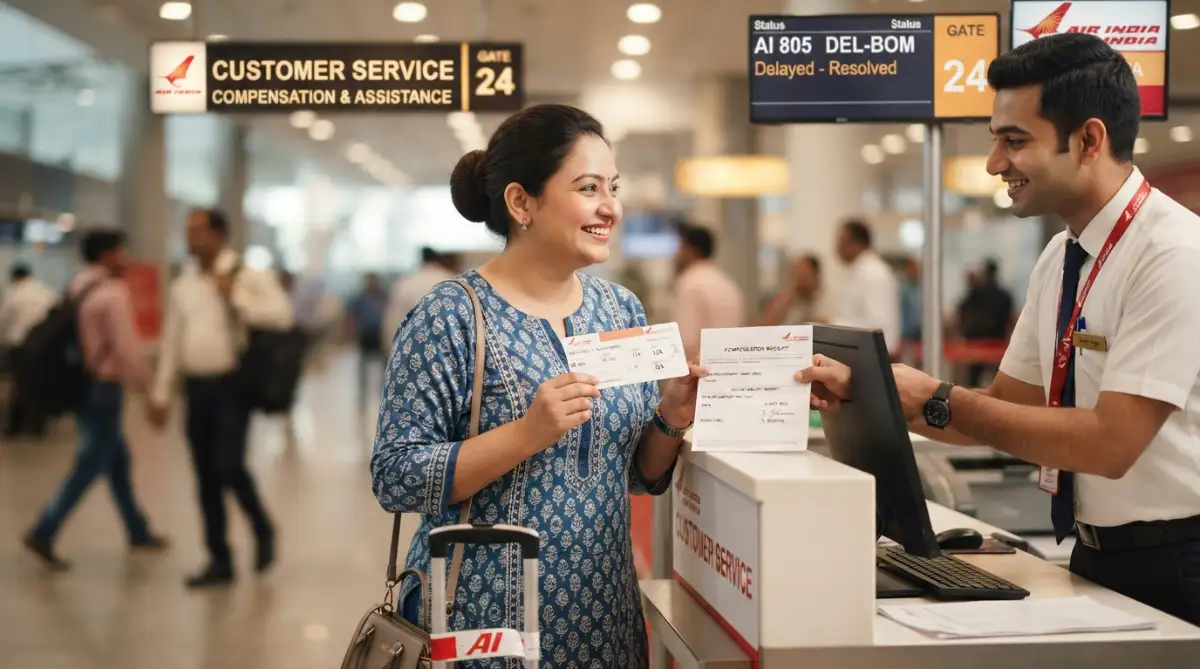
When an airline announces that a flight is oversold, the gate area can quickly turn into a scene of panic. In these stressful moments, it is incredibly easy to make a bad decision that costs you money and time.
Many travelers make simple mistakes that accidently cancel out their legal protections. Avoiding these traps is just as important as knowing your passenger rights.
Accepting the First Travel Voucher Without Reading the Fine Print
When an airline offers a shiny travel voucher, it can look like a great deal at first glance. However, these vouchers are often filled with hidden rules that make them almost useless.
Many travel vouchers expire after just one year, and they cannot be used during busy holiday periods. If you accept a voucher, you might also give up your right to claim cash compensation.
Walking Away from the Gate Without Written Confirmation
One of the biggest mistakes you can make is leaving the gate area with only verbal promises. A busy gate agent might promise to put you on the next flight and book you a free hotel room.
However, once you walk away, that agent might go off duty, and the next agent will have no record of that promise. If you do not have it in writing, it basically does not exist in the airline world.
Always wait at the counter until the agent prints out your new boarding passes and provides your written hotel and meal vouchers. Your travel plans are too valuable to rely on a stranger's verbal word.
Losing Your Temper at Airport Staff
It is completely natural to feel angry when an airline ruins your travel plans. However, screaming, cursing, or behaving aggressively toward the gate staff will only make your situation worse.
Airline employees have the legal authority to deny boarding to anyone they consider a security risk. If you lose your temper, you could be banned from the flight entirely without any compensation.
Instead, stay calm, speak politely, and keep a professional tone. This approach makes the staff want to help you, and it keeps you in control of the negotiation.
Forgetting to Check Your Credit Card Travel Protections
Many travelers do not realize that the credit card they used to buy their ticket offers free travel insurance. Premium credit cards often include high-quality trip delay and cancellation coverage.
If your flight is overbooked, your credit card company might pay for your meals, hotels, and alternative transport. This benefit is completely separate from any money you get from the airline.
Not Knowing How to Present Your Financial Demand
When you are negotiating at the gate, you must explain your situation clearly and confidently. If you do not state your demands properly, the airline will offer you the absolute minimum.
You need to show the gate agent that you understand the exact value of your time and your ticket. This is very similar to how you would craft a value proposition that drives sales by highlighting clear, undeniable benefits.
Tell the agent exactly what the law requires them to pay you based on your delay. Presenting your case clearly makes it much harder for the airline to ignore your rights.
Your Personal Shield for Future Travels
Protecting yourself from flight overbooking is not about fighting the airlines; it is about being smarter than their computer systems. When you travel with preparation and knowledge, you can face any airport delay with absolute confidence.
The Ultimate Gate Checklist
Here is a simple, quick list of things you should do before every flight to ensure your seat is safe:
- Check-in 24 Hours Early: Set an alarm on your phone to check in the exact minute the window opens.
- Select a Seat Immediately: Never leave your seat assignment blank on your booking.
- Join the Loyalty Club: Sign up for the airline's frequent flyer program before you book.
- Keep Your Phone Charged: Make sure your smartphone has enough battery to show your documents and record info.
- Travel Light: Stick to a carry-on bag whenever you can to remain flexible.
Stand Up for Your Passenger Rights
Airlines count on the fact that most passengers do not know the rules. They save millions of dollars every year because people simply walk away without claiming their compensation.
You paid for your ticket, and you deserve to get to your destination safely and on time. If things go wrong, do not be afraid to speak up and claim the money that the law says is yours.
Keep this guide in mind for your next trip, share it with your family, and travel with peace of mind. Your journey belongs to you, and with the right knowledge, you can protect it every step of the way.
Don't let the fear of a bad travel day stop you from booking your next big adventure. Once you understand these simple rules, you stop being a target for airline errors and start becoming a pro traveler who stays in control. Keep these tips in your back pocket, stay confident at the gate, and go enjoy that trip you’ve been dreaming about!
Professional Travel Disclaimer
Disclaimer: The information provided in this article is for educational and informational purposes only. While we make every effort to provide accurate and up-to-date travel advice, aviation regulations and airline policies can change without notice. Passenger rights can vary based on your specific location, ticket type, and the operating carrier. For legal advice or official policy decisions, please consult the official guidelines of the relevant department of transportation or aviation authority in your country.