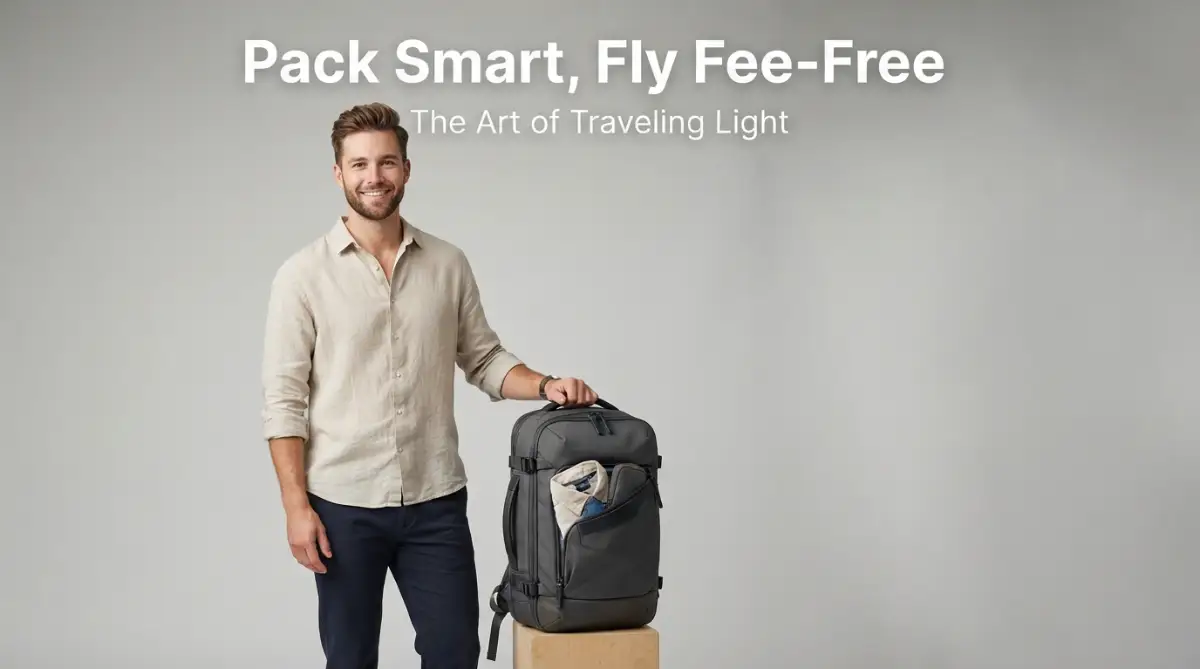
The Gate Agent, the Red Light, and the Hidden Cost of Flying
Picture this common airport scene. You are standing in the boarding line, excited about your upcoming holiday. The queue moves quickly, and you are just a few steps away from the airplane door. Suddenly, a gate agent points at your small suitcase and asks you to put it in the metal sizing box.
Your heart sinks as the bag gets stuck by just an inch. The agent smiles politely but hands you a credit card reader to collect a seventy-dollar gate-checking fee. That single moment instantly drains your travel budget and fills your mind with anger.
Many of us have felt this exact stress while traveling. Modern airlines continue to shrink their free baggage limits to make more money. What used to be a simple journey has turned into a stressful test of spatial awareness.
You find yourself worrying about bag dimensions instead of enjoying the excitement of visiting a new city. Your peace of mind should not depend on a tiny metal measuring frame at the boarding gate.
Have you ever wondered why packing light feels so difficult? We often pack for "just in case" situations that never actually happen. We carry heavy jackets, extra pairs of shoes, and books we never open.
This habit does not just cost money; it makes transit physically exhausting. Dragging a heavy bag over European cobblestones or through crowded subway stations ruins the joy of exploration.
By shifting your packing mindset, you can protect your wallet and make transit a breeze. Let us look at how you can bypass these expensive cabin fees without leaving behind what you truly need.
The Secret Economy of Modern Airplane Cabins
To beat the system, you must first understand why airlines charge these fees. Airplane cabins have limited space, and every extra pound of weight increases fuel consumption. Airlines realized they could advertise low ticket prices while charging extra for overhead bin space.
This means your cheap flight ticket is often a trap. The airline expects you to pay more at the gate to bring a standard carry-on bag.
By learning to pack within the personal item limits, you can easily avoid these fees. A personal item is typically a small backpack or shoulder bag that fits entirely under the seat in front of you.
Most airlines do not charge extra for this bag because it does not use the shared overhead bins. This small space is actually large enough for a week of travel if you know how to use it.
Below is a simple guide to help you compare what different airlines expect at the gate.
Airline Class TypeAverage Free Bag DimensionTypical Gate FeeRecommended Bag StyleBudget Carriers18 x 14 x 8 inches$50 - $80Soft Under-seat BackpackNational Airlines22 x 14 x 9 inches$30 - $60Compact Hardside SpinnerRegional Flights17 x 13 x 8 inches$45 - $75Lightweight Duffle Bag
Shifting Your Packing Psychology
Most travelers suffer from packing anxiety. We pack extra clothes because we fear looking bad or running out of clean laundry.
In reality, almost every destination in the world has laundry services or a place to buy basic soap. You only need to pack enough clothing to last for four to five days, regardless of your total trip length.
Think of your suitcase as a premium space that you must rent to yourself. Every item you place inside must earn its spot by being highly useful.
If an item only has one specific use, leave it at home. Multi-purpose items are the secret to keeping your bag light and small.
The Great Packing Debate: Rolling Versus Folding
Many people argue about the best way to fit clothes into a small bag. Let us look at the facts behind these two popular packing methods.
- Traditional Folding: This creates flat layers but leaves a lot of empty, wasted space in the corners of your bag. It also creates deep creases in your shirts.
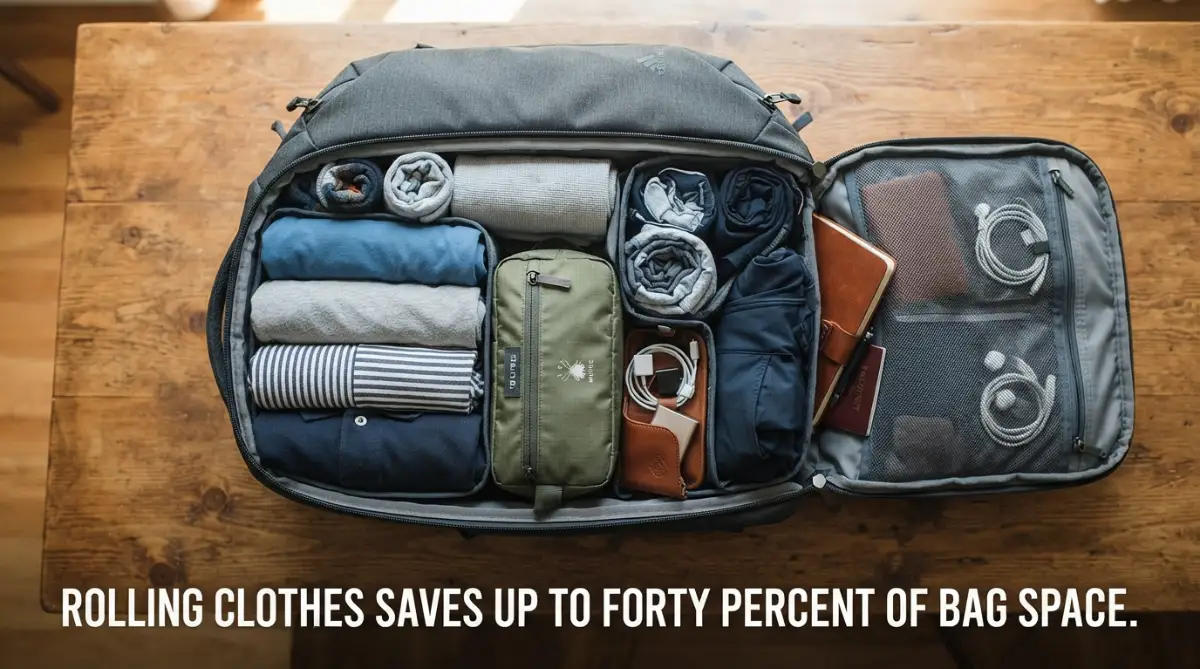
- Army Rolling: This technique rolls each clothing item into a tight, sausage-like shape. It pushes out trapped air and allows you to pack items side by side without gaps.
Rolling is the clear winner for small backpacks and personal items. It keeps your clothes wrinkle-free and lets you see every item without unpacking the entire bag.
You can also use your rolled socks to fill the small gaps between your larger rolled clothes.
Building Your Minimalist Capsule Wardrobe
A capsule wardrobe is a small collection of clothes that you can mix and match to create many different outfits. To make this work, you should stick to a simple color palette.
Choose neutral colors like black, grey, white, and navy blue. This allows every shirt to match every pair of pants you pack.
Select lightweight materials that dry quickly. Merino wool and synthetic athletic fabrics are perfect for lightweight travel.
These fabrics do not hold bad smells and can be washed in a hotel sink and dried overnight. Avoid heavy cotton shirts and thick denim jeans, as they take up too much space and dry slowly.
The Heavy Jacket Strategy
The easiest way to save space inside your bag is to wear your heaviest items on the plane. Even if the weather is warm, put on your bulkier jacket and heavy walking shoes during transit.
Airports and airplanes are usually cold anyway, so this keeps you comfortable during the flight.
You can take off your heavy jacket once you pass through the boarding gate. Simply slide it under the seat or hold it in your lap during the flight.
This simple trick can free up to thirty percent of the space inside your main travel bag.
Decoding the Three-One-One Liquids Rule
Liquid restrictions are a major challenge when packing a small carry-on bag. You do not need to bring giant bottles of shampoo, conditioner, and body wash.
Buy small travel-sized bottles and fill them with your favorite products. You can also switch to solid toiletries to save space and avoid security checks.
Solid shampoo bars, solid deodorant, and toothpaste tablets work just as well as liquids. They do not count toward your liquid limit and will never leak inside your bag.
Always pack your liquids in a clear bag at the very top of your luggage for quick security screening.
Managing Your Essential Travel Technology
Heavy laptops, cameras, and chargers can quickly make your bag too heavy. Before you pack a device, ask yourself if your smartphone can do the same job.
Most modern phones have excellent cameras and can be used to read books, check maps, and write emails.
If you must bring multiple electronics, invest in a universal charger. A single multi-port wall adapter can charge your phone, laptop, and headphones at the same time.
This eliminates the need to carry three or four separate power bricks and messy cables.
Choosing the Right Under-seat Travel Bag
The shape of your bag matters just as much as how you pack it. Hard-shell suitcases are durable, but they cannot bend or compress when empty.
A soft-sided travel backpack is much better for budget airline travel. Soft bags can be squished into tight spaces to fit the airline sizing frames.
Look for a backpack that opens like a suitcase, often called a clamshell opening. This design allows you to open the bag completely flat to pack and organize your gear easily.
Make sure the bag has comfortable, padded shoulder straps to make walking through the airport easy.
Dealing with Travel Document Anxiety
Many people carry paper folders, large wallets, and multiple notebooks. This adds unnecessary weight and clutter to your bag.
Keep digital copies of your passport, flight tickets, and hotel bookings on your phone.
Use a secure cloud storage app so you can access your travel files even if you lose your phone.
Only carry a tiny, RFID-blocking passport holder for your physical documents and essential cards. This keeps your valuables safe and leaves more space in your pockets and bag.
Understanding the Importance of Compression Sacks
Compression packing cubes are a game changer for minimalist travelers. Unlike regular packing cubes, compression cubes have an extra zipper designed to squeeze out excess air.
This reduces the physical volume of your packed clothes by up to forty percent.
Be careful not to overpack your compression cubes. Squeezing too many clothes into a small space can make the cube heavy and round like a ball.
Keep them flat so they slide easily into your backpack without creating awkward bumps.
Managing Footwear on the Road
Shoes are the biggest space killers in any travel bag. They are bulky, dirty, and cannot be folded.
The golden rule of light travel is to limit yourself to two pairs of shoes maximum.
Wear your heaviest, most comfortable walking shoes during your flight. Pack a lightweight, flat pair of shoes or sandals in your bag for casual evenings.
Always pack your extra shoes inside a clean plastic bag to protect your clean clothes from dirt and smell.
Sourcing Basic Items at Your Destination
Remember that your destination is not a deserted island. If you forget minor items like sunscreen, toothpaste, or a basic umbrella, you can easily buy them at a local market.
This is often cheaper than paying a high baggage fee to carry those items from home.
This approach also supports local businesses in the communities you visit. It turns shopping for basic needs into a fun cultural experience.
You might even discover unique local brands that you prefer over your usual products at home.
Packing for Unexpected Weather Changes
You do not need to pack heavy winter gear to stay warm in cold climates. The secret to staying warm is wearing multiple thin layers instead of one thick coat.
A thin, windproof rain jacket worn over a light sweater can keep you just as warm as a bulky jacket.
Thin layers are much easier to pack and can be worn separately if the weather gets warmer.
Pack a lightweight scarf and a thin beanie hat to keep yourself warm without taking up valuable bag space.
Organizing Your Bag for the Airport Security Line
The airport security line can be a stressful place if your bag is disorganized. You do not want to be the person searching through a messy bag to find liquids and electronics.
Keep your laptop, tablet, and clear liquids bag in an easily accessible pocket.
Pack these items last so they are sitting right at the top of your bag. This allows you to pull them out quickly, walk through security, and pack them back without slowing down the line.
A smooth security experience sets a relaxed tone for your entire journey.
Developing a Post-Trip Travel Audit Habit
The best way to improve your packing skills is to evaluate your bag after every trip. When you return home, lay out all the clothes and gear you packed.
Divide them into two piles: things you used multiple times and things you never touched.
Take a mental note of the items you did not use and promise to leave them behind next time.
Over time, this practice will make you a highly efficient traveler. You will quickly realize how little you actually need to enjoy a wonderful vacation.
The True Freedom of Traveling Light
Avoiding expensive airline fees is a great financial benefit of packing light. However, the real reward is the feeling of physical and mental freedom.
You no longer have to wait in long check-in lines or crowd around baggage carousels after a tiring flight.
You can walk off the airplane, pass through customs, and head straight to your destination.
Your journey becomes simpler, lighter, and far more enjoyable. By embracing minimalist packing, you take back control of your travel experience and focus on creating beautiful memories.
Master-Level Packing Strategies for Frequent Flyers
Experienced travelers know that packing is not just about putting clothes into a box. It is a highly strategic task that requires planning and the right systems. If you travel often, you need to think of your luggage as a mobile survival kit.
One of the best kept secrets of light travel is the use of specialized wearable gear. Many regular flyers now buy lightweight utility jackets with hidden, oversized pockets. These jackets allow you to carry heavy items like power banks, books, and extra cameras directly on your body.
Since airlines only weigh your bags and not your body, this is a perfectly legal way to move weight out of your luggage. You can easily slide these items back into your bag once you pass the boarding gate and find your seat. This single trick can easily save you three to four pounds of bag weight.
To help you make the best choice for your next flight, we always update our travel booking guide with fresh airport strategies. Learning these small tricks can save you hundreds of dollars in unexpected fees over time.
Another master-level secret is the daily laundry rotation system. Instead of packing a new outfit for every single day of your trip, commit to washing your basic clothes every night. You only need a tiny travel bottle of liquid soap or a few solid laundry sheets.
Washing a single shirt and a pair of socks in your hotel sink takes less than five minutes. Hang them up near a window or an air vent, and they will be dry and fresh by morning. This simple habit instantly cuts your clothing needs in half.
Packing light is a mindset that resembles launching a new project. Just as you want to avoid reasons why most side hustles fail by planning carefully, you must plan your luggage limits with complete focus. A small mistake in preparation can lead to unwanted costs at the airport.
The Magic of Double Compression Packing
Standard packing cubes are great, but double compression cubes are much better. These specialized cubes have two zippers instead of one. The first zipper closes the bag, while the second zipper squeezes out all the remaining air.
This process flattens your clothes into thin, brick-like shapes. It allows you to stack multiple layers of clothing inside a very small backpack. You must be careful to stack these compressed bricks flat against the back panel of your bag for the best weight distribution.
Understanding the Zero-Frame Backpack Advantage
Many people buy heavy hardshell suitcases because they look modern and clean. However, the heavy plastic shell and the rolling wheels can weigh up to six pounds before you even put a single shirt inside. That is almost half of your total weight allowance for budget airlines.
Instead, look for a lightweight, zero-frame backpack made from durable nylon or polyester. These bags have no metal support bars and no heavy wheels. They weigh almost nothing when empty, giving you more weight allowance for your actual belongings.
Before you pack, think about the environment you will enter and who you will meet. It is similar to how businesses find target audience demographics to understand exactly what people need. Knowing your destination's climate and social norms helps you avoid packing items you will never use.
The Dry Toiletries Revolution
Liquid toiletries are always a major issue during airport security checks. You have to pull them out of your bag, place them in a clear plastic bin, and pray they do not leak. You can easily solve this problem by switching to dry alternatives.
Today, you can buy solid shampoo bars, dry toothpaste tablets, and solid sunscreen sticks. These items work incredibly well and do not count toward your liquid allowance under the TSA liquid rules. This simple shift completely removes the risk of a messy shampoo spill inside your clean backpack.
The Weighing Ritual Before You Leave Home
Never guess the weight of your bag before heading to the airport. Buy a cheap, digital luggage scale and use it every single time you pack. Weigh your bag when it is fully packed, including your water bottle and travel documents.
If your bag is even half a pound over the limit, remove one non-essential item immediately. It is much easier to make these decisions in your living room than under the cold lights of the airport check-in desk. This simple ritual gives you complete confidence before you step out of your door.
Costly Blindsspots and Packing Traps to Avoid
Even smart travelers sometimes fall into easy traps that result in heavy gate fees. One of the most common mistakes is using the expandable zipper on your suitcase. Most modern bags have a special zipper that lets the bag expand by two or three inches.
While this feature is tempting, it almost always makes your bag too thick to fit into the airline sizing frames. Once your bag expands, it loses its structured shape and bulges in the middle. This bulge is the first thing gate agents look for when pulling travelers out of the boarding line. Keep that expansion zipper closed at all times to maintain a slim bag profile.
Another common pitfall is the souvenir trap. You might leave home with a perfectly packed bag, but you will likely buy gifts, clothes, or souvenirs during your trip. If your bag was already packed to the absolute limit, you will have no space for these new items on your way back.
Always leave at least twenty percent of your bag empty when leaving home. This small empty space gives you the freedom to bring back local items without needing to buy a second bag. If you cannot leave empty space, make sure you only buy small, flat souvenirs like postcards or magnets.
The Danger of Code-Share Flight Confusion
Many travelers book a flight with one major airline, only to find out that a smaller regional partner operates the actual airplane. This is called a code-share flight, and it can cause massive baggage problems. Different airlines often have completely different weight and size rules for carry-on bags.
For example, a major international airline might allow a twelve-kilogram carry-on bag. However, their regional partner might only allow an eight-kilogram limit on their smaller airplanes. Always check the specific baggage rules of the actual company operating the aircraft to avoid sudden fees. You can find detailed passenger right guidelines on the European Commission Passenger Rights portal to understand your options during disputes.
Heavy Items at the Bottom of the Bag
When you pack a backpack, where you place heavy items matters a lot. Many people make the mistake of packing heavy items like shoes or cameras at the very top or the outer pockets of their bag. This throws off your center of gravity and makes the bag feel much heavier on your shoulders.
It also causes the bag to sag and lose its compact shape, making it look much larger to airport staff. Always pack your heaviest items close to your back and in the middle section of the backpack. This distributes the weight naturally across your hips and keeps the bag looking neat and slim.
Trusting the "Eyeball" Method
Many travelers assume their bag is fine because they have used it on other flights without any issues. This is a dangerous assumption because airlines constantly update their sizing rules and train their staff to be more strict. What passed as a free personal item last month might be rejected today.
Do not trust your eyes or past experiences. Always use a tape measure to check the height, width, and depth of your bag from the very bottom of the wheels to the top of the handle. Keeping your measurements accurate is the only way to guarantee a stress-free boarding experience.
The Over-Packing of Emergency Supplies
It is natural to want to prepare for every possible emergency while traveling. We pack extra medical kits, multiple jackets, and heavy tools just in case something goes wrong. However, this level of preparation is rarely necessary for standard holiday destinations.
Most cities have modern pharmacies, supermarkets, and clothing stores where you can easily find basic supplies. Carrying a massive emergency kit just adds dead weight to your shoulders. Limit your medical supplies to a few essential plasters, pain relievers, and personal prescriptions.
Your Simple Plan for Stress-Free Travel
Minimalist packing is not about depriving yourself of comfort. It is about choosing freedom and ease over heavy, unnecessary physical possessions. When you carry less, you reduce your anxiety and allow yourself to focus on the actual journey.
Imagine walking past the crowded check-in desks, skipping the slow baggage carousel, and stepping directly into your destination. You do not have to worry about lost luggage, broken zippers, or expensive gate fees. You are light, mobile, and completely in control of your journey.
The Quick Prep Checklist for Your Next Trip
- Audit Your Wardrobe: Lay out all planned clothes and remove exactly one-third of them before packing.
- Use the Scale: Weigh your packed bag and make sure it is at least one pound under the airline limit.
- Wear the Bulk: Put on your heaviest shoes and your warmest jacket for the flight.
- Check the Operating Carrier: Confirm the exact bag limits for every airline you will fly with on your trip.
- Go Dry: Swap out liquid shampoos and gels for solid travel bars to make security checks simple.
Take a deep breath and embrace this new way of moving through the world. Start with your next short weekend trip and see how easy it feels to travel with just a small backpack. You will quickly find that the less you carry, the more enjoyable and adventurous your travels become.
Disclaimer
This guide is for informational purposes only. Airline baggage policies, weight limits, and fee structures can change without notice. Always verify the current baggage guidelines directly with your operating airline before booking or departing for your flight.