
The Empty Shop Syndrome: Why Great Products Fail to Sell
Imagine pouring your heart, soul, and hard-earned savings into building a beautiful online store. You launch your product, wait for the sales notifications to chime, but nothing happens. Just dead silence.
You check your internet connection, refresh the page, but the screen stays empty. This painful silence is a common nightmare for new business owners. It feels like throwing a massive party in a hidden forest and forgetting to send out the invitations.
You stare at your screen with a heavy heart, wondering why nobody cares about your hard work. The stress begins to creep into your evenings, stealing your sleep and making you doubt your abilities. You ask yourself if you are cut out for this business journey at all.
This deep frustration does not mean your product is bad. It simply means you are shouting your message into an empty room. You see other brands growing rapidly every day on social media. They seem to find buyers effortlessly while you struggle to get a single click.
This gap makes you feel left behind and completely overwhelmed. You spend hours tweaking your website colors and changing your prices. Yet, the real problem lies deeper than your website layout.
You are trying to sell warm winter coats to people living in a tropical desert. To fix this, you must stop guessing who your buyers are and start looking at the real data.
Why Understanding Your Buyer Is Your Real Secret Weapon
Many new business owners believe that everyone is their customer. They think a wide net catches the most fish in the ocean. However, trying to sell to everyone means you end up appealing to nobody at all.
When you speak to everyone, your message becomes dry, boring, and easily ignored. Knowing your target audience demographics changes everything about how you run your business. It helps you spend your small marketing budget where it actually brings in cash.
You stop wasting time on social media platforms your customers never visit. Instead, you show up exactly where they hang out and speak their language. This shift transforms your business from an invisible shop into a popular community hub.
The Real Cost of Marketing to Everyone
When you do not target your audience, you burn through your advertising budget incredibly fast. You pay for ads that show up on screens of people who have zero interest in your offer. This waste can quickly drain your savings and force you to shut down.
On the other hand, targeted marketing makes every dollar work much harder for you. You only display your messages to people who already need your specific solution. This focus makes your business look highly professional and deeply caring.
Demographics vs Psychographics: What Is the Difference?
To understand your buyers, you must know the difference between these two key terms. Demographics tell you "who" is buying, while psychographics tell you "why" they buy. Both work together to build a complete picture of your perfect customer.
FeatureDemographics (Who They Are)Psychographics (Why They Buy)ExamplesAge, Location, Gender, IncomeValues, Hobbies, Fears, GoalsData SourceCensuses, Analytics, SurveysInterviews, Social Media CommentsMain UseFinding and reaching the audienceCreating messages that connect
By combining these two datasets, you create a powerful marketing strategy. You know exactly where to find your buyers and what words will make them trust you.
The Core Elements of Customer Demographics
To build a clear picture of your audience, you need to look at specific data points. These points are the building blocks of your customer profile. Let us break down the most important ones you need to track.
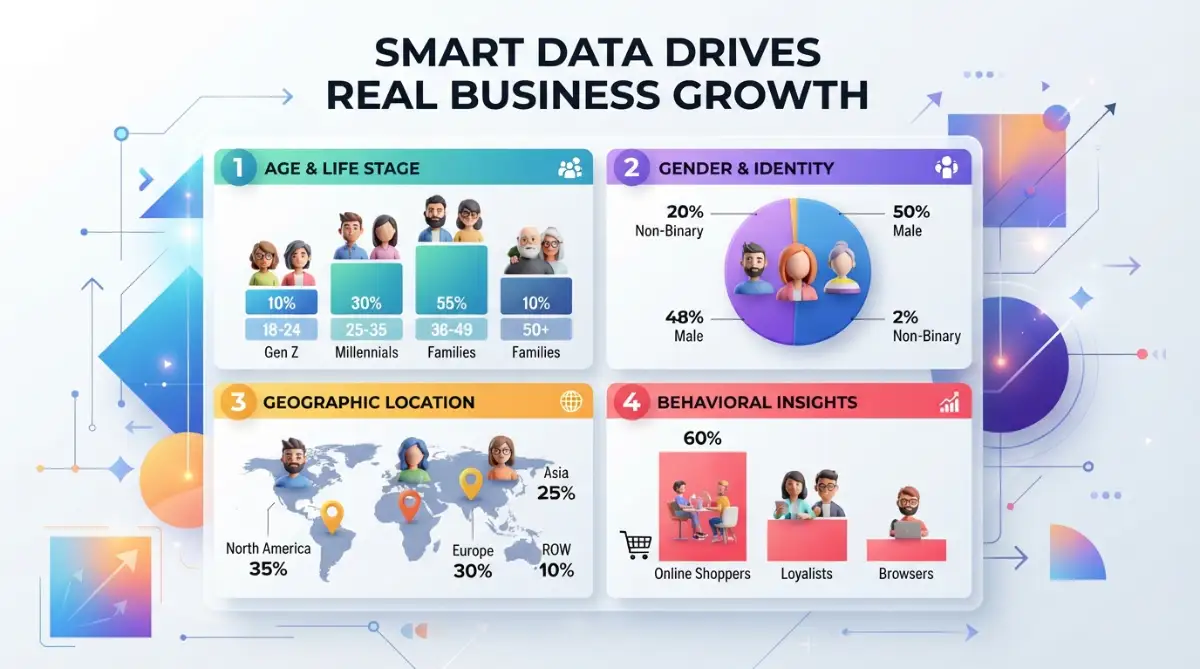
Age and Life Stage
Age is much more than just a number on a birth certificate. It determines how a person interacts with technology and what problems they face daily. For example, a college student has very different spending habits than a retired grandparent.
You must ask yourself what stage of life your ideal customer is currently in. Are they buying their first home, raising young kids, or preparing for retirement? Each life stage comes with unique needs, worries, and financial habits.
Location and Climate
Where your customers live affects what they buy and when they buy it. A clothing brand needs to know if their audience lives in snowy mountains or sunny beaches. Location also tells you about the local culture, language, and timezone.
Knowing the timezone helps you post your content when your audience is awake and active. It ensures your emails land at the top of their inbox when they check their phones in the morning.
Income and Spending Power
You must know if your audience can realistically afford your products or services. If you sell luxury goods, you need to target high-income earners. If you sell budget-friendly items, you should focus on students or thrifty shoppers.
Pricing your products without knowing your audience's income is a major business risk. It leads to either pricing yourself out of the market or leaving money on the table.
How to Gather Demographic Data Without Spending a Fortune
You do not need an expensive research firm to find your target audience. There are plenty of free tools and simple methods you can use today. Here is how you can start gathering valuable data right away.
Mine Your Free Social Media Analytics
If you have a social media page, you already have a goldmine of demographic data. Platforms like Facebook, Instagram, and Pinterest offer free creator dashboards. These dashboards show you the age, gender, and location of your current followers.
Spend some time looking at these charts every week to spot emerging trends. You might discover that a specific city has a high interest in your posts. This insight allows you to run highly targeted local campaigns.
Analyze Your Competitors' Active Communities
If you are starting completely from scratch, look at your direct competitors. Visit their social media pages, read their blog comments, and look at their reviews. Pay close attention to the people who leave positive feedback and ask questions.
Are they mostly young moms, corporate professionals, or tech-savvy teens? Learning from your competitors' audience saves you months of slow, painful trial and error.
Create Simple and Friendly Online Surveys
Never underestimate the power of simply asking your audience what they want. You can use free tools like Google Forms to create a short, simple survey. Share this survey with your email newsletter list or on your social media channels.
To encourage more people to fill it out, offer a small reward, like a helpful checklist. Ask friendly questions about their daily challenges, their age range, and their main goals.
Common Myths About Target Audiences
code
step-by-Step Guide to Identifying Your Demographics
Now that you know the basics, let us walk through a practical plan. You can follow these steps to define your audience clearly.
Step 1: Look Deeply Into Your Current Circle
Start by looking at the customers who have already bought from you. Reach out to them with a warm, personal email to say thank you for their support. Ask them why they chose your business over other options in the market.
You will often find that your most passionate customers share similar demographic traits. These happy customers are the blueprint for your future business growth.
Step 2: Map Out the Core Demographic Details
Create a simple document on your computer and start filling in the blanks. Write down the age range, gender, location, occupation, and average income of your buyers. Use the data you gathered from your surveys and social media analytics.
Do not worry about making this perfect on your very first try. You can always update this document as you learn more about your buyers over time.
Step 3: Conduct Direct, Friendly Conversations
Nothing beats talking to a real human being to understand their needs. Try to schedule three to five short phone calls with people in your target market. Keep the conversation casual, friendly, and focused entirely on their experiences.
Ask them what frustrates them most about the products currently available to them. These real conversations will give you priceless insights that numbers on a screen cannot show.
Building Your First Customer Avatar
A customer avatar is a fictional profile that represents your perfect buyer. It makes your demographic data feel like a real person you can talk to. Let us look at how you can build one easily.
Give Your Customer Avatar a Name and a Story
To make your avatar feel real, give them a name, an age, and a job. For example, let us create "Sarah," a 32-year-old busy school teacher living in Chicago. Sarah struggles to find time to cook healthy meals after a long day of teaching.
By giving her a name, you change the way you write your marketing content. You are no longer writing for a cold demographic; you are writing a helpful letter to Sarah.
Map Out Their Daily Routine
Think about what Sarah does from the moment she wakes up to when she goes to sleep. When does she check her phone, and what makes her feel stressed during the afternoon? Understanding her daily routine helps you time your marketing messages perfectly.
You will know when she is most likely to read a blog post or open an email. This deep level of understanding builds a strong bond of trust between you and your reader.
How to Use This Demographic Data to Grow Your Sales
Once you have defined your customer avatar, it is time to put this data to work. Here is how you can use these insights to improve your business results.
Write Copy That Feels Like a Warm Conversation
When you know your buyer's struggles, you can write text that speaks directly to their heart. You use the exact words they use when they complain to their friends. This makes your readers feel deeply understood and instantly comfortable on your website.
They will feel like you built your product specifically to solve their personal problems. This high level of trust naturally leads to more sales and long-term customer loyalty.
Select the Right Social Media Platforms
You do not need to be active on every single social media platform to succeed. If your target demographic is professionals, you should focus your efforts on LinkedIn. If your audience is younger, platforms like Instagram or Pinterest are much better choices.
Focusing on one or two platforms saves you from burning out. It allows you to build a highly active and engaged community of loyal fans.
Refine Your Product Design and Packaging
Your demographic data should guide how your physical or digital products actually look. For example, older audiences might need larger fonts and highly intuitive website layouts. Younger audiences might prefer minimalist, eco-friendly packaging and modern designs.
These small details show your customers that you truly care about their daily experience. It turns one-time buyers into passionate brand advocates who share your work with others.
Keep Your Audience Research Fresh and Updated
The market is always changing, and your target audience will evolve over time. What worked for your audience last year might not work as well today. You must make audience research a regular habit in your business routine.
Review Your Analytics Every Month
Set aside one hour on the first day of every month to review your data. Check if there are any sudden shifts in your audience's age, location, or interests. Catching these trends early allows you to adapt your strategy before your competitors do.
Ask for Honest Feedback Regularly
Keep an open line of communication with your audience at all times. Encourage them to reply to your emails and share their thoughts on your social media posts. A business that listens to its audience is a business that stays profitable forever.
Taking Your First Step Today
Identifying your target audience demographics might feel like a big task at first. However, you can start today by taking one tiny, simple step. Open your social media analytics dashboard and look at where your followers live.
This single piece of information will start you on the path to smarter business decisions. As you learn more about your buyers, your marketing will become easier and much more rewarding.
You will stop shouting in an empty forest and start welcoming eager buyers into your shop. Your business will grow steadily, built on a solid foundation of real human connection and trust.
The Empty Shop Syndrome: Why Great Products Fail to Sell
Imagine pouring your heart, soul, and hard-earned savings into building a beautiful online store. You launch your product, wait for the sales notifications to chime, but nothing happens. Just dead silence.
You check your internet connection, refresh the page, but the screen stays empty. This painful silence is a common nightmare for new business owners. It feels like throwing a massive party in a hidden forest and forgetting to send out the invitations.
You stare at your screen with a heavy heart, wondering why nobody cares about your hard work. The stress begins to creep into your evenings, stealing your sleep and making you doubt your abilities. You ask yourself if you are cut out for this business journey at all.
This deep frustration does not mean your product is bad. It simply means you are shouting your message into an empty room. You see other brands growing rapidly every day on social media. They seem to find buyers effortlessly while you struggle to get a single click.
This gap makes you feel left behind and completely overwhelmed. You spend hours tweaking your website colors and changing your prices. Yet, the real problem lies deeper than your website layout.
You are trying to sell warm winter coats to people living in a tropical desert. To fix this, you must stop guessing who your buyers are and start looking at the real data.

Why Understanding Your Buyer Is Your Real Secret Weapon
Many new business owners believe that everyone is their customer. They think a wide net catches the most fish in the ocean. However, trying to sell to everyone means you end up appealing to nobody at all.
When you speak to everyone, your message becomes dry, boring, and easily ignored. Knowing your target audience demographics changes everything about how you run your business. It helps you spend your small marketing budget where it actually brings in cash.
You stop wasting time on social media platforms your customers never visit. Instead, you show up exactly where they hang out and speak their language. This shift transforms your business from an invisible shop into a popular community hub.
The Real Cost of Marketing to Everyone
When you do not target your audience, you burn through your advertising budget incredibly fast. You pay for ads that show up on screens of people who have zero interest in your offer. This waste can quickly drain your savings and force you to shut down.
On the other hand, targeted marketing makes every dollar work much harder for you. You only display your messages to people who already need your specific solution. This focus makes your business look highly professional and deeply caring.
Demographics vs Psychographics: What Is the Difference?
To understand your buyers, you must know the difference between these two key terms. Demographics tell you "who" is buying, while psychographics tell you "why" they buy. Both work together to build a complete picture of your perfect customer.
FeatureDemographics (Who They Are)Psychographics (Why They Buy)ExamplesAge, Location, Gender, IncomeValues, Hobbies, Fears, GoalsData SourceCensuses, Analytics, SurveysInterviews, Social Media CommentsMain UseFinding and reaching the audienceCreating messages that connect
By combining these two datasets, you create a powerful marketing strategy. You know exactly where to find your buyers and what words will make them trust you.
The Core Elements of Customer Demographics
To build a clear picture of your audience, you need to look at specific data points. These points are the building blocks of your customer profile. Let us break down the most important ones you need to track.
Age and Life Stage
Age is much more than just a number on a birth certificate. It determines how a person interacts with technology and what problems they face daily. For example, a college student has very different spending habits than a retired grandparent.
You must ask yourself what stage of life your ideal customer is currently in. Are they buying their first home, raising young kids, or preparing for retirement? Each life stage comes with unique needs, worries, and financial habits.
Location and Climate
Where your customers live affects what they buy and when they buy it. A clothing brand needs to know if their audience lives in snowy mountains or sunny beaches. Location also tells you about the local culture, language, and timezone.
Knowing the timezone helps you post your content when your audience is awake and active. It ensures your emails land at the top of their inbox when they check their phones in the morning.
Income and Spending Power
You must know if your audience can realistically afford your products or services. If you sell luxury goods, you need to target high-income earners. If you sell budget-friendly items, you should focus on students or thrifty shoppers.
Pricing your products without knowing your audience's income is a major business risk. It leads to either pricing yourself out of the market or leaving money on the table.
How to Gather Demographic Data Without Spending a Fortune
You do not need an expensive research firm to find your target audience. There are plenty of free tools and simple methods you can use today. Here is how you can start gathering valuable data right away.
Mine Your Free Social Media Analytics
If you have a social media page, you already have a goldmine of demographic data. Platforms like Facebook, Instagram, and Pinterest offer free creator dashboards. These dashboards show you the age, gender, and location of your current followers.
Spend some time looking at these charts every week to spot emerging trends. You might discover that a specific city has a high interest in your posts. This insight allows you to run highly targeted local campaigns.
Analyze Your Competitors' Active Communities
If you are starting completely from scratch, look at your direct competitors. Visit their social media pages, read their blog comments, and look at their reviews. Pay close attention to the people who leave positive feedback and ask questions.
Are they mostly young moms, corporate professionals, or tech-savvy teens? Learning from your competitors' audience saves you months of slow, painful trial and error.
Create Simple and Friendly Online Surveys
Never underestimate the power of simply asking your audience what they want. You can use free tools like Google Forms to create a short, simple survey. Share this survey with your email newsletter list or on your social media channels.
To encourage more people to fill it out, offer a small reward, like a helpful checklist. Ask friendly questions about their daily challenges, their age range, and their main goals.
Common Myths About Target Audiences
code
Code
=====================================================================
MYTH: "My product is so good that absolutely anyone can use it."
REALITY: Even water has different target markets, from budget tap
water to expensive luxury mineral brands.
=====================================================================
MYTH: "Identifying demographics takes too much time and money."
REALITY: You can gather basic audience data for free in under an
hour using basic online analytics tools.
=====================================================================
Step-by-Step Guide to Identifying Your Demographics
Now that you know the basics, let us walk through a practical plan. You can follow these steps to define your audience clearly.
Step 1: Look Deeply Into Your Current Circle
Start by looking at the customers who have already bought from you. Reach out to them with a warm, personal email to say thank you for their support. Ask them why they chose your business over other options in the market.
You will often find that your most passionate customers share similar demographic traits. These happy customers are the blueprint for your future business growth.
Step 2: Map Out the Core Demographic Details
Create a simple document on your computer and start filling in the blanks. Write down the age range, gender, location, occupation, and average income of your buyers. Use the data you gathered from your surveys and social media analytics.
Do not worry about making this perfect on your very first try. You can always update this document as you learn more about your buyers over time.
Step 3: Conduct Direct, Friendly Conversations
Nothing beats talking to a real human being to understand their needs. Try to schedule three to five short phone calls with people in your target market. Keep the conversation casual, friendly, and focused entirely on their experiences.
Ask them what frustrates them most about the products currently available to them. These real conversations will give you priceless insights that numbers on a screen cannot show.
Building Your First Customer Avatar
A customer avatar is a fictional profile that represents your perfect buyer. It makes your demographic data feel like a real person you can talk to. Let us look at how you can build one easily.
Give Your Customer Avatar a Name and a Story
To make your avatar feel real, give them a name, an age, and a job. For example, let us create "Sarah," a 32-year-old busy school teacher living in Chicago. Sarah struggles to find time to cook healthy meals after a long day of teaching.
By giving her a name, you change the way you write your marketing content. You are no longer writing for a cold demographic; you are writing a helpful letter to Sarah.
code
Code
=====================================================================
                    CUSTOMER AVATAR PROFILE
=====================================================================
* Name: Sarah
* Age: 32 years old
* Location: Chicago, Illinois
* Occupation: High School Teacher
* Monthly Income: Moderate
* Main Struggle: Lacks time to prepare healthy weeknight dinners
* Favorite Platform: Pinterest and Instagram
=====================================================================
Map Out Their Daily Routine
Think about what Sarah does from the moment she wakes up to when she goes to sleep. When does she check her phone, and what makes her feel stressed during the afternoon? Understanding her daily routine helps you time your marketing messages perfectly.
You will know when she is most likely to read a blog post or open an email. This deep level of understanding builds a strong bond of trust between you and your reader.
How to Use This Demographic Data to Grow Your Sales
Once you have defined your customer avatar, it is time to put this data to work. Here is how you can use these insights to improve your business results.
Write Copy That Feels Like a Warm Conversation
When you know your buyer's struggles, you can write text that speaks directly to their heart. You use the exact words they use when they complain to their friends. This makes your readers feel deeply understood and instantly comfortable on your website.
They will feel like you built your product specifically to solve their personal problems. This high level of trust naturally leads to more sales and long-term customer loyalty.
Select the Right Social Media Platforms
You do not need to be active on every single social media platform to succeed. If your target demographic is professionals, you should focus your efforts on LinkedIn. If your audience is younger, platforms like Instagram or Pinterest are much better choices.
Focusing on one or two platforms saves you from burning out. It allows you to build a highly active and engaged community of loyal fans.
Refine Your Product Design and Packaging
Your demographic data should guide how your physical or digital products actually look. For example, older audiences might need larger fonts and highly intuitive website layouts. Younger audiences might prefer minimalist, eco-friendly packaging and modern designs.
These small details show your customers that you truly care about their daily experience. It turns one-time buyers into passionate brand advocates who share your work with others.
Keep Your Audience Research Fresh and Updated
The market is always changing, and your target audience will evolve over time. What worked for your audience last year might not work as well today. You must make audience research a regular habit in your business routine.
Review Your Analytics Every Month
Set aside one hour on the first day of every month to review your data. Check if there are any sudden shifts in your audience's age, location, or interests. Catching these trends early allows you to adapt your strategy before your competitors do.
Ask for Honest Feedback Regularly
Keep an open line of communication with your audience at all times. Encourage them to reply to your emails and share their thoughts on your social media posts. A business that listens to its audience is a business that stays profitable forever.
Taking Your First Step Today
Identifying your target audience demographics might feel like a big task at first. However, you can start today by taking one tiny, simple step. Open your social media analytics dashboard and look at where your followers live.
This single piece of information will start you on the path to smarter business decisions. As you learn more about your buyers, your marketing will become easier and much more rewarding.
You will stop shouting in an empty forest and start welcoming eager buyers into your shop. Your business will grow steadily, built on a solid foundation of real human connection and trust.
Going Deeper: Advanced Methods to Track Your Ideal Customer
We need to look past the surface if we want to build a truly successful business. Simple demographic numbers are just the starting line for your brand. To stay ahead of your competitors, you need to use advanced methods to study your market.
Let us look at how you can dig deeper into your audience without getting lost in complex mathematics. If you feel nervous about analyzing big sheets of data, do not worry at all. You can learn how to beat math anxiety using a few science-backed tips that keep your mind clear and focused.
Once your mind is calm, you can start using advanced techniques to unlock powerful customer secrets. These pro-level strategies will help you predict exactly what your buyers want before they even know it themselves.
Use National Databases and Public Studies
You do not have to spend thousands of dollars on expensive private market reports. High-quality public resources are already waiting for you online. Organizations like the U.S. Census Bureau offer free, deep statistics on local communities.
These public tools show you income shifts, age trends, and education levels across different areas. You can also explore reports from the Pew Research Center to see how different generations use new technology. Combining these public resources with your own findings gives you a much clearer picture of your market.
Using official data keeps your marketing strategy grounded in real-world facts rather than soft wishes. It protects your business from launching products in areas where nobody can afford them.
Share the Research Load with a Growing Team
Trying to handle all this customer research by yourself can quickly lead to severe exhaustion. Many new business owners try to wear every single hat in their business. This lonely path often leads to slow progress and burnout.
If you want your research to stay accurate, you need to share the work with others. Learning why solo founders fail and how early teams win can help you build a support system early. A small team can help you monitor different social channels and organize customer feedback.
When you divide the tasks, you can cover much more ground without losing your mental peace. One person can track website analytics while another chats directly with your customers.
Monitor Micro-Behaviors on Your Website
A powerful way to understand your audience is by watching what they do on your website. Use free heat-mapping tools to see where people click and how far they scroll down your pages. This shows you exactly what topics catch their eye and what sections they ignore completely.
If users leave your site quickly, it usually means your content does not match what they want. Watching these small actions helps you adjust your pages to suit their specific tastes. You will soon know exactly which headlines work best and what layout keeps people reading.
These tiny details might seem small, but they make a massive difference in your sales. They turn random website visitors into active, paying customers over time.
Create a Dedicated Customer Feedback Loop
Make it incredibly easy for your current buyers to share their opinions with you. You can set up an automated email that goes out a week after someone buys your product. Ask them two simple questions about their experience and what they wished was different.
Keep your tone warm and highly personal so they feel like their voice actually matters. When people see that you listen to their advice, they become loyal fans. They will gladly share your brand with their friends and family, acting as free marketing for your store.
This continuous feedback loop keeps your business perfectly aligned with your audience's changing needs. It ensures you never waste time building things that your buyers do not actually want.
Look for Patterns in Negative Reviews
Another brilliant way to learn about your market is to read the negative reviews of your competitors. Go to popular online marketplaces or forums and look at what makes people angry. If many customers complain about slow shipping or confusing setup guides, you can focus on these areas in your own business.
You can design your packaging to be incredibly simple and highlight your fast delivery times in your marketing. This simple trick turns your competitors' weaknesses into your own business strengths. It shows your target audience that you truly understand their biggest frustrations.
Paying close attention to these complaints helps you avoid making the same mistakes in your own shop. It gives you a massive advantage in the market from day one.
Use Search Intent to Decipher Buyer Needs
Search intent tells you exactly what stage of the buying process your customer is in. If someone searches for "how to fix a leaky faucet," they want quick educational information. If they search for "best plumber near me," they are ready to spend money immediately.
Aligning your website content with these search terms ensures you meet your buyers right when they need you most. It helps you write helpful articles that answer their exact questions at the perfect time. This thoughtful approach builds a deep bond of trust before any money changes hands.
Understanding this intent allows you to create a smooth journey for your website visitors. It guides them naturally from being curious readers to becoming happy, repeat buyers.
Track Demographic Shifts Over Time
Your target audience is not a static group of people that stays the same forever. People grow older, move to new cities, change their jobs, and develop new tastes. You must review your demographic data at least twice a year to spot these changes early.
If you notice a sudden rise in older users, you must adjust your marketing messages to fit them. Staying flexible ensures your business remains relevant and profitable for many years to come.
Never let your research sit in a dark corner of your computer gathering dust. Keep updating your notes as your brand grows and the market continues to shift.
Image Here-----------------
The Dangerous Traps of Lazy Customer Research
Many well-meaning business owners fall into painful traps when trying to define their market. These mistakes can quietly drain your bank account and leave you feeling highly discouraged. Let us talk about these errors so you can protect your hard work.
Relying Entirely on Your Personal Guesswork
The most common error is assuming you already know exactly what your customers want. You might think, "I love this product, so my customers will love it for the exact same reasons." This assumption is a fast way to build something that nobody actually wants to buy.
When you build your entire marketing strategy on guesses, you waste precious time and money. You must always verify your ideas with real numbers and direct customer feedback. Let the data guide your path, even if it contradicts your original beliefs.
Remember that you are not your customer. Your personal tastes might be completely different from the people who actually have the money to buy from you.
Building an Unrealistic Business Plan
When you start a new business, you might feel tempted to write down a massive, complicated plan. You might guess your target audience demographics instead of doing the actual research. This mistake often results in a weak foundation that falls apart at the first sign of trouble.
To avoid this trap, you must learn about the huge misconceptions about writing your first business plan before you start. A strong plan must be built on real audience facts, not soft wishes. Understanding your audience first will make your business plan highly practical and realistic.
Taking the time to study your market first saves you from major headaches later on. It keeps your business moving in the right direction without costly detours.
Creating Too Many Customer Avatars at Once
When you try to please everyone, you end up confusing your messaging completely. Some business owners try to target ten different customer groups right from the start. They build separate avatars for college students, retired teachers, and corporate managers all at once.
This division scatters your focus and leaves your small team feeling incredibly overwhelmed. It is much smarter to focus on one main customer avatar when you are starting out. Master that single market before you try to expand into other customer groups.
A laser-focused message is always much more powerful than a broad, watery one. It cuts through the online noise and grabs the attention of your perfect buyer instantly.
Ignoring the Real Needs of Your Buyers
It is easy to get so excited about your product's features that you forget about the customer's actual pain. Your buyers do not care about the complex technical details of your product. They only care about how your product makes their daily life easier or happier.
If your website only talks about yourself, your readers will quickly leave. You must turn every feature into a direct benefit that solves their biggest daily struggle. Speak to their daily reality, and they will gladly listen to your offer.
Show them that you understand their pain and that you have the perfect cure. This empathetic approach is the secret to building a highly successful and respected brand.
Failing to Keep Your Data Organized
When you collect demographic data, you might feel tempted to store it in different random files or notebooks. This chaotic system makes it very hard to use the information when you need to make fast business decisions. Create a clean, single digital folder where all your audience research lives.
Make sure your team members can easily access this folder so everyone stays on the exact same page. Having organized data allows you to update your marketing campaigns in minutes rather than hours.
It also helps you spot errors in your strategy before they cost you valuable customers. Keep your research neat, tidy, and ready for action at any moment.
Not Testing Your Messages on Small Audiences
Before you launch a massive marketing campaign, you must test your messages on a very small group. Running a highly expensive campaign without a simple test is like jumping into a deep pool without checking the water level first. Spend a tiny budget to test two different messages on a small social media group.
See which one gets the most clicks and likes before you commit your full budget to the launch. This careful approach protects your hard-earned money from being wasted on weak marketing.
It also helps you perfect your tone and style based on real-world reactions. Testing small first is the safest path to building a highly profitable brand.
Looking at Demographics in Complete Isolation
While age and location are highly useful, they only tell you a fraction of the story. If you ignore how your audience thinks and feels, your marketing will feel cold and robotic. You must combine simple demographic facts with deep emotional insights.
Ask yourself what keeps your ideal buyer awake at three in the morning. Understanding their quiet worries allows you to build a brand that feels like a true friend.
When you blend numbers with human empathy, your marketing becomes incredibly powerful. It builds a strong community of loyal buyers who believe in your business mission.
Your Action Plan for Tomorrow
You now have a complete, step-by-step roadmap to find and understand your ideal buyers. This knowledge is your most valuable asset as you build your business from the ground up. You no longer have to guess who your customers are or waste your money on broad, useless ads.
The Simple Steps to Start Right Now
To make this process easy, let us break down your next steps into a simple daily checklist:
First, check your current analytics by spending ten minutes looking at your social media insights page today. This simple task will show you the basic age ranges and locations of your active followers.
Second, note the top locations and write down the three main cities where your current audience lives. This helps you understand their local timezone and cultural habits.
Third, draft your first avatar by spending fifteen minutes writing a short story about your single perfect customer. Give them a realistic name, a job, and a clear daily struggle.
Finally, ask one simple question by posting a quick poll on your social channels to ask your audience about their main goals. This direct feedback will help you adjust your future blog posts to suit their exact needs.
A Final Note of Encouragement
Building a successful business is a journey that takes patience, care, and continuous learning. Do not feel pressured to get every single detail perfect on your very first day. The most important thing you can do is to start taking action right now.
Every piece of feedback you gather brings you one step closer to your dream business. You have the tools, the knowledge, and the passion to make this a massive success.
Trust the process, listen to your buyers, and keep moving forward with confidence. Your ideal customers are already out there waiting for you to find them.
Disclaimer
This article is for informational and educational purposes only. The business strategies, demographic tools, and marketing methods discussed here do not guarantee specific financial results. Every business is unique, and readers should evaluate their own market conditions and consult with professional advisors before making financial