The Fog of Starting a Development Journey
I still remember the first time I sat in front of my computer, staring at a blank screen. My heart was racing, but not because of excitement. It was pure, raw fear. I had this grand idea for an app that would change how people manage their day. But as I sat there, I realized I had no clue where to actually start. Should I pick a language first? Or maybe a database? I felt like I was standing in the middle of a thick forest without a map or a compass.
My desk was covered in half-empty coffee cups and scribbled notes that made no sense. I spent hours reading forums, but every answer seemed to contradict the last one. One person said I needed to learn one thing, while another insisted that tool was dead. It felt like I was drowning in a sea of technical words. I honestly thought about quitting right then and there. I felt like a failure before I even wrote my first line of logic.
This feeling of being lost isn't just my story. It is the story of almost everyone who tries to build something from scratch. We all want to create, but the path is often hidden behind a wall of confusion. I stayed up late for weeks, losing sleep and feeling my stress levels hit the roof. My eyes were sore, and my mind was a mess. But I pushed through, and that is why I am sharing this with you today.
The Real Struggle of Building Great Software
Many people think that building software is just about typing on a keyboard. They see it as a mechanical task, like assembling a shelf from a box. But in reality, it is much more like building a house in a storm. If you don't have a solid plan, the whole thing will come crashing down around you. I have seen so many people start with great energy, only to give up a month later because they got stuck.
The mental load of software development is heavy. You have to think about how data moves, how users feel, and how things connect. When it doesn't work, it feels personal. It feels like your brain is broken. This frustration can bleed into your daily life. You might become grumpy with your family or lose interest in your hobbies because that one bug is eating you alive. It steals your peace of mind and makes you question your own intelligence.
The problem is that most guides are too complex. They use big words that make you feel small. They talk about "scalability" and "high availability" before you even know how to structure a simple folder. This gap between wanting to build and knowing how to build is where most dreams go to die. It is a lonely place to be, and it can really hurt your confidence. You start to think that maybe you just aren't "smart enough" for this.
Building the Skeleton: Why Architecture Matters
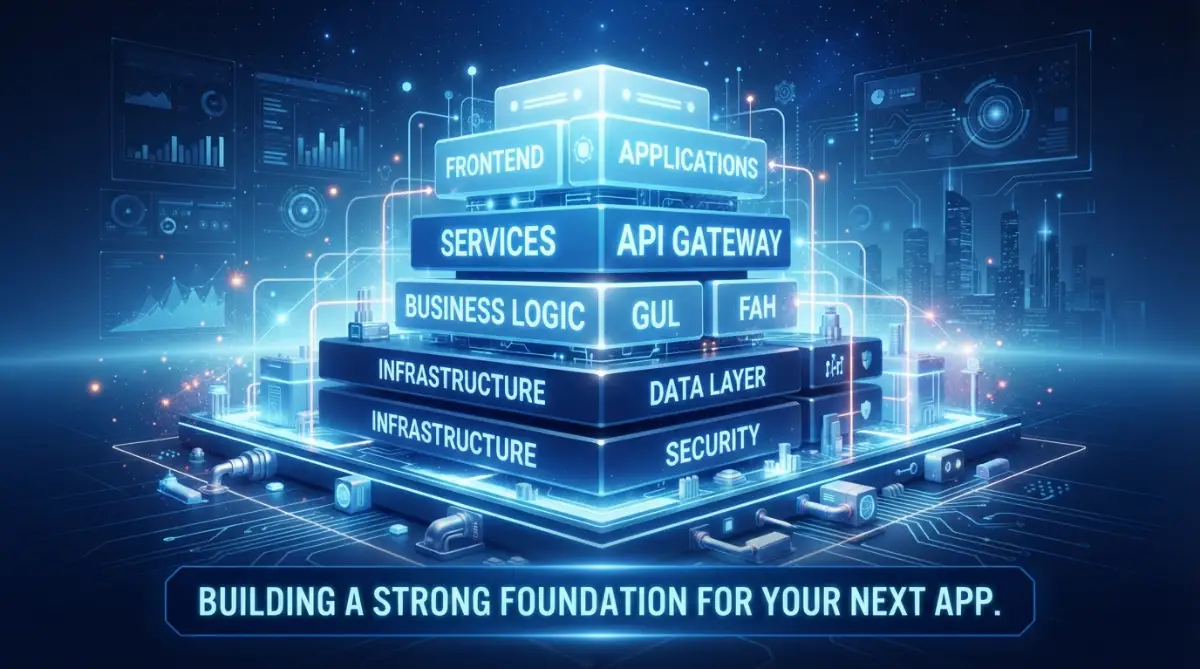
When I finally started to understand things, I realized that architecture is like the bones of a body. Without bones, a body is just a pile of skin and muscle that can't move. In software, architecture is the plan that tells you where everything goes. It is about making choices early so that you don't have to fix massive mistakes later. I once built a whole project without a plan, and I had to delete everything and start over. It was a painful lesson, but I learned that structure is your best friend.
Think of it like planning a kitchen. You need the stove near the gas line and the sink near the water pipes. In software, you need your data to stay in one place and your visual design to stay in another. This keeps things clean. When you need to change something later, you won't break the whole system. Keeping things separate is a secret that many pros don't explain simply enough.
I like to use a "layered" approach. Imagine a cake. The bottom layer is your data—the stuff you want to save forever. The middle layer is the logic—the rules of how your app works. The top layer is what the user sees. If you keep these layers from getting mixed up, your life becomes much easier. It sounds simple, but it takes practice to stick to it.
Choosing Your Toolbox Without the Headache
Choosing tools is where most people get stuck for weeks. There are thousands of options, and everyone claims theirs is the best. I used to spend days comparing tools instead of actually building. It was a massive waste of time. Now, I tell people to keep it simple. You don't need the fanciest tools to build something great. You just need tools that you understand and that have a good community.
A good text editor is your primary weapon. It should feel comfortable and not get in your way. Then, you need a way to track your changes. Think of this like a "save game" feature in a video game. If you make a mistake, you can just go back to the last version. This one tool saved my sanity more times than I can count. I remember a time I accidentally deleted a whole day's work, but because I had a backup system, I got it back in seconds.
Pro Tip: I spent way too much time trying to use "professional" tools that were too hard for me. My advice is to start with the simplest tool that does the job. You can always switch to something more complex later as you grow. Don't let the "fancy" stuff slow you down when you are just trying to get your idea off the ground.
Learning the Flow of Logic
Logic is the heart of every app. It is just a series of "if this happens, then do that" statements. It sounds easy, but connecting thousands of these statements can get messy. The trick is to break everything down into tiny pieces. If I want to build a login page, I don't think about the whole thing at once. I think: "How do I check if the box is empty?" then "How do I check if the password is correct?"
Watch this video to see how these logic layers connect in a real project.
Breaking things down makes the big mountain look like a bunch of small hills. I used to look at a huge project and feel defeated. Now, I just look at the next small task. This shift in my mindset changed everything for me. It stopped being a giant scary monster and turned into a fun puzzle. I started to enjoy the process of solving one small piece at a time.
Finding Fresh Coding Ideas That Actually Work
Sometimes the hardest part isn't the coding; it's knowing what to build. I used to sit and wait for a "million-dollar idea" to hit me. It never did. Then I realized that the best ideas come from fixing small problems in your own life. Do you hate how you track your grocery list? Build a simple app for that. Do you want a better way to organize your digital photos? Start there.
You don't have to reinvent the wheel. You can just make a better version of something that already exists. Or, you can combine two things that don't usually go together. Think about an app that combines a weather report with an outfit picker. It's simple, useful, and fun to build. When you build something you actually use, you stay motivated even when things get tough.
Another great way to find ideas is to look at what people are complaining about online. People love to share their frustrations. If you find a group of people who all have the same small problem, you have a perfect idea for a software project. Building for others gives you a sense of purpose that keeps you going during those late-night sessions.
Managing Your Time and Energy
Software development is a marathon, not a sprint. I used to try to work for ten hours straight. By the end, I was making more mistakes than I was fixing. I was exhausted and my work was terrible. Now, I work in short bursts. I take breaks to walk around or grab a snack. It keeps my mind fresh and my heart happy.
You have to protect your energy. If you feel a headache coming on, stop. The code will be there tomorrow. Working while tired is how you create bugs that take three days to fix. I learned this the hard way after staying up all night and breaking my entire database. It took me the whole next weekend to repair what I destroyed in two hours of tired clicking.
Trust your process and be patient with yourself. You are learning a new language and a new way of thinking. It takes time for your brain to rewire itself. Don't compare your "day one" to someone else's "year ten." Everyone you look up to once struggled with the same simple things you are facing right now. We all started at zero.
The Importance of Community and Sharing
One of the biggest mistakes I made was trying to do everything alone. I thought I had to be a "lone wolf" to be a real developer. I was wrong. The software world is built on sharing. When I started asking questions and talking to others, my growth doubled. There are so plenty of kind people out there who love to help.
You don't have to know everything. You just have to know how to ask the right questions. When you share what you are learning, it also helps you understand it better. I started writing down what I learned, and it made the concepts stick in my brain. Plus, it feels great to help someone else who is just a few steps behind you.
Even if your project isn't perfect, show it to someone. The feedback you get is like a shortcut to getting better. I used to be afraid of people seeing my "ugly" code. But once I let go of that fear, I started getting tips that saved me months of work. People care more about what your app does than how perfect the back end looks.
Testing Without the Stress
Testing sounds like a boring chore, but it is actually your safety net. It is about checking if your work actually does what you think it does. I used to skip this part because I wanted to move fast. But moving fast without testing is like driving a car without brakes. You will eventually crash, and it will hurt.
You don't need fancy automated systems at first. Just try to break your own app. Click buttons you aren't supposed to click. Type weird things into the boxes. If it stays standing, you are doing a good job. Over time, you will learn better ways to test, but for now, just being curious is enough. It gives you a sense of pride to know that your creation is solid.
I remember the first time I gave my app to a friend and it didn't crash. It was one of the best feelings in the world. All those hours of struggle finally felt worth it. It wasn't about the code anymore; it was about the fact that I built something that actually worked. That feeling of success is what keeps us coming back to the screen day after day.
Keeping Your Skills Fresh
The tech world moves fast, but the basics stay the same. Don't get distracted by every new "shiny" thing you see on social media. Focus on the core ideas of how software works. Once you understand the foundation, you can learn any new tool very quickly. I spent too much time chasing trends and not enough time learning the basics.
Read books, watch videos, and most importantly, build things. Building is the only way to truly learn. You can watch a thousand hours of tutorials, but you won't be a developer until you build something yourself. It's like learning to ride a bike. You have to get on and peddle, and yes, you might fall a few times.
When you feel stuck, take a step back and look at how far you have come. A month ago, you might not have known what architecture was. Now, you understand how it holds an app together. Celebrate those small wins. They are the fuel that will carry you to the finish line of your biggest projects.
The Power of Documentation
Writing down how your software works is a gift to your future self. I can't tell you how many times I opened an old project and had no idea what I was doing. It felt like someone else had written it. Now, I leave small notes for myself. It's like leaving breadcrumbs so I can find my way back.
This also helps if you ever want to work with someone else. They can read your notes and understand your logic without you having to explain it for hours. It makes you look professional and organized. Plus, it helps clear the clutter in your mind. When it's written down, you don't have to hold it all in your head at once.
I used to think documentation was a waste of time. I wanted to spend every second coding. But I realized that five minutes of writing saves five hours of wondering. It’s about being kind to yourself. Your brain has enough to do without having to remember every single detail of a project from three months ago.
Embracing the Journey
At the end of the day, software development is a creative journey. It is about taking a tiny spark of an idea and turning it into something real that people can touch and use. It is a mix of art and science. There will be bad days, but the good days are incredible. You are building the future, one small piece at a time.
Don't let the fear of making mistakes stop you. Mistakes are just proof that you are trying. Every bug you fix makes you a better developer. Every failed project teaches you something you need for the next one. Keep your head up and keep moving forward. You have the tools, you have the ideas, and now you have the plan.
I am so excited for you to start this process. It changed my life, and I know it can change yours too. It’s not just about the apps; it’s about the person you become while building them. You become a problem solver, a clear thinker, and a creator. That is the true magic of software development.
Setting Realistic Goals
One of the best things I did was stop trying to build "the next big thing" right away. I started with tiny goals. My first goal was just to make a button change color. When it worked, I felt like a genius. Then I tried to make a list of names appear. Small goals keep you moving without feeling overwhelmed.
If you set your goals too high, you will get discouraged. If you set them just right, you stay in the "flow." This is where you are challenged but not defeated. It's the sweet spot for learning. I always try to find that balance in every project I start. It makes the work feel like play.
Remember, your first few projects don't have to be perfect. They just have to be finished. A finished, messy project is worth a thousand perfect ideas that never got started. Just get it done, learn from it, and move on to the next one. That is the secret to real progress.
Final Thoughts on Starting Right
You now have a solid understanding of how to approach software development. We talked about the struggle, the importance of a plan, the tools you need, and how to find ideas. This is your foundation. Use it well. Don't rush, and don't be too hard on yourself.
Take the first step today. It doesn't have to be a big step. Just decide on one small thing you want to build. Maybe it's just a simple landing page or a basic calculator. Whatever it is, start it now. The world is waiting for what you are going to create. You have everything you need to succeed.
I hope this guide helps you avoid the mistakes I made. I want your journey to be smoother and happier than mine was. Stay curious, stay patient, and most importantly, stay coding. You’ve got this, and I’m rooting for you every step of the way.
Mastering the Hidden Secrets of Great Builders
Now that you have your basics ready, it is time to look at how the experts really work. It is not just about writing lines of text on a screen. It is about how you think and how you manage your daily energy. I used to think that the best developers were just faster at typing. I was wrong because the real skill is in thinking clearly before your fingers ever touch the keys.
One secret I learned is the power of clean thinking. Before you build a new feature, sit away from your computer. Take a notebook and draw how the data moves from one place to another. When you have a clear map in your head, the building part becomes easy and fun. This keeps you from getting lost in your own creation later on.
I also found that naming things correctly is a superpower. If you give a part of your app a name that makes sense, you won't have to guess what it does next week. It’s like labeling boxes in your garage. If the label says "Winter Blankets," you know exactly what is inside without opening it. In the same way, clear names make your work easy to read for everyone.
Another expert tip is to embrace the small wins. Don't try to build a giant system in one day. Focus on making one tiny thing work perfectly. This builds your confidence and keeps your momentum going. When I feel stuck, I always go back to the smallest possible task and finish it first.
Keeping Your Mind Sharp and Ready
To stay good at this for a long time, you need to manage your mental battery. Think of your brain like a high-tech power system. If you push it too hard without a break, it will shut down. I have learned to treat my focus like a limited resource that I must use wisely every single day.
You can learn a lot from how other systems manage energy. For example, when choosing between different power sources like lead acid vs lithium ion solar batteries, people look for what lasts longest and works best. Your brain is the same way; you need to choose the habits that give you the most long-term power. Resting and sleeping well are not signs of being lazy; they are part of your job.
Also, don't be afraid to use modern helpers to speed up your work. Learning how to master the art of writing AI prompts can save you hours of searching. These tools are like having a smart assistant by your side. They don't do the work for you, but they make your path much smoother and faster.
I always tell my friends to stay curious. The moment you stop wanting to learn is the moment you stop growing. Read blogs, look at how others build their apps, and try new things. Even if you never use a specific tool, knowing how it works makes you a better problem solver in the end.
Building for the Long Run
When you build something, think about the person who will use it. Most people forget this and focus only on the tech. But the best apps are the ones that make life easier for someone else. I try to put myself in the shoes of a user every time I design a new screen or button.
You should also plan for things to go wrong. It sounds negative, but it is actually very smart. If you expect a problem, you can build a safety net. This is why MDN Web Docs is such a great place to visit. They show you the right way to do things so your work stays strong and doesn't break easily.
Lastly, remember that your work is a reflection of your growth. Every project you finish is a step toward becoming a master. I look back at my old work and smile because I can see how much I have learned. That growth is the most rewarding part of this whole journey, and it belongs only to you.
Image Here-----------------
The Traps That Can Break Your Spirit
Even with a good plan, there are traps that can catch you off guard. One of the biggest mistakes I see is over-complicating things. People love to add fancy features that nobody actually needs. They spend weeks building something complex, and in the end, it just makes the app slower and harder to use.
I call this "The Shiny Object Trap." You see a new tool or a cool animation and you want to use it right away. But if it doesn't help the user solve their problem, it shouldn't be there. I have wasted so much time building things that I eventually had to delete. It hurt my heart to throw away that work, but it was the right thing to do for the project.
Another silent killer is ignoring your health. I used to sit for eight hours without moving. My back started to hurt, and I felt tired all the time. If you don't take care of your body, your work will suffer. It’s like trying to build a house when you are too weak to lift a hammer. You have to stay strong to do your best work.
If you find yourself struggling with physical pain from sitting too long, you are not alone. Many people have to learn how to stop back pain with gentle home stretches. Taking ten minutes to move your body can change your whole mood. It keeps your mind clear and helps you get back to your project with fresh energy and focus.
Financial and Safety Pitfalls to Watch For
Sometimes the traps are not in the code, but in how you manage your project's life. Many people start a big project and run out of money or time. They don't realize that building software can be expensive if you don't plan your budget. I have seen great ideas die because the creator didn't think about the costs of servers or tools.
If you need a bit of help to get your project moving, be careful where you look for funds. Some people look into the best credit unions for easy unsecured loans to get their dream started. But always make sure you have a real plan to pay it back. Don't let your dream turn into a debt nightmare that keeps you up at night.
You also need to think about the "what ifs" in life. What happens if you get sick and can't work on your project for a month? This is why it is smart to understand how much disability insurance you need. It sounds boring, but it is a safety net that lets you take risks with your creative ideas without being afraid of the future.
Lastly, never stop asking for help. I used to be too proud to admit I was stuck. I would bang my head against a wall for days. Then I realized that places like Stack Overflow are full of people who have already solved my problem. Asking a question is not a sign of weakness; it is a sign that you want to move forward and learn.
Your Path to a Bright Future
This journey you are on is one of the most exciting things you can do. You are learning to create something out of nothing. It is a path filled with challenges, but also with incredible joy. I want you to look at every bug and every problem as a chance to get smarter and stronger.
Remember that you are not alone in this. There are millions of us building together. We all share the same frustrations and the same wins. When you finish your first big app, you will feel a sense of pride that nobody can take away. It is a badge of honor that shows you have the grit to see something through to the end.
I want you to keep this ultimate software development guide in your bookmarks. Refer back to it whenever you feel lost or overwhelmed. It is your map for the days when the forest feels a bit too thick. You have the heart of a builder, and I know you are going to do amazing things.
A Quick Action Plan for Tomorrow
To make sure you don't just read this and forget it, here is a simple plan. Tomorrow, don't try to change your whole life. Just pick one small thing from this guide and do it. Maybe you spend ten minutes drawing a plan for your next feature. Or maybe you finally clean up those messy names in your current project.
Consistency is the secret sauce of success. Doing a little bit every day is much better than doing a lot once a week. It’s how you build habits that last a lifetime. I promise that if you stick with it, everything will start to click. One day, you will look at a complex system and realize you understand exactly how it works.
I truly believe that anyone can learn this if they have the right heart and the right plan. You have both. I have made many mistakes on my way, but they all led me here. My hope is that my stories help you find your way a little bit faster and with more smiles along the way.
My final message to you is simple: start where you are, use what you have, and do what you can. I have seen so many people wait for the "perfect" time that never comes. I started my journey with a broken laptop and a lot of dreams. If I could make it work, I know you can too, so go out there and build something wonderful today!
Common Questions About Building Software
How do I know if my app idea is good?
A good idea is one that solves a real problem for you or someone else. If you find yourself saying "I wish there was an app for this," you have found a great starting point. Don't worry about being unique; focus on being helpful and easy to use for your friends or family.
Which language should I learn first?
The best language to learn first is the one that lets you build what you want right now. If you want to make websites, try HTML and CSS. If you want to make phone apps, look into tools that help with mobile design. Most languages share the same basic logic, so once you learn one, the others become much easier to pick up.
How do I stay motivated when my code doesn't work?
Motivation comes and goes, but habits stay. When you feel frustrated, take a walk or talk to a friend. Remember why you started in the first place. Seeing a small part of your app finally work is usually enough to give you a fresh burst of energy to keep going.
Is it too late to start learning software development?
It is never too late to learn a new skill that makes you happy. I have seen people start in their 40s or 50s and become amazing builders. Your life experience actually gives you a better perspective on what problems need solving. The tech world always needs fresh eyes and new ways of thinking.
Do I need a fancy computer to start?
You definitely do not need an expensive machine to start. Most basic laptops are more than enough to learn the basics of coding and design. As you grow and start building very complex systems, you might want an upgrade, but for the first year or two, use what you already have and save your money.
Disclaimer:
This article is for informational purposes only. Software development involves technical challenges and financial considerations that can vary based on individual circumstances. Always do your own research or consult with a professional before making major financial or career decisions. I am sharing my personal experiences to help guide you, but results may vary from person to person.