
The Day My Quiet Paycheck Stopped Feeling Safe
I still remember the cold sweat that broke out on my skin when my close friend had a sudden accident. He was a healthy office worker, much like me, who thought nothing could go wrong. Then, in a single afternoon, a bad fall left him unable to work for months.
I watched him struggle to pay his basic rent and buy simple groceries. That scary moment made me realize how easily my own life could fall apart without a steady paycheck. It made me look at my own bank accounts with a feeling of deep worry.
Most of us never want to think about getting sick or hurt. We plan our weekly budgets around the idea that our jobs will always be there. Yet, the emotional weight of not knowing how you would pay your bills next month is incredibly heavy.
When you lose your ability to earn, you do not just lose money. You lose your sleep, your peace of mind, and your feeling of safety in your own home. The constant worry about debt collectors calling your phone can break even the strongest person.
I wrote this guide because I want to help you avoid that terrible stress. We will walk through the exact steps to find your financial safety number together. By the end of this read, you will know exactly how to shield your home from the unexpected.
Getting Real With Your Monthly Survival Number
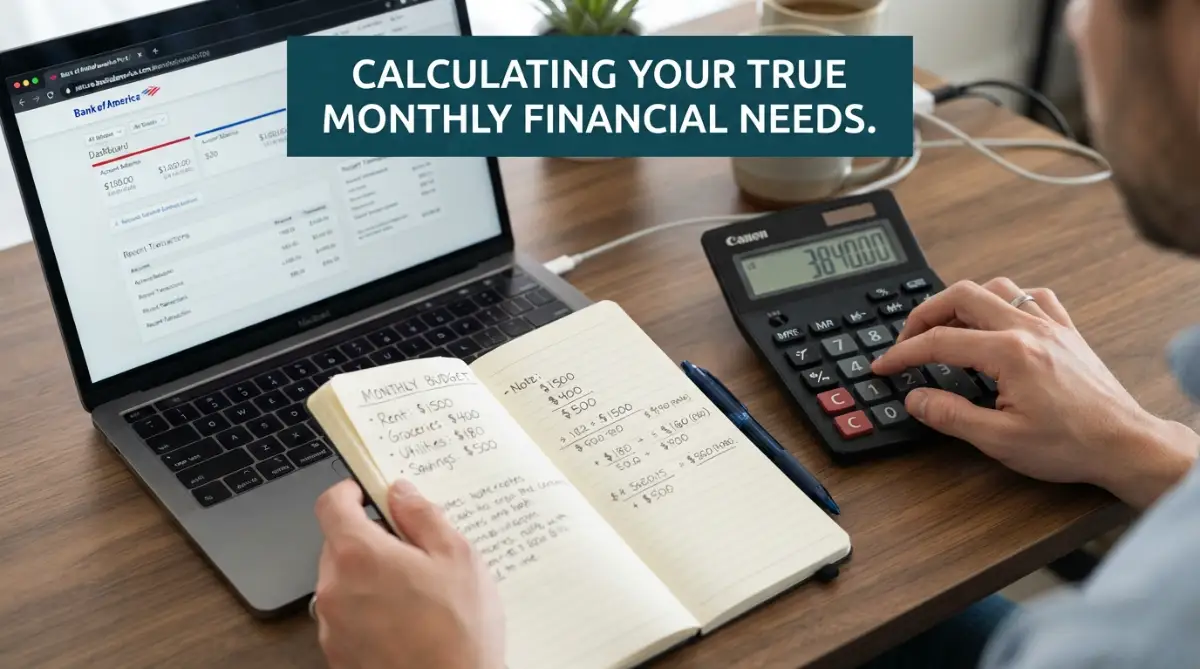
The very first action you must take is to find your true monthly cost of living. This is not the budget you use when you are eating out and enjoying weekend trips. This is your survival budget, which includes only the things you absolutely must pay to live.
Start by opening your bank statements from the last three months. Look at every single dollar that went out of your account. We need to separate these costs into two columns: your absolute needs and your luxury wants.
Your needs are the items that keep a roof over your head and food on your table. Your luxury wants are the subscription services, dining out, and shopping trips that you can instantly stop. Let us look at what goes into your survival column:
- Your mortgage or monthly rent payment
- Basic utility bills like power, water, and heating
- Basic groceries and household hygiene items
- Car payments, auto insurance, and fuel
- Minimum payments on your credit cards or student loans
- Essential medical insurance premiums and regular prescriptions
Once you add these up, you will have a clear monthly base number. This number is the absolute minimum amount of money you need to survive each month. Write this down on a piece of paper because it is the foundation of our entire plan.
The Surprise Bills That Creep Up on You
Many people make the mistake of only calculating their basic rent and food. They forget that being sick or hurt actually brings new, unexpected costs. Your medical bills will likely go up at the exact same time your paychecks stop.
You must think about your insurance deductibles and co-pays. If you are staying at home to recover, your utility bills for heating and cooling will likely rise. You might also need to pay for extra help, like grocery delivery or home care assistance.
I always suggest adding a small safety buffer to your survival number. Adding an extra ten or fifteen percent to your base calculation is a smart move. This little buffer makes sure you are not left scrambling when a surprise bill arrives.
Knowing Your Real Income Gap
Now that we know what you spend, we must look at what you actually bring home. Your gross income is the big number on your job contract before taxes are taken out. Your net income, or take-home pay, is what actually lands in your bank account.
Most disability insurance policies do not pay you your full past salary. They usually pay between sixty and seventy percent of your gross income. This means there will always be a gap between your normal pay and your insurance pay.
Our goal is to make sure your insurance payout is large enough to cover your survival number. If your survival number is higher than what a standard policy offers, you have an income gap. We must close this gap to keep your family safe.
Myth vs. Reality: Your Work Policy Might Not Be Enough
A lot of workers think they are fully safe because their employer offers group disability insurance. I used to think the exact same thing until I read the fine print of my benefits package. The reality of workplace policies can be quite shocking when you look closely.
First, if your employer pays the premiums for your policy, your eventual benefits will be taxed. This means a sixty percent benefit can easily turn into forty percent after the government takes its share. That is a massive drop in your actual buying power.
Second, group policies are tied directly to your job. If you get laid off, quit, or change companies, you lose that coverage instantly. Relying solely on your employer leaves you vulnerable if your career path changes.
If you want to understand the exact difference between these policy types, look at this breakdown video. It explains how private coverage can protect you where work plans fail.
Subtracting Your Existing Safety Nets From the Equation
Before you buy any extra coverage, you should look at what safety nets you already have. Do you have a dedicated emergency fund sitting in a high-yield savings account? If so, how many months of basic living costs can it cover?
If you have six months of savings, you can choose a policy with a longer waiting period. The waiting period is the time you must wait before the insurance company starts paying you. A longer waiting period will make your monthly insurance price much cheaper.
You should also look at other sources of household income. Can your partner's salary cover a portion of your monthly survival bills? If yes, you can safely lower the amount of disability coverage you need to buy.
Pro Tip: I once assumed my basic savings would save me if I ever got hurt. I learned the hard way that medical recovery takes much longer than we think, and savings dry up fast. Always buy a policy with a waiting period that matches your actual emergency fund so you never run out of cash.
Choosing Between Short-Term and Long-Term Protection
Disability plans come in two main types: short-term and long-term coverage. Short-term policies usually start paying out within a week of your injury. However, they only pay benefits for a few months, up to a maximum of one year.
Long-term policies have longer waiting periods, often around ninety days. The great thing is that they can pay you for several years, or even until you reach retirement age. A serious illness can keep you out of work for years, which makes long-term plans incredibly valuable.
I recommend prioritizing long-term coverage if your budget is tight. You can usually handle a short-term gap with savings or minor lifestyle changes. A long-term disability, however, is what can completely ruin your financial future if you are unprepared.
The Own-Occupation Definition Checklist
When shopping for a policy, you must pay close attention to how the insurer defines "disabled." This definition is the single most important part of your contract. It determines whether the company will actually pay you when you file a claim.
Some policies use the term "Any Occupation." This means they will only pay you if you cannot work any job at all. If you are a surgeon who hurts your hand, they might refuse to pay because you could still work as a retail cashier.
The best option is to look for an "Own Occupation" policy. This type pays out if you cannot perform the specific duties of your current job. It is more expensive, but it offers the absolute best protection for skilled professionals.
The Final Math: Putting Your Numbers Together
Let us put all these steps together into a simple, real-life math example. Imagine a worker named Sarah who brings home four thousand dollars a month. Her absolute survival budget is twenty-five hundred dollars a month.
Sarah's employer provides a basic group policy that covers sixty percent of her income, which is twenty-four hundred dollars. However, since her employer pays the premium, that money will be taxed. After taxes, she might only get eighteen hundred dollars.
This leaves Sarah with a monthly gap of seven hundred dollars to meet her survival needs. To fix this, Sarah decides to buy a small, individual policy to cover that seven hundred dollar gap. Now, she can rest easy knowing her bills are fully covered.
By taking these steps, you take control of your financial destiny. You no longer have to worry about the "what ifs" of life because you have a solid plan. Take some time this weekend to sit down with your bank statements and run these numbers for your own home.
Advanced Strategies to Maximize Your Income Protection
Buying a basic policy is only the first step in protecting your family. If you want to make sure your financial safety net works when you need it, you must use advanced strategies. These expert methods will help you keep your coverage strong for many years.
To explore more financial safety options, you can read professional insurance reviews and planning guides to build a solid base. Let us look at the smart adjustments that will make your safety net truly bulletproof.
Securing Your Future With the Inflation Shield
A check that feels large today will not buy the same amount of groceries ten years from now. Inflation slowly eats away at your purchasing power every single year. That is why you should look into a Cost of Living Adjustment (COLA) rider.
This special feature automatically increases your monthly benefit amount while you are disabled. It matches the rising costs of basic goods so you never have to worry about falling behind. It is a highly effective way to protect your long-term wealth.
The Power of the Future Purchase Guarantee
Your income will likely grow as you gain more experience in your career. If your salary goes up, your basic insurance policy will no longer cover your new lifestyle. A future purchase option rider lets you buy more coverage later without taking another medical exam.
This is incredibly important if you develop health issues as you age. The insurance company cannot deny you the extra coverage, even if your health has declined. It keeps your policy matching your growth.
Paying Your Premiums the Smart Way
The way you choose to pay for your policy can change your tax bill later. If you use your personal, after-tax money to pay your monthly premiums, your benefits will be completely tax-free. This simple trick saves you thousands of dollars when you need the cash most.
You should also check how your health plan connects with your income protection. Knowing your limits will help you avoid paying double for the same type of coverage. For a deeper understanding of your current healthcare out-of-pocket costs, check out our guide on understanding out of pocket health costs.
Setting Up Regular Financial Audits
Your life does not stay the same, and your insurance plan should not either. You should sit down and review your numbers at least once every two years. Big life events like having a baby, buying a house, or getting a raise require a fresh calculation.
If you do not update your plan, you might find yourself with a massive gap in your coverage. A quick check of your budget ensures your safety net stays perfectly aligned with your real life.
I
The Danger Zones: Painful Mistakes That Cost Families Everything
Many people make simple mistakes when they try to set up their income protection. These errors often seem harmless at first, but they can destroy your financial life during a crisis. Let us look at the most dangerous pitfalls so you can avoid them completely.
Assuming the Government Will Save You
The biggest mistake is relying entirely on federal programs like Social Security Disability Insurance. Many workers assume the government will automatically pay them if they get sick. According to official government social security disability rules, the application process is incredibly long and difficult.
Over sixty percent of first-time claims get denied by the state. Even if you do get approved, the monthly check is rarely enough to pay basic rent. Relying on this system as your main plan is a recipe for financial disaster.
Overlooking Policy Exclusions and Hidden Limitations
Every insurance contract has a list of things they simply will not pay for. If you do not read this list carefully, you might get a terrible surprise when you try to file a claim. You need to know exactly what your policy leaves out before you sign the contract.
Some plans will not cover injuries from certain hobbies, pre-existing conditions, or mental health struggles. To see how these rules work in the broader insurance world, read about policy exclusions that can catch you off guard.
Failing to Address the Coverage Gaps Early
Leaving your income exposed is just as risky as ignoring a leak in your roof. Minor issues in your planning can add up until they ruin your entire monthly budget. You must act quickly to find and seal these cracks before a real emergency happens.
If you want to protect your lifestyle, you must learn to identify these blind spots. You can read about how to avoid dangerous coverage gaps to make sure your household is completely safe.
These tiny planning errors are very similar to unexpected tech glitches in your home. They seem small at first, but they quickly grow into major headaches if you do not fix them right away.
Waiting Too Long to Buy Coverage
Your age and health determine how much you will pay for your policy. If you wait until you are older or sick, the price of coverage will skyrocket. In some cases, you might not be able to buy a policy at all.
According to disability statistics and likelihood data, one in four today's young workers will face a disability before retirement. Buying your policy while you are young and healthy locks in the lowest possible rates. It is the best way to save money while protecting your future.
Your Action Plan for Tomorrow
Protecting your paycheck does not have to be a confusing task. By taking small, simple steps today, you can build a wall of safety around your family. Start by writing down your monthly expenses and checking what your job already offers.
If you need extra guidance, you can consult official state insurance resources to find licensed professionals in your area. They can help you compare private plans and find the right fit for your budget.
Always keep a close eye on your household debt as well. If you want to keep your stress levels low, look into tips for managing your debt obligations safely while you build your safety net.
I spent years worrying about what might happen if my income suddenly stopped. When I finally took action and calculated my own safety needs, the constant worry vanished completely. I want you to feel that same peace of mind today, so please take a moment to look at your budget and protect your future.
Answers to Your Toughest Disability Insurance Questions
How long does it take for disability insurance payments to start?
Most long-term policies have a waiting period of ninety days before the benefits begin. You will need to use your personal emergency savings or short-term coverage to pay your bills during this time.
Can I have more than one disability insurance policy?
Yes, you can combine an employer-sponsored group plan with a private individual policy to cover your entire income. The total benefits from all your policies cannot exceed your actual pre-disability earnings.
Is a medical exam always required to get coverage?
Many traditional policies do require a basic health checkup to determine your monthly premium rates. However, some companies offer simplified-issue plans that only require you to answer a few health questions online.
What happens to my policy if I change jobs?
If you have a private individual policy, your coverage will stay with you no matter where you work. If you only have a group plan through your employer, that coverage will end the day you leave the company.
Disclaimer
This article is for informational and educational purposes only. It does not constitute professional financial, legal, or insurance advice. Insurance policies and regulations vary by state and individual situation. Always consult with a licensed insurance agent or certified financial planner before making any purchasing decisions or changing your existing coverage.