The Invisible Wall: Why Your Homeownership Dream Feels Stuck
For years, I felt stuck renting a tiny apartment while watching my savings slowly grow. Every time I saved a few thousand dollars, the average house price seemed to jump even higher. It was incredibly frustrating to feel like I was doing everything right but still getting nowhere because of that daunting twenty percent down payment rule.
Do you feel like you are running on a treadmill that never stops? You save every penny you can. You skip the fancy dinners. You stay in your small apartment, dreaming of a backyard.
Every month, you check your bank balance. You want to buy a house, but that "twenty percent" number feels impossible. It hangs over your head like a dark cloud. You see house prices go up while your savings stay almost the same.
It is heartbreaking to feel like you are doing everything right but still failing. You might feel like the dream of owning a home is only for the rich. This constant stress can keep you awake at night. You wonder if you will be a renter forever.
Many people believe they must wait until they have a huge pile of cash. They think the "twenty percent rule" is a law. But what if I told you that this wall is mostly in your head? What if the path to your front door is actually much shorter than you think?
Let’s talk about why this myth exists and how it is hurting your future. Most importantly, let's look at how you can break free from it today. You deserve to build equity instead of paying your landlord’s mortgage.
Why the Old Twenty Percent Rule is a Total Myth
Many people think you need twenty percent down because that is what their parents did. Years ago, it was the standard. Banks wanted to make sure you were serious. They wanted you to have "skin in the game."
But the world has changed. The real estate market does not look the same as it did thirty years ago. Today, there are dozens of ways to buy a home with much less money.
The idea that you must have twenty percent is simply outdated advice. It is a ghost from the past that keeps good people from buying homes. When you wait to save that much, you might miss out on years of price growth.
If you wait five years to save another $40,000, the house might cost $100,000 more by then. You are chasing a target that keeps moving. This is why understanding modern options is so helpful.
Still think you need a massive pile of cash to buy a home? Watch this clear video explaining why the old rules no longer apply before reading about your best loan options below!
The Secret Advantage of FHA Loans
One of the most popular ways to beat the myth is the FHA loan. This is a government-backed loan designed for people just like you.
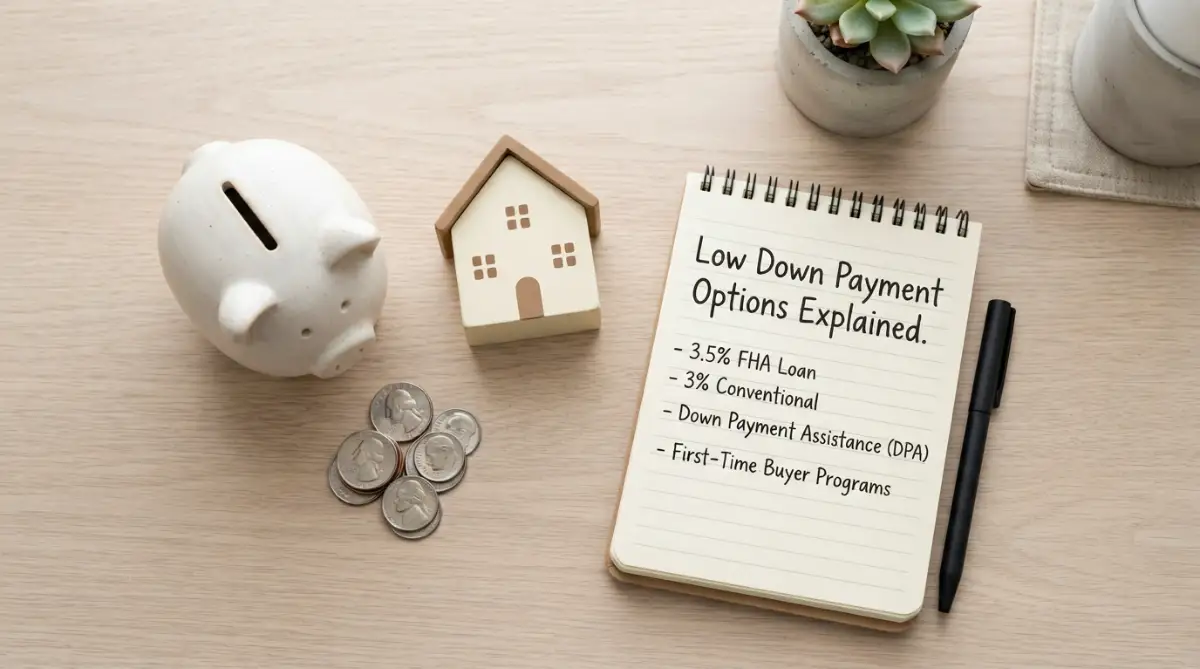
With an FHA loan, you can buy a home with as little as 3.5 percent down. That is a huge difference! On a $300,000 home, twenty percent is $60,000. But 3.5 percent is only $10,500.
Think about that for a second. You could be $49,500 closer to your dream than you thought. These loans also have more flexible credit score requirements.
It makes homeownership possible for people who are just starting their careers. You don't need to be a millionaire to get the keys to your own place.
Conventional Loans with Low Down Payments
You might think that "conventional" loans always require a big down payment. That is another part of the myth.
Many banks now offer conventional loans with only 3 percent down. These are often called "Conventional 97" loans.
These programs are great if you have a good credit score. They often have lower long-term costs than FHA loans.
You can even get rid of your private mortgage insurance (PMI) later on. This happens once you reach twenty percent equity in your home. You don't have to pay that big chunk of money upfront to get started.
The Hero’s Benefit: VA Loans
If you have served in the military, you have a powerful tool at your disposal. The VA loan is one of the best ways to buy a home.
In most cases, a VA loan requires zero percent down. Yes, you read that right. You can walk into a home with no down payment at all.
There is also no monthly mortgage insurance required for VA loans. This can save you hundreds of dollars every month.
It is a way for the country to thank you for your service. If you are a veteran or active duty, this myth should never stop you.
Living in Rural Areas? Try the USDA Loan
There is another "zero down" option that many people forget. The USDA loan is for homes in specific rural and suburban areas.
The goal is to help develop these communities. Like the VA loan, it offers 100% financing.
You do not have to be a farmer to get this loan. Many quiet suburbs actually qualify for USDA funding.
It is a fantastic way to get a home without a huge cash pile. You just need to check the map to see if your target area qualifies.
Understanding Private Mortgage Insurance (PMI)
When you put down less than twenty percent, you usually have to pay PMI. Many people are afraid of PMI. They think it is "wasted money."
But let’s look at it logically. PMI is the tool that allows you to buy the home now.
Without PMI, the bank would not take the risk of a low down payment. Think of PMI as a small monthly fee for the privilege of owning a home early.
It is often much cheaper than the amount rent goes up every year. Once your home value grows, you can often cancel the PMI anyway.
Myth vs. Reality: A Quick Comparison
To help you see the truth, let’s compare the old myth with the new reality.
FeatureThe 20% MythThe Modern RealityCash NeededHuge ($50k - $100k+)Low ($5k - $15k)Time to Save5 to 10 years1 to 2 yearsCredit ScoreMust be perfectFlexible optionsMarket EntryDelayedImmediateMonthly CostLower paymentSlightly higher (includes PMI)
As you can see, the modern reality is much more accessible. You trade a slightly higher monthly payment for years of homeownership.
The Cost of Waiting Too Long
Waiting to save twenty percent has a hidden cost. It is called the "opportunity cost."
While you are saving, home prices usually go up. If home prices rise by 5 percent in a year, a $300,000 home now costs $315,000.
You just lost $15,000 in equity you could have had. You also spent another year paying rent.
Rent is a 100 percent interest rate. You get nothing back when you move out. Buying early with a small down payment lets you start building wealth today.
How to Start Your Journey Today
You don't need to have all the answers right now. The first step is to change your mindset.
Stop telling yourself that you can't afford a home. Instead, start asking how you can afford it with the cash you have.
Talk to a local mortgage professional. Ask them about low down payment programs in your state.
Many states even have "Down Payment Assistance" programs. These can provide grants or low-interest loans to help with your initial costs.
Is a Low Down Payment Right for You?
Every person’s situation is different. You should look at your monthly budget.
Can you handle a slightly higher mortgage payment? If the answer is yes, then a low down payment is a great choice.
It keeps more cash in your pocket for emergencies. If you spend every dime you have on a 20% down payment, you are "house poor."
Keeping some savings for repairs or furniture is a smart move. It gives you a safety net after you move in.
Common Questions About Small Down Payments
1. Will my offer be rejected if I don't put 20% down?
Not necessarily. Sellers mostly care about the final price and your ability to close. A strong pre-approval letter is more important than your down payment size.
2. Are interest rates higher for low down payments?
Sometimes they are slightly higher, but not always. FHA loans often have very competitive rates compared to conventional loans.
3. Can I use gift money for my down payment?
Yes! Many loan programs allow family members to give you a "gift" for your down payment. This can help you reach your goal even faster.
The Power of Equity Growth
Equity is the difference between what your home is worth and what you owe. When you own a home, your wealth grows in two ways.
First, you pay down the loan balance every month. Second, the value of the home usually goes up over time.
If you put 3 percent down on a $300,000 home, and the value goes up to $330,000, you just made $30,000.
That is a huge return on your small investment! This is how the middle class builds wealth in this country.
Building Your Savings Plan
Even if you don't need twenty percent, you still need some money. It is good to aim for 3 to 5 percent plus closing costs.
Closing costs are the fees you pay to finish the home purchase. They usually run about 2 to 3 percent of the home price.
Start a dedicated "House Fund" in your savings account. Set up an automatic transfer every payday.
Even $200 a month adds up over time. You will be surprised how fast you reach a 3 percent goal compared to a 20 percent goal.
Finding the Right Home for Your Budget
When you use a low down payment, you should be careful not to overbuy. Stay within a price range where the monthly payment is comfortable.
Use an online mortgage calculator to test different scenarios. Include the cost of taxes, insurance, and PMI.
Knowing your numbers will give you confidence. You won't feel overwhelmed when it is time to sign the papers.
Trusting the Process
Buying a home is a big step, but it doesn't have to be a scary one. The system is set up to help people get into homes.
The myths are often spread by people who haven't bought a home in a long time. Listen to experts who know the current rules.
You have the power to change your living situation. You have the ability to stop renting and start owning.
The twenty percent myth is just a hurdle. Now that you know the truth, you can simply step over it.
Your Future Self Will Thank You
Imagine yourself sitting on your own porch next year. You are planting flowers in a garden that belongs to you.
You are not worried about your landlord raising the rent. You are not worried about moving again.
This peace of mind is worth more than a perfect bank balance. By choosing a low down payment, you are choosing your future.
Don't let an old myth steal your happiness. Take the first step today and see what is possible.
Final Thoughts on the Down Payment Myth
We have covered a lot of ground today. We looked at FHA, VA, USDA, and Conventional options.
We talked about why waiting can actually cost you more money. We looked at the reality of PMI and how it helps you.
The most important thing is that you now know you have choices. You are not trapped by the number twenty.
Your journey to homeownership is unique. Use the tools available to you and make your dream a reality.
Secrets to Winning the Home Buying Game with Less Cash
Now that you know the 20% rule is a myth, you might wonder how to make a low down payment work even better. Most buyers think the only way to get a house is to save, save, and save.
But there are "insider secrets" that pro real estate investors use every day. These strategies help you keep more money in your pocket while still securing a great deal.
One of the best ways to reduce your upfront costs is through seller concessions. This is a fancy term for asking the seller to pay for some of your closing costs.
In many markets, a seller might be willing to pay 3% of the purchase price toward your fees. This can cover things like title insurance, appraisals, and property taxes.
If you use a 3% down payment loan and get a 3% seller concession, your out-of-pocket cash drops significantly. It allows you to buy a home with almost nothing but the initial down payment.
Another powerful tool is Down Payment Assistance (DPA) programs. Many people think these are only for very low-income families, but that is often not true.
There are thousands of programs across the country offered by local governments and non-profits. Some provide grants that you never have to pay back.
You can find a list of local home buying programs and grants through official government resources. Checking these can literally put thousands of dollars in your pocket for free.
To make these programs work, you need to be prepared before you even start looking at houses. Knowing the pre-approval secret you need is a big part of this preparation.
A strong pre-approval tells the seller that your low down payment is not a risk. It shows them that a bank has already checked your math and approved your plan.
You should also look into Lender Credits. This is when the bank pays some of your closing costs in exchange for a slightly higher interest rate.
While your monthly payment goes up a little, the cash you save today can be used for home repairs. This is a great move if you are buying a "fixer-upper" that needs immediate attention.
For long-term success, you must also focus on your debt-to-income (DTI) ratio. This is just as important as your down payment amount.
Lenders want to see that your total monthly debts are not too high compared to your income. Paying off a small credit card balance can sometimes help you qualify for a much better loan than adding $5,000 to your savings.
Think of your home purchase as a marathon, not a sprint. Using these advanced tips keeps you from being exhausted by the time you cross the finish line.
You want to move into your home with a smile, not with an empty bank account. These "pro" moves make that possible for anyone.

Traps and Pitfalls: Where Most Low-Down-Payment Buyers Go Wrong
Buying a home with a small down payment is a smart move, but it has risks if you aren't careful. Many people get so excited about the low entry cost that they forget the "hidden" dangers.
The biggest mistake is draining your entire savings account. Just because you can buy a home with 3% down doesn't mean you should spend every last dollar on it.
Imagine moving in and your water heater breaks the next morning. If you have zero dollars left, you are in big trouble.
When I bought my first place, I put almost all of my cash into the down payment to make my loan look better. My kitchen plumbing backed up on day three, and I had to put the entire repair bill on a high-interest credit card. I realized then that keeping a small emergency fund is much more important than pushing for a slightly larger down payment.
Always keep an emergency fund separate from your home buying costs. You need a safety net for those unexpected repairs that every home eventually needs.
Another huge error is making big purchases before the loan closes. I have seen people buy a new car or expensive furniture on credit while their mortgage is in "escrow."
When the bank does a final credit check right before closing, they see that new debt. This can cause your loan to be rejected at the last minute.
You must understand what really happens during escrow to avoid these timing mistakes. Escrow is a delicate time where everything must remain stable.
Wait until you have the keys in your hand before you buy that new sofa or car. Your future self will be very glad you waited.
A common emotional mistake is skipping the home inspection. When you are trying to save money, a $500 inspection might feel like a lot.
But skipping it can cost you tens of thousands of dollars later. You must know about critical home inspection red flags before you sign the final papers.
A low down payment means you have less equity in the beginning. You cannot afford to buy a house that needs a new roof or has a cracked foundation.
Some buyers also ignore the total monthly cost. They only look at the mortgage payment but forget about property taxes and insurance.
In some areas, taxes can add hundreds of dollars to your monthly bill. Always ask for a "Total Monthly Payment" estimate from your lender.
Lastly, do not forget to check your legal documents. Even if you feel rushed, you need to know your rights as a buyer.
Sometimes people feel pressured to sign away their protections. Remember that even if you have signed a waiver, you might still have legal rights if something goes wrong.
Avoiding these pitfalls is the difference between a happy home and a financial nightmare. Stay smart, stay patient, and keep your eyes on the long-term goal.
Your Action Plan for Homeownership Success
The path to your new front door is clear now. You don't need a huge pile of cash, but you do need a solid plan.
First, check your credit score tonight. You don't need a perfect score, but a higher score can lower your monthly PMI costs.
Second, find a lender who specializes in low down payment programs. Not every bank offers every program.
Ask them about FHA, USDA, and conventional options for first-time buyers. A good loan officer is like a guide through a thick forest.
Third, start a "Maintenance Fund" right now. Even if you haven't found a house yet, get into the habit of saving for repairs.
This builds the discipline you will need as a homeowner. It also gives you peace of mind during the buying process.
Remember, the "Twenty Percent Rule" was made for a different time. Today, the rule is to buy when you are ready and stay within your budget.
You are making a choice to build your own wealth instead of someone else's. Every mortgage payment you make is like a deposit into a forced savings account.
Years from now, you will look back and be so glad you didn't wait. You will see the equity you have built and the memories you have made.
Homeownership is more than just a financial move. It is about having a place that is truly yours.
It is about stability for your family and a foundation for your future. The myth of 20% shouldn't be the thing that stops you from that joy.
You have the knowledge now. You know the programs, the secrets, and the mistakes to avoid.
The only thing left to do is take that first step. Call a pro, run the numbers, and start your journey.
Your dream home is much closer than you think. Go out there and get it!
When I bought my first place, I put almost all of my cash into the down payment to make my loan look better. My kitchen plumbing backed up on day three, and I had to put the entire repair bill on a high-interest credit card. I realized then that keeping a small emergency fund is much more important than pushing for a slightly larger down payment.
Disclaimer:
The information provided in this blog post is for educational purposes only. I am not a financial advisor or a licensed mortgage lender. Real estate laws and loan programs vary by location and personal financial situations. Always consult with a qualified professional before making any major financial decisions or signing legal contracts. Home buying involves risks, and it is important to perform your own due diligence.