
The Silent Trap of the Unlaunched Dream
Many people do not fail at business because they lack ideas. They fail because they spend too much time preparing and too little time learning from real customers. A simple idea tested in the market is often more valuable than a perfect plan hidden on a computer. The first step is not building everything — it is finding out if anyone actually wants what you offer.
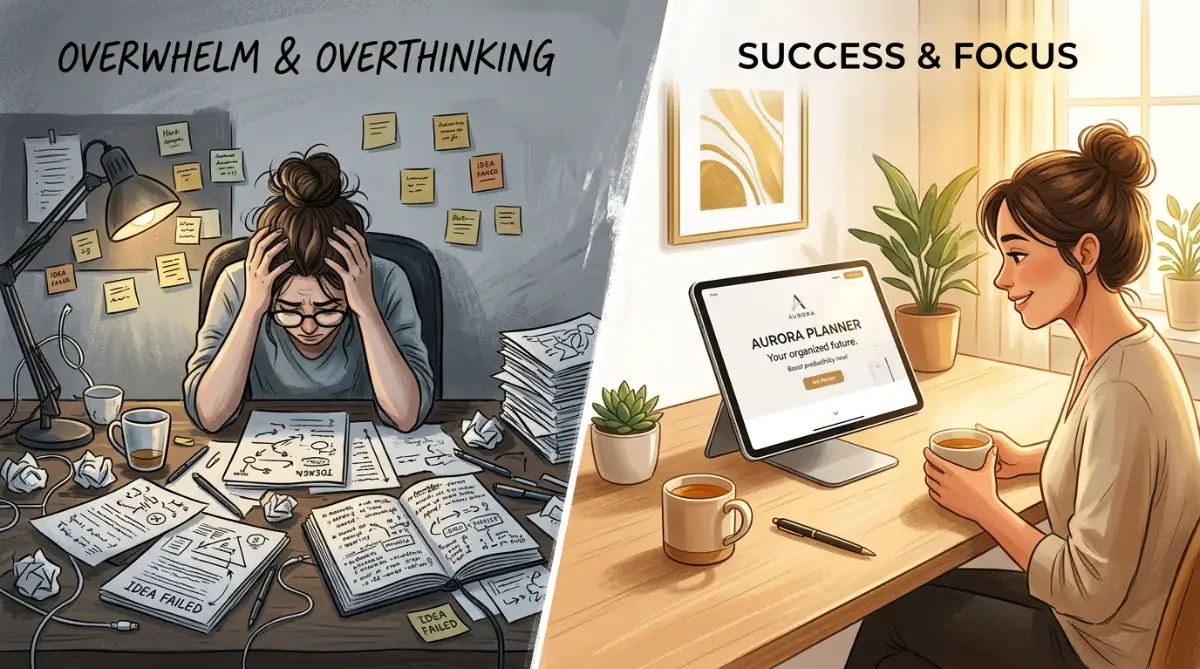
You sit at your desk late at night, staring at a blank screen. Your notebook is filled with great ideas, neat drawings, and bullet points of what your future looks like.
You feel a spark of hope, believing this new idea will finally give you the freedom you want. Yet, weeks pass by, and that notebook stays closed on your shelf.
The domain name you bought in a moment of excitement sits empty, waiting for a website that you have not started building yet.
Key Takeaways: Turn Your Idea Into a Real Test
- A business idea becomes valuable only after real people respond to it.
- Testing before building reduces wasted time, money, and effort.
- A simple first offer can teach you more than months of planning.
- Small customer conversations create the foundation for better products.
Why We Get Stuck Before Day One
To fix a problem, we must first understand exactly why it happens. Let us look at the main reasons why so many bright ideas never make it to a real launch.
The Endless Loop of Preparation
We often mistake preparation for actual progress. You might spend days picking the perfect color theme for your website.
You might spend hours editing a logo or writing a long business plan that no one will ever read. This feels like hard work, but it is actually a clever form of procrastination.
This happens because planning feels safe, while launching feels scary. When you plan, you cannot fail.
When you actually launch, the world can see you, and that brings the risk of rejection. We must learn to separate active work from passive busywork.
The Myth of the Perfect Product
Many creators believe their offer must be completely flawless before anyone sees it. They think they need every single feature, a beautiful dashboard, and dozens of positive reviews on day one.
This mindset is highly dangerous. It causes you to spend months building something in secret without any external input.
If you build in a dark room, you will likely build something that nobody actually wants to buy. Perfectionism is the ultimate killer of new ideas.
The Silent Weight of Imposter Syndrome
You might find yourself thinking, "Who am I to sell this service?" or "Someone else is already doing this much better than me."
These thoughts are incredibly common, especially when you are working alone at night. We look at giant companies and compare our messy beginnings to their polished middles.
This unfair comparison makes us feel small. It makes us hold back our ideas, keeping them hidden away where they are safe from judgment.
The Reality Shift: Testing Over Planning
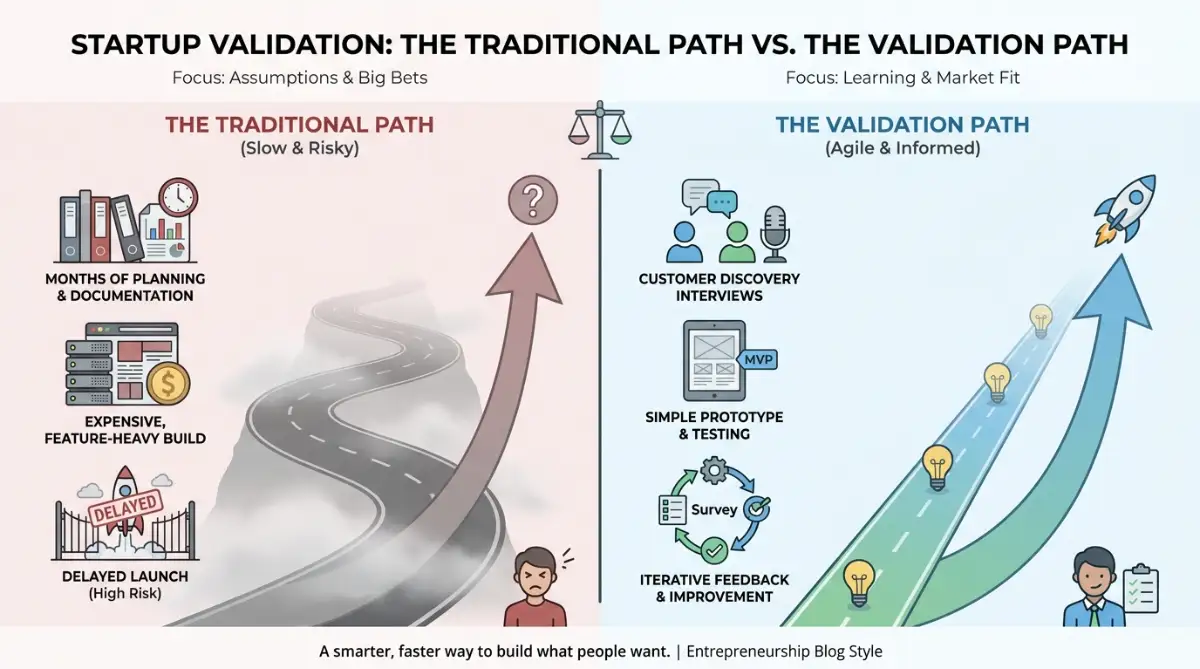
If we want to build a real, profitable business, we must change how we think about launching. We need to move away from the old way of building and embrace a simpler, faster method.
Let us compare the traditional approach with the modern, risk-free approach to starting a business.
FeatureThe Old Way of LaunchingThe Modern Validation WayMain GoalBuild a perfect, complete productFind out if real people will pay for the ideaTime SpentThree to six months of quiet workThree to five days of simple testingMoney RiskedHundreds or thousands of dollarsLittle to no budget neededPrimary FocusLogos, websites, and business cardsTalking to customers and solving problemsFailure RateExtremely high and highly painfulVery low, because you adapt quickly.
If you want a clear visual roadmap on how to quickly test your side project without spending a single dollar, watch this short video first. It will show you how to find your first buyers before you read through our three simple steps below.
How to Validate Your Idea in Three Simple Steps
You do not need a fancy website or a registered company to start testing your side business. You only need to answer one simple question: Are people willing to give me their time, information, or money to solve this problem?
Here is a simple, stress-free guide to help you validate your idea this week.
The Idea Validation Scorecard
Give your idea 1 point for each “yes”:
A score of 4–5 means you have enough evidence to continue testing.
Step 1: Find the One Specific Problem You Solve
Every successful business does one thing: it solves a painful problem for a specific group of people. If you try to help everyone, you will end up helping no one.
Instead of saying, "I help people eat healthy," you should say, "I help busy office workers prep healthy lunches in under ten minutes."
This simple formula makes your message incredibly clear. It helps the right people instantly understand that your service is designed specifically for them.
Let us look at a real-world scenario. Imagine you want to start a side business teaching dog training.
If you launch a general "Dog Training Course," you will struggle to get noticed. But if you launch "How to Stop Your Puppy From Barking During Zoom Calls," you suddenly have a highly specific solution to a very modern, painful problem.
Step 2: Create a Simple Minimum Viable Offer (MVO)
An MVO is the absolute simplest version of your idea that still solves the core problem. It is not a cheap or bad product; it is just a highly focused one.
If you want to write a detailed book, your MVO could be a simple five-page PDF guide. If you want to build a large online course, your MVO could be a live, one-hour workshop on Zoom.
- Keep it simple: Avoid complex software, integrations, or automated systems.
- Focus on value: Ensure the core promise of your offer is highly clear and easy to understand.
- Use free tools: Create a simple Google Doc, a basic landing page, or even a clear social media post to share your offer.
Think of this like baking. You do not build a three-tier wedding cake to test a new recipe; you bake one single cupcake first to see how it tastes.
Step 3: Talk to Real People and Ask for Feedback
Once you have your simple offer, you must get it in front of real human beings. Go where your target audience already spends their time online.
This could be in specific online groups, local forums, or professional networks. Do not post spammy links or shout "Buy my product!"
Instead, ask honest questions and share helpful, free advice. You can use a simple script like this to start conversations:
"Hi everyone! I am creating a simple, free guide to help busy remote workers organize their daily schedules in under five minutes. I want to make sure it is actually helpful. If you struggle with staying organized, what is your biggest daily challenge?"
This friendly approach does not trigger people's spam filters. It invites them to share their real pain points with you.
If ten people reply saying they struggle with afternoon fatigue, you now know exactly what to focus on in your guide. You are building with your audience, not in a dark room by yourself.
Overcoming the Fear of Starting
Even with a perfect plan, you will still feel a bit of fear when it is time to share your work. This is completely normal.
Every successful entrepreneur you see online felt that exact same fear when they started. The difference is that they chose to act anyway.
Shift Your Goal From Revenue to Learning
When you are just starting, do not worry about making thousands of dollars. Instead, make your primary goal learning.
If you launch a simple page and nobody signs up, that is not a failure. It is a highly valuable data point.
It tells you that either your message was not clear, or you were talking to the wrong crowd. You can easily tweak your words and try again the next day without losing any money.
The First Customer Learning Loop
After your first launch, repeat this cycle:
- Get one person to try your offer.
- Ask what worked and what felt confusing.
- Improve one small thing.
- Test again.
Your first customers are not just buyers. They are your earliest product advisors.
Set a Strict Time Limit for Your Launch
Give yourself a clear, unbreakable deadline to show your offer to the world. If you decide to test a service, give yourself exactly seven days.
This tight limit stops you from overthinking, tweaking details, and delaying the launch. It forces you to focus only on what truly matters: talking to customers.
A Simple One-Week Roadmap to Launch
To make this completely practical, here is a day-by-day plan you can follow starting tomorrow morning.
1 and Day 2: Choose Your People
Spend these two days thinking about who you want to help. Look at your own skills, hobbies, or past work experience.
Write down a list of three potential groups of people you understand well. Pick the one group that has a clear, frustrating problem that they are already spending money to solve.
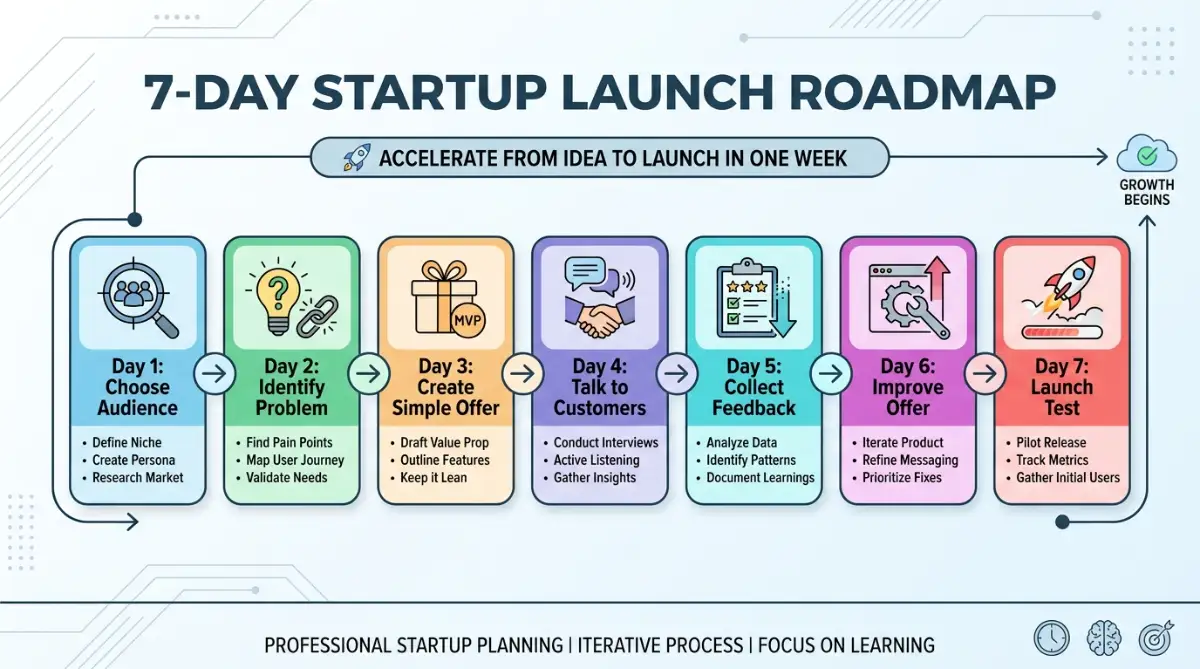
Day 3 and Day 4: Write the Solution
Do not open a website builder or write complex code. Simply open a clean document and write down exactly how you can help them.
Keep it to one page. Explain what they will get, how it helps them, and how they can get started.
Day 5 and Day 6: Connect and Listen
Go to where your chosen group hangs out online. Read their posts, look at their complaints, and offer helpful answers without asking for anything in return.
Once you understand their tone, share your simple one-page offer. Ask them if it makes sense and if it sounds like something they would use.
Day 7: Put it Out There
Make your offer live. This could mean sharing a link to your sign-up form, sending an email to the people who showed interest, or posting your offer clearly on your profile.
Take a deep breath and hit send. You have officially broken the loop of endless preparation.
Keeping Your Peace of Mind
Starting a side business should improve your life, not make it more stressful. It is easy to get overwhelmed when trying to manage a job, family, and a new project all at once.
Guard Your Free Time Gently
You do not need to work five hours every single night. That is a quick path to severe burnout.
Instead, dedicate just thirty to sixty minutes of focused, distraction-free time each day to your project. Turn off your phone notifications, close your social media tabs, and focus on one single task.
You will be amazed at how much you can get done in just a few hours of highly focused work each week.
Celebrate the Small Wins
Did you talk to one potential customer today? That is a huge win.
Did you write a clear outline for your service? Celebrate that progress.
Building a side business is a long journey of small, consistent steps. By celebrating these small moments, you keep your motivation high and make the process truly enjoyable.
Moving Forward With Confidence
The world does not need another perfect, unlaunched business plan sitting in a dusty drawer. The world needs your unique voice, your helpful skills, and your genuine desire to solve real problems.
By dropping the need for perfection and focusing on simple, honest validation, you protect yourself from failure, save your precious time, and build a real foundation for success.
Take that simple idea out of your notebook today. Keep it small, talk to your future customers, and take that very first step toward a real launch.
Strategic Practices of Highly Successful Solopreneurs
Starting a side business is exciting, but keeping it alive requires a clear strategy. Many new founders think the hard work ends once the product is built.
In reality, the real work begins when you start showing your solution to the world. To make sure your project survives the early days, you need to use smart, proven methods that experienced business owners rely on.
Let us look at how you can build a strong foundation that keeps your business running smoothly without taking over your entire life.
The Power of Shadow Testing
One of the smartest ways to test a new idea is through a method called shadow testing. This simply means presenting your offer to the public before you spend any time or money building the actual product.
You can set up a basic page that explains your service and asks people to join a waiting list. If you get a high number of signups, you know there is real interest in your solution.
If nobody signs up, you can easily change your message or try a completely different direction. This method saves you from the painful experience of spending months building something that nobody wants.
According to research shared by the U.S. Small Business Administration, gathering real market data is the most reliable way to find out if your business has a real chance of succeeding. This simple step helps you make smart choices based on real human behavior rather than guesses.
When I finally decided to launch my first service, I made the mistake of spending three months secretly building a complete course before checking if anyone wanted it. Not a single person bought it, which broke my heart and my bank account. Once I started shadow testing my ideas with a simple waitlist page first, I never wasted another day building something nobody wanted.
Setting Up Your Systems Early
As your side project begins to grow, you will quickly find yourself overwhelmed by small, repetitive tasks. You might spend hours replying to emails, scheduling meetings, or keeping track of customer questions.
This is where many new founders get tired and decide to quit. To prevent this, you need to set up simple systems that handle these tasks for you.
When you start getting your first few clients, managing their information on simple spreadsheets can become a major headache. You might lose track of who paid you or forget to follow up with a highly interested lead.
Learning how to stay organized is a major key to survival. You can easily solve this problem by choosing the right CRM software for small businesses to automate your follow-ups and keep all your customer data in one safe place.
Building Feedback Loops
A feedback loop is a simple process where you ask your users what they think and use their answers to improve your offer. You do not need to wait until your product is completely finished to do this.
You can share a basic outline with a small group of people and ask them for their honest opinions. Ask them what they like, what confuses them, and what they would change.
This open communication builds a strong bond between you and your early users. They will feel like they are part of your journey, which makes them much more likely to support you.
It also helps you spot major mistakes in your product before you spend too much time on them. Listening to your audience is the absolute best way to build a product that sells itself.
A Simple Q&A for New Side Hustlers
To help you navigate this phase, here are answers to some of the most common questions new founders ask.
Question: How do I know if my side business idea is actually good?
Answer: An idea is only good if real people are willing to pay money for it. The quickest way to find out is to ask people to pre-order or sign up for a waiting list before you build anything.
Question: What if I do not have a large budget to start my business?
Answer: You do not need a big budget. You can use free tools to build simple landing pages, write free social media posts to share your message, and talk directly to people in online communities.
Question: How much time should I spend on my side project each week?
Answer: Consistency is much more important than long hours. Spending just five to seven hours of focused work each week is more than enough to make real progress.

Hidden Pitfalls That Quietly Drain Your Energy
Many well-meaning creators start their side business with a lot of energy, only to watch it fade away within a few weeks. This rarely happens because of a lack of talent.
Instead, it happens because they fall into common, invisible traps that waste their time and drain their motivation. Let us look closely at these pitfalls so you can avoid them entirely.
The Trap of the Detailed Business Plan
We often think that starting a business requires a long, complicated document filled with financial charts and market predictions. You might spend weeks sitting at your desk writing a forty-page plan before you ever talk to a single customer.
This is a major waste of your limited energy. A long plan is just a list of guesses until you actually test your idea in the real world.
If you spend all your time writing, you will feel like you are making progress when you are actually just delaying your launch. You should read about the misconceptions about writing business plans to understand why keeping things simple is always the better choice.
Focus on testing your ideas with real people instead of writing long documents that sit on your hard drive.
Talking to the Wrong Audience
Another major mistake is trying to sell your solution to everyone. If you do not have a clear picture of who your ideal customer is, your marketing messages will feel weak and confusing.
You might end up spending your time trying to convince people who do not even have the problem you are trying to solve. This leads to a lot of silence, rejection, and frustration.
Before you write a single word of your offer, you must spend time defining your target audience demographics to know exactly who you are speaking to.
Knowing their age, daily habits, and main struggles allows you to write messages that speak directly to their hearts. This simple shift makes your offer feel incredibly relevant and highly valuable.
bsessing Over Brand Assets Too Early
It is incredibly easy to get distracted by the fun parts of starting a business. You might spend days picking out color palettes, designing logos, or ordering fancy business cards.
While these things are fun, they do not bring in any revenue. In fact, spending too much time on design before you have customers can actually hurt your business.
Many new founders waste their budget on expensive designs that do not match what their customers actually want. You should look at the common design mistakes that make businesses invisible to see how simple, clean setups always outperform complicated designs.
Keep your branding basic in the beginning and let it grow naturally as you get more sales.
Pushing for Fast Growth Too Soon
When you get your first few sales, you might feel a sudden rush of excitement. You might think it is time to quit your job, rent an office, or hire a team to scale your business.
This is a highly dangerous moment. Scaling a business before you have a stable, repeatable sales process is a recipe for disaster.
If you grow too quickly, your costs will skyrocket while your revenue remains unpredictable. It is highly important to understand why scaling your business too quickly destroys promising new businesses before you make any major financial commitments.
Keep your expenses as low as possible and focus on perfecting your core offer first.
Your Weekly Action Plan for Consistent Progress
To keep you from feeling overwhelmed, here is a simple, stress-free weekly routine you can use to build your business in just one hour a day.
Monday: The One-Hour Focus
- Goal: Set your single main task for the week.
- Action: Write down the one thing that will bring you closest to a sale. Focus only on that task and ignore everything else.
Tuesday and Wednesday: Customer Research
- Goal: Understand your audience deeper.
- Action: Read posts in online forums where your target audience hangs out. Take notes on the exact words they use to describe their struggles.
Thursday and Friday: Refine and Share
- Goal: Tweak your offer based on what you learned.
- Action: Update your simple one-page offer using the exact phrases your audience used. Share it with a few people to get their feedback.
Saturday: Review and Rest
- Goal: Celebrate your progress and clear your mind.
- Action: Look at what you accomplished this week, write down your next steps, and then step away from your work to rest.
Do's and Don'ts for a Stress-Free Launch
Let us summarize the core lessons into a simple list of habits to adopt and habits to avoid.
The Do's
- Do talk to real people about their problems every single week.
- Do keep your daily work sessions short, focused, and consistent.
- Do launch a basic version of your product as quickly as possible.
- Do focus on helping your very first customer get an amazing result.
The Don'ts
- Don't spend money on expensive software or complex tools in the beginning.
- Don't try to make your product completely perfect before showing it to the world.
- Don't compare your quiet beginning to someone else's highly polished business.
- Don't let a lack of immediate sales make you give up on your dreams.
Your Monday Morning Action Plan
You do not need to wait for the perfect moment to start building your dream. The perfect moment does not exist, and waiting for it will only keep you stuck in the same place.
You have all the tools, knowledge, and skills you need to take action today. Start by taking just thirty minutes tomorrow morning to write down one specific problem you can solve for someone.
Remember that every giant business you see today started as a simple, messy idea in someone's spare time. By focusing on helping real people and taking small, consistent steps, you will build a business that brings you real joy and freedom.
Step away from the endless planning, close your design tools, and go share your ideas with the world. Your future customers are waiting for your solution, and the only way they can find you is if you decide to finally launch.
Disclaimer & Social Media Policy Compliance
This informational guide is created to share general business and startup tips. Starting a side business involves financial and personal risks, and individual results can vary based on your effort, market conditions, and industry. The information provided here does not constitute official legal, financial, or tax advice. Always do your own research and consult with a certified professional before making any major financial decisions.