
The Night My Screen Went Blank: Why I Almost Gave Up on Blogging
I still remember sitting at my desk late at night, staring at a blank screen with a heavy sigh. I had a major deadline the next morning, but my mind was completely blocked and empty of ideas. In a moment of panic, I decided to let a popular machine-writing tool write my entire blog post for me.
The software finished the draft in less than thirty seconds, and at first, I felt a massive sense of relief. But as I read through the words, my heart sank because the text felt incredibly cold, stiff, and lifeless. It had no personality, no warmth, and sounded exactly like a dry textbook.
That was the moment I realized that fast technology cannot replace the real human connection we build through our stories. I had to rewrite the entire piece from scratch, but it taught me a valuable lesson about what makes content truly work.
The Content Dilemma at a Glance
Every single day, thousands of content creators face this exact same struggle when trying to build an online presence. We are told to publish more and write faster, which makes machine tools look like the perfect escape. Yet, relying too much on these automated generators often leaves us feeling disconnected and deeply worried about our work.
When you publish text that feels cold and robotic, your readers notice it almost instantly and leave your site. This constant worry about losing your unique identity can take a massive toll on your creative confidence. You begin to wonder if your natural voice even matters anymore in this digital age.
But the truth is, your personal voice is more important now than it has ever been. People do not connect with cold algorithms; they connect with real human feelings, mistakes, and shared lessons.
I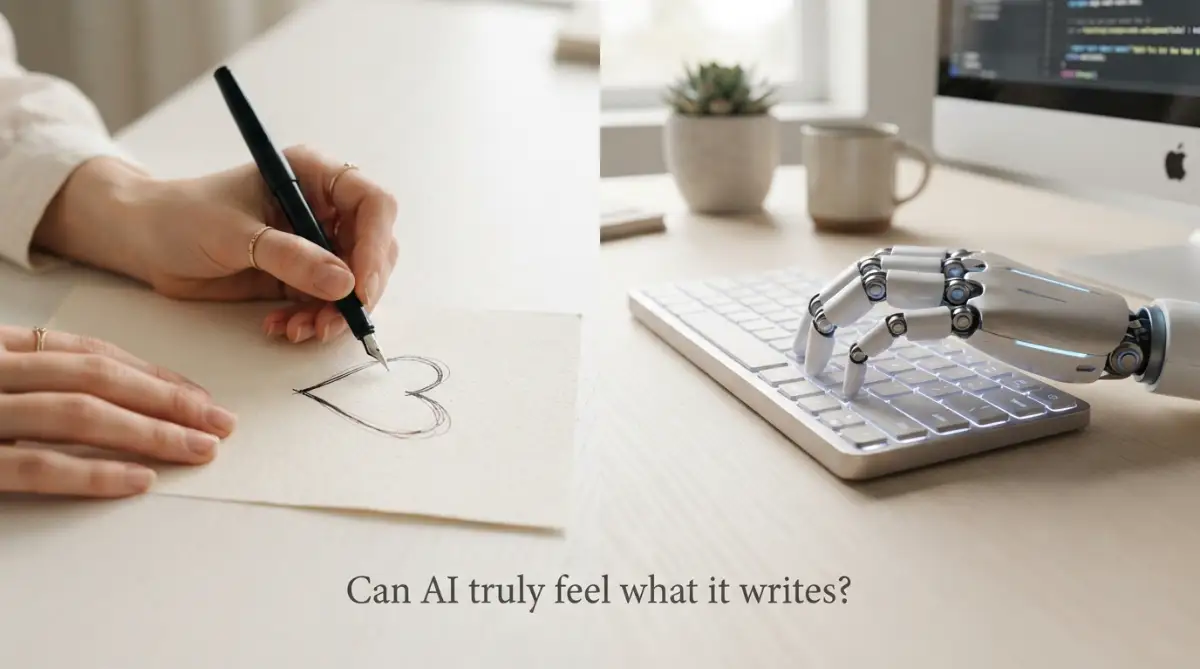
Decoding the Code: How Machine Formulas Differ from Real Human Thoughts
To understand the core differences in ai writing vs human writing, we must look at how both are created. Machine tools work by analyzing huge amounts of existing text on the internet to predict the next logical word. They use mathematical formulas to build sentences, which means they are simply guessing what word should come next.
Human writers, on the other hand, write from a place of deep personal memory, cultural understanding, and raw emotion. When we write, we think about how our words will affect a reader's mood and day. This basic difference is why machine text often feels so empty even when the grammar is completely correct.
The Power of Empathy and Shared Human Experiences
Machines do not have feelings, memories, or personal opinions to share with the world. They cannot tell you how it feels to fail a test, lose a pet, or experience a beautiful sunrise.
When you read a human-written piece, you are stepping into another person's unique life view. This exchange of real empathy is what keeps readers scrolling down your page until the very end.
- Machine Writing: Predictive data, static patterns, and rigid formulas that read like a robot.
- Human Writing: Empathy, heart, dynamic stories, and personal lessons that feel like a friend.
The Search for Originality in a Sea of Clones
Because machine tools rely on existing data, they can never truly create a brand-new idea. They simply repackage old information in slightly different ways, which leads to repetitive online content.
Human minds are capable of making surprising connections between completely different subjects. This natural ability to think outside the box is what drives true innovation in the creative world.
Why Search Engines Value Genuine Personal Experiences
Search engines want to show their users the most helpful and trustable information available. They have advanced systems designed to spot content that is created just to fill up space without offering real value.
When you write with genuine personal experience, you naturally include unique details that machines cannot copy. This makes your blog highly authoritative and helps you stand out in search rankings.
Understanding the Concept of Trust and Real Authority
To build a successful blog, you must show your readers that you actually know what you are talking about. If you write a product review, sharing your own photos and personal test results builds instant trust.
A machine tool can only summarize other reviews, which often feels hollow and unhelpful. True authority comes from living the experience, not just reading about it online.
Watch: The True Difference in Action
Understanding how these two writing styles compete can change the way you build your blog for good.
[
Why Readers Stay Longer on Human-Centered Blogs
When a visitor lands on your blog, you only have a few seconds to grab their attention. If they see a wall of repetitive, robotic sentences, they will click away immediately.
But if they meet a warm, friendly voice that speaks directly to their needs, they will stay to read the whole post. This longer reading time signals to search engines that your content is highly valuable.
The Myth of Instant Perfection in Machine Content
Many people believe that using digital writing assistants will save them from ever making mistakes again. While these tools are great at catching basic spelling errors, they frequently make quiet logic mistakes.
They can state incorrect facts with absolute confidence, which can quickly ruin your blog's reputation. Let us look at a few common myths surrounding these automated systems.
- Myth: "AI tools are always 100% accurate."
- Reality: They often invent fake facts and present them as true.
- Myth: "AI can replace human editors."
- Reality: Machine text still requires heavy human proofreading.
- Myth: "Readers cannot tell the difference."
- Reality: Most readers easily spot dry, repetitive robotic sentences.
The Danger of Fact Errors and Hallucinations
In the tech world, when a machine tool makes up false information, it is called a hallucination. These errors can be incredibly hard to spot because the sentence structure looks completely natural.
If you publish these errors on your blog, your readers will quickly lose faith in your brand. Taking the time to check every single claim yourself is essential for maintaining your integrity.
The Problem of Tone Deafness in Automated Tools
A machine does not understand sarcasm, gentle humor, or the subtle weight of sensitive topics. It can easily generate text that feels completely inappropriate for your specific audience.
A human writer knows how to adjust their tone dynamically depending on the mood of the piece. This emotional intelligence keeps your communication safe and respectful.
Step-by-Step Guide to Saving Your Unique Voice Online
You do not have to banish technology from your writing process entirely to remain authentic. Instead, you must learn how to use these tools without letting them take over your natural style. Let us look at some practical ways to keep your writing completely human.
Step 1: Start with Your Own Thoughts and Outline
Never let a machine do the initial thinking for your blog post. Always sit down and write out your main ideas and personal thoughts first. This ensures that the core message of your article comes directly from your own brain.
Step 2: Infuse Real-Life Stories into Every Section
Whenever you make a point, try to back it up with a quick personal story or example. If you are writing about a software tool, explain how it helped you save time during a busy week. These small details are what make your content impossible for machines to mimic.
My Personal Realization:
I used to think that my writing had to be absolutely flawless to be respected. But I realized that my readers actually liked my small mistakes and honest stories much more than perfect, boring text. Being real is always better than being a perfect machine.
Step 3: Read Your Written Words Out Loud
Once you finish a draft, take a few minutes to read it aloud to yourself. If a sentence sounds unnatural or makes you run out of breath, change it immediately. If you would not say it to a friend over a cup of coffee, do not write it on your blog.
Finding the Sweet Spot Between Speed and Quality
It is entirely possible to use modern digital tools to assist your workflow without losing your soul. You can use them to brainstorm basic ideas, check your grammar, or organize your research.
The key is to always remain the chef in your own kitchen, using tech as a simple tool rather than a replacement creator. This balance lets you publish regularly while maintaining high quality.
Using Tech for Basic Research Assistance
You can use online search engines and databases to gather facts and figures quickly. This saves you hours of digging through old library books and cluttered web pages.
Just make sure to write down the findings in your own words instead of copying text directly. This keeps your writing clean, fresh, and completely original.
Keeping the Final Edit Completely in Human Hands
The very last step of your writing process should always belong to you. Take the time to polish the transitions, add your own jokes, and make the pacing feel natural.
This final pass is where the real magic happens and where your personality shines through brightest. Your readers will appreciate the extra care you put into making the post enjoyable.
The Future of Writing in a Tech-Heavy World
As technology continues to develop, the online world will likely be flooded with cheap, auto-generated text. This means that genuine human writing will become a rare and highly prized treasure.
People will seek out independent bloggers who write with real passion, honesty, and unique viewpoints. By protecting your voice today, you are setting yourself up for long-term success.
Why Your Unique Voice is Your Best Asset
There is only one person in the entire world who has your exact mix of memories, ideas, and experiences. That unique mix is your ultimate superpower as a writer and content creator.
No machine can ever copy your childhood, your specific struggles, or your personal victories. Lean into your story, share it openly, and watch your blog community grow naturally over time.
Advanced Strategies to Master the Art of Natural Editing
If you want to keep your readers coming back, you must learn to refine machine drafts so they sound entirely human. It is not enough to just fix basic spelling or punctuation errors on your screen. You have to actively inject your personal rhythm, warmth, and daily perspectives into every single paragraph.
This process is about taking control of the digital tools around you instead of letting them control your voice. When you understand how these software platforms generate sentences, you can easily break their repetitive patterns. You can use standard platforms like Trust Picks HQ to see how real-world writers connect naturally with their audience.
Let us explore several highly effective methods that you can use to transform flat text into an exciting reading experience.
Transforming Cold Sentences into Warm Conversations
Machine tools love to use long, complicated words that real people almost never use in regular conversations. They write in a highly formal tone that makes readers feel like they are reading a dry instruction manual.
Your job as an editor is to find these stiff patterns and simplify them immediately. For example, if a tool writes "utilize," you should change it to "use" to make the text flow better. If it writes "subsequently," you can easily change it to "then" or "after that."
You can learn more about this by studying how AI writing tools work on a fundamental level. Knowing how the math behind these systems selects words helps you spot their weaknesses much faster. It gives you the exact skills needed to break up predictable text patterns with your own natural vocabulary.
Building Your Own Voice Blueprint
A personal voice blueprint is a collection of phrases, words, and pacing styles that make your writing uniquely yours. You can build this by looking at your old emails, personal journal entries, or favorite blog posts.
Make a simple list of the words you use when you are explaining something exciting to a close friend. Keep this list next to your computer whenever you are reviewing draft articles.
Using your blueprint helps you stay incredibly consistent across all the articles you publish. It ensures that no matter what topic you write about, your readers will always recognize your signature style. This step is essential if you are working to build a highly loyal and engaged community around your website.
The Power of Real Life Interviews
One of the absolute best ways to make your blog stand out is to include real quotes from actual human beings. You can send a quick email to a local professional or talk to a friend who has experience with your topic.
Even a simple two-sentence quote can give your post a massive boost in authority and interest. No machine brain can recreate the spontaneous thoughts and feelings shared during a live chat.
This method is especially useful when you are trying to master new concepts in the tech space. If you want to study these digital systems further, you can read about smart tech made simple to get a clear head start. You can learn how creativity combines with computers in a great article on using AI to boost creativity by Harvard Business Review. Blending deep research with real quotes is the ultimate way to keep your blog looking trustable and unique.
The Reading Aloud Editing Method
When you finish editing an article, find a quiet space in your home and read the whole piece out loud. This simple action helps you catch awkward phrasing and repetitive sentence lengths that your eyes might miss.
If you find yourself running out of breath while reading a sentence, it is way too long. Break it down into two or three short sentences to make it easier for your audience to digest.
Good writing has a natural musical beat, with a mix of short, punchy statements and slightly longer explanations. Machines simply cannot hear this rhythm, which is why their content often feels so incredibly monotone. By reading aloud, you act as the musical director of your own blog.

The Hidden Traps That Can Quietly Kill Your Website Trust
When creators start using online writing assistants, it is incredibly easy to slide into bad habits without realizing it. These shortcuts might save you a little bit of time today, but they can cause massive damage to your long-term success.
If your readers start to feel like you are just pushing a button to generate articles, they will stop visiting your platform. Let us look at the most dangerous pitfalls you need to avoid at all costs.
The Lazy Trap of Blind Copying and Pasting
The absolute quickest way to fail in the online world is to copy machine-generated text directly into your editor. This lazy approach creates a massive wall of text that lacks any real personality, energy, or warmth.
Search engine crawlers are incredibly smart and can easily identify websites that offer zero original value. You can read a great study on how advanced systems detect these patterns in this research paper on text patterns published by Nature.
If you want to build a real business, you must treat your readers with the deep respect they deserve. Every single paragraph you publish should go through your own careful thoughts and editing process.
Trusting Machine Facts Without Double Checking
As we mentioned earlier, modern writing tools do not actually understand the real meaning of the words they produce. They frequently mix up facts, share incorrect data, or state completely false statistics with absolute confidence.
If you publish these errors, you could be giving your audience dangerous advice without even knowing it. This is why you must check every single detail, study, and claim before you click the publish button.
For instance, if you are discussing complex subjects, you need to make sure your fundamental definitions are accurate. If you are a beginner, learning how to learn artificial intelligence can help you avoid making basic tech mistakes on your site. You should also review the Google Search Central helpful content guidelines to see exactly how search engines define quality. Always rely on real research to back up your claims instead of letting software guess the details.
Losing the Emotional Core of Your Story
When you focus too much on optimizing for search systems, you often lose the emotional heart of your writing. You start stuffing keywords into sentences where they do not belong, making your text sound incredibly forced.
Remember that search engine crawlers do not buy products, join email lists, or share articles with their friends. Real human beings do those things, and they only do them when they feel a genuine connection to your work.
Keep your target audience at the absolute front of your mind whenever you sit down to plan a new article. Think about the specific problems they are facing and how you can offer them comforting, practical solutions. This empathetic focus will naturally make your writing more powerful than any mathematical machine output.
Your Action Plan for Creating Irresistible Content
To stand out in a world filled with digital noise, you must commit to being a truly authentic creator. This means embracing your own mistakes, sharing your personal stories, and writing with real passion.
By blending modern research tools with your unique perspective, you can build a highly successful blog that people love to read. Let us look at a simple action plan you can start using today to improve your craft.
Always remember that writing is a wonderful journey of personal growth and continuous learning. Every single article you write is a brand-new chance to refine your unique voice and connect with someone who needs your help.
Do not be afraid to show your true self to the world through your written words. Your natural voice is the absolute best tool you have to build a lasting, meaningful online presence.
I have spent years writing online, and I know how incredibly tempting it can be to take quick shortcuts when you are tired. But my best moments of success always came when I put my honest feelings, struggles, and real-life lessons directly onto the screen. I encourage you to trust your own mind today, step away from the robotic generators, and write something that comes straight from your heart.
Clear Answers to Common Writing Questions
Can search engines tell if I used an AI assistant to write my blog post?
Yes, search engine systems are highly advanced and can easily spot predictable patterns in machine-generated text. They look for robotic structures, lack of personal experience, and highly repetitive word choices across your site. To prevent issues, always edit your work thoroughly and add your own unique stories.
How can I make my automated drafts sound more natural and friendly?
The easiest way is to read your draft aloud and replace any stiff, formal words with simple everyday language. Insert short personal stories, use conversational words like "you" and "I," and break long sentences into shorter pieces. You can also read our guide on what is artificial intelligence to better understand how these systems process text in daily life.
Is it acceptable to use digital tools to help me brainstorm blog ideas?
Using software to gather basic research, organize outlines, or check grammar is completely fine and helpful. The key is to make sure you do not let the machine write the actual thoughts, feelings, and core arguments of your post. Keep yourself in the director's seat of your creative work.
Why is human writing still considered better than machine output?
Human writing is superior because it contains genuine empathy, cultural context, and real-life experiences that machines cannot feel or live. We write to build emotional connections, whereas software only predicts the most likely next word using math. This emotional depth is what keeps readers engaged and builds long-term trust.
Disclaimer
The information provided on this blog is for educational and informational purposes only. While we share expert tips on content creation and writing tools, we do not guarantee specific search rankings or financial success. Always research your specific audience needs and follow current web standards when publishing content online.