
The Day a High Medical Bill Ruined My Morning Coffee
I remember sitting at my kitchen table, taking a sip of warm coffee, when I opened the envelope. My heart dropped instantly when I saw the balance of my medical bill.
I had health insurance, so I thought my doctor visit was fully covered. Instead, I owed over five hundred dollars for a quick check-up.
That was the moment I realized I had no idea how my health plan actually worked. I felt defeated, confused, and completely overwhelmed by the strange words on the paper.
This feeling of confusion is something millions of people deal with every single day. When you do not understand your health plan, every doctor visit feels like a gamble. You might avoid going to the clinic even when you are sick because you fear the bill.
This constant worry ruins your peace of mind and keeps you awake at night. It is deeply unfair that taking care of your health has to feel so stressful. You work hard to pay your monthly insurance costs, yet the system still feels designed to keep you in the dark.
This confusion often leads to deep financial stress and unnecessary debt. Families end up draining their savings just to cover basic medical care that they thought was covered. It makes you feel helpless and trapped in a system that should be helping you.
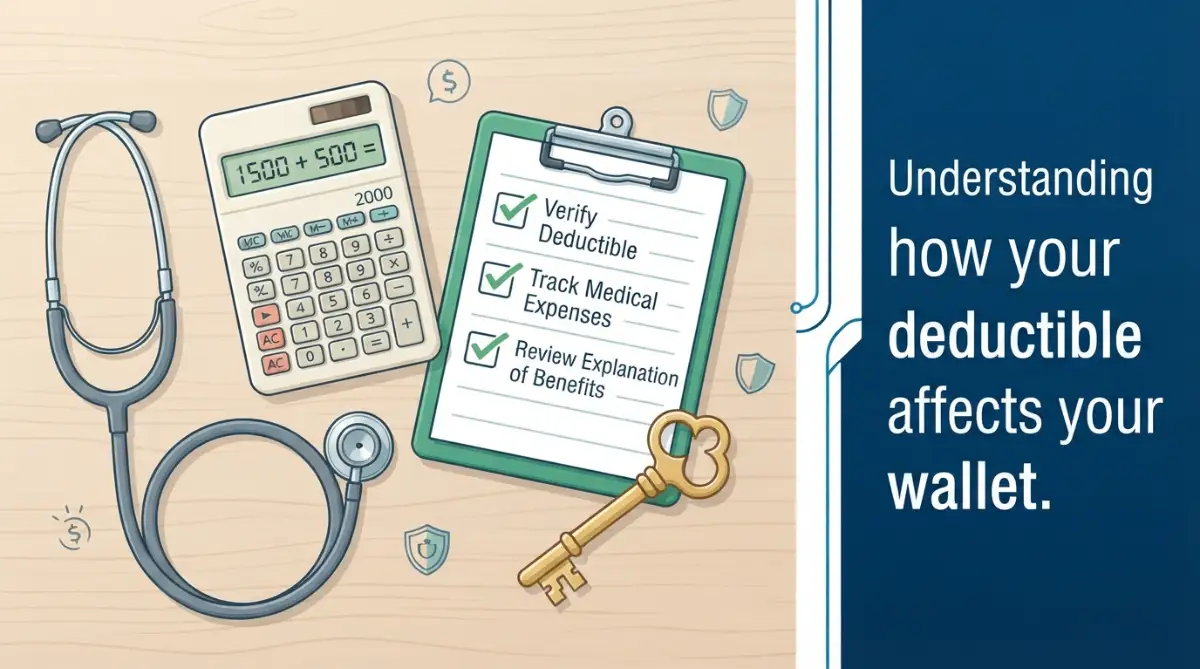
Your Simple Map to Health Insurance Terms
To take control of your healthcare spending, you need to know the terms. Health insurance does not have to feel like a foreign language. Let us break down the three most common costs you will face.
The Deductible: Your Starting Line for Benefits
Think of your deductible as the entry fee you must pay before your insurance plan starts helping with your bills. Until you spend this specific amount out of your own pocket, your insurance company will not pay for most services.
For example, if your plan has a one-thousand-dollar deductible, you must pay the first one thousand dollars of your medical care. Once you hit this limit, your plan active phase begins, and they start sharing the costs.
Many people do not realize that some services are covered before you meet this limit. Preventive care like annual physicals or vaccine shots is usually free from day one.
Why Do Deductible Amounts Vary So Much?
Insurance plans generally fall into two categories: high-deductible plans and low-deductible plans. High-deductible plans usually have lower monthly premiums, which makes them look very attractive at first glance.
However, if you get sick or need surgery, you will have to pay a large amount before your coverage kicks in. Low-deductible plans cost more each month but protect you from huge surprise bills when you need care.
Choosing the right balance depends on your health needs and your monthly budget. If you rarely see the doctor, a higher deductible might save you money on monthly fees.
Copays: Your Flat Fee for Routine Doctor Visits
A copay is a fixed dollar amount you pay at the front desk every time you visit a doctor or buy medicine. Unlike your deductible, a copay is usually a small, predictable number that you can easily plan for.
You might pay twenty dollars for a regular doctor visit and fifty dollars when you see a specialist. These fees are set by your insurance company, and they do not change based on how much the doctor actually charges.
It is important to know that copays do not always count toward meeting your annual deductible. You should read your plan summary carefully to see how these fees are tracked by your insurer.
Different Copays for Different Services
Your insurance card usually lists your common copays right on the front. You will see different prices for primary care doctors, specialists, and emergency room visits.
Emergency room copays are almost always the highest because emergency care is very expensive to provide. Knowing these numbers ahead of time helps you decide whether to visit urgent care or the emergency room.
Using urgent care instead of an emergency room for minor issues can save you hundreds of dollars in copays alone. It is a simple choice that makes a big difference to your wallet.
Coinsurance: Sharing the Cost Percentage After Your Deductible
Coinsurance is your share of the costs of a covered health care service, calculated as a percentage. This cost-sharing kicks in only after you have fully paid your deductible for the year.
For example, if your plan has a twenty percent coinsurance rate, you pay twenty percent of the bill. Your insurance company pays the remaining eighty percent of the allowed amount.
This means if a medical procedure costs one thousand dollars, your share of that bill would be two hundred dollars. It is a shared responsibility that continues until you reach your yearly out-of-pocket maximum.
The Difference Between Copay and Coinsurance
While a copay is a flat fee, coinsurance is a moving percentage because it is based on the total bill. If a test is expensive, your coinsurance will be high, whereas a copay is always the same dollar amount.
Many plans use copays for routine care like doctor visits and prescription drugs. They tend to use coinsurance for larger events like hospital stays, surgeries, and high-tech scans.
Knowing which one applies to your upcoming medical service helps you estimate your real costs. You can call your doctor's billing office and ask for the specific billing codes to check with your insurer.
Let's Do the Math: A Real-World Health Insurance Scenario
If you find health insurance math confusing, you are not alone. Watch this simple visual guide to see exactly how these three terms work together in real life before reading our detailed breakdown below.
Let us look at a real scenario to see how these three terms work together in real life. Meet Sarah, who has an insurance plan with a one-thousand-dollar deductible, twenty percent coinsurance, and a twenty-dollar copay.
Sarah gets sick and needs a medical procedure that costs a total of five thousand dollars. Let us walk through exactly how much Sarah will have to pay out of her pocket.
First, Sarah must pay her entire one-thousand-dollar deductible because she has not spent any medical money this year. This leaves four thousand dollars of the bill remaining for her insurance plan to cover.
Calculating the Coinsurance Phase
Now that Sarah has met her deductible, the coinsurance rule begins to apply to the remaining balance. Her plan has a twenty percent coinsurance rate, meaning she must pay twenty percent of the remaining four thousand dollars.
Twenty percent of four thousand dollars is exactly eight hundred dollars. Her insurance company will pay the remaining eighty percent, which equals three thousand two hundred dollars.
In total, Sarah pays her one-thousand-dollar deductible plus her eight hundred dollars in coinsurance. Her final bill for this five-thousand-dollar procedure is one thousand eight hundred dollars.
This table shows how each payment type serves a different purpose during your healthcare journey. It is a great quick reference to keep on your phone for your next doctor visit.
Understanding this timeline helps you avoid the shock of getting a massive bill after you think you paid enough. It turns a confusing system into a clear plan you can easily budget for.
The Ultimate Safety Net: Out-of-Pocket Maximum
You might be wondering what happens if you get extremely sick and your bills keep adding up. This is where the out-of-pocket maximum comes in to protect your savings from complete ruin.
The out-of-pocket maximum is the absolute most you will have to pay for covered services in a single year. Once you spend this amount on deductibles, copays, and coinsurance, your insurance pays one hundred percent of your covered care.
For example, if your out-of-pocket limit is five thousand dollars, you will never pay more than that in a year. This limit provides massive peace of mind when facing serious health challenges or major accidents.
What Counts Toward Your Out-of-Pocket Limit?
Your deductible, copays, and coinsurance all count toward reaching your yearly out-of-pocket maximum. However, your monthly insurance premiums do not count toward this limit at all.
If you pay three hundred dollars a month for your plan, you must keep paying that fee even after hitting your limit. It is also important to remember that out-of-network care usually does not count toward this ceiling.
Keeping your care in-network is the most important step to make sure your out-of-pocket limit works for you. Always double-check that every doctor and hospital you visit is in your plan's approved network.
Pro Tip: I once made the mistake of visiting a clinic that was out of my network, which cost me hundreds of extra dollars. I assumed all local doctors accepted my plan, but I learned the hard way to always call and verify before booking an appointment. Now, I always call the billing department directly to confirm.
How to Choose the Best Plan for Your Budget
When shopping for health insurance, you must balance your monthly premiums against your potential out-of-pocket costs. If you are generally healthy and rarely see a doctor, a plan with lower monthly payments might be best.
In this case, you will have a higher deductible, but you will save money on your monthly bills. If you have a chronic illness or need regular medical care, a plan with a higher premium is often smarter.
This type of plan will have lower deductibles and copays, which saves you money over the course of the year. Doing some simple math on your expected medical needs can save you thousands of dollars.
The Hidden Value of Preventive Care
Many people avoid the doctor because they fear the cost of the visit. However, taking advantage of free preventive care can actually prevent massive medical bills in the future.
Catching a health issue early means you can treat it easily before it becomes a major medical emergency. This simple step keeps you healthier and keeps your wallet safe from expensive hospital stays.
Make sure to schedule your annual check-up every year since it is fully covered by almost all insurance plans. It is a free benefit that you are already paying for with your monthly premiums.
Talking to Your Doctor's Billing Department
Never be afraid to ask your doctor's office for a clear estimate of your costs before you receive any care. You have the right to know what a procedure will cost and how it will be billed.
Ask them for the specific billing codes they plan to use for your visit. You can then call your insurance company with these codes to get an exact estimate of your out-of-pocket costs.
This proactive step takes away the guesswork and keeps you in complete control of your healthcare spending. It is a simple habit that will protect your budget from unexpected surprises.
Understanding Your Summary of Benefits and Coverage
Every insurance plan must provide a short document called the Summary of Benefits and Coverage. This paper uses simple charts to show you exactly what your plan covers and what you must pay.
It also includes helpful examples of common medical events, such as having a baby or managing type two diabetes. Looking at these examples makes it much easier to estimate your potential yearly costs.
You can easily download this document from your insurance provider's online portal at any time. It is a highly useful tool that takes the guesswork out of planning your healthcare budget.
In-Network vs. Out-of-Network: The Golden Rule of Savings
Health insurance companies negotiate special discounted rates with specific doctors and hospitals. These approved medical providers make up your plan's official care network.
If you visit a doctor who is out of your network, your insurance may refuse to pay anything. Even when they do pay, your share of the bill will be significantly higher than in-network care.
Always check your insurance company's website directory to confirm your doctor's current network status before your visit. A quick online search can save you thousands of dollars in surprise medical bills.
Advanced Strategies to Slash Your Healthcare Out-of-Pocket Costs
The Power of Health Savings Accounts (HSAs)
An HSA is a special savings account that lets you put aside pre-tax money specifically for medical costs. You can use this tax-free money to pay for your deductible, copays, and coinsurance.
According to the official U.S. government healthcare resources, using an HSA is one of the smartest ways to manage a high deductible. It acts like a personal medical nest egg that stays with you forever, even if you change jobs.
Negotiating Your Bills Before Paying
Most people do not know that medical bills are often highly negotiable. Hospital billing offices are usually willing to lower your total balance if you ask for an itemized bill.
An itemized bill lists every single band-aid and pill, allowing you to catch duplicate charges. You can also visit Trust Picks HQ to find more personal finance resources to keep your household budget secure.
The Pre-Authorization Secret
Before scheduling any major medical test, you must ask your doctor's office to submit a pre-authorization request. This official process ensures your insurance company agrees that the test is medically necessary.
If you skip this step, your insurer might refuse to pay their share of the coinsurance. This simple phone call can save you thousands of dollars in surprise out-of-pocket costs.
Maximizing Your Plan's Annual Cycle
If you have already met your yearly deductible, try to schedule your remaining doctor visits before the plan resets. This timing ensures your insurance company covers the majority of your costs during the coinsurance phase.
Once the plan resets on its anniversary date, your deductible tracker returns to zero. Planning your procedures around this calendar cycle is a highly effective way to keep your money in your pocket.
Shopping Around for Medical Procedures
Medical prices are not fixed and can vary wildly between different facilities in the same town. An MRI at an independent imaging center often costs a fraction of what a hospital charges.
You can use online price transparency tools provided by your insurer to compare costs before you book. Taking an hour to research your options is an easy way to protect your savings from inflated fees.
Understanding Pharmacy Tiers to Save on Medicine
Insurance companies group prescription drugs into different pricing levels called tiers. Tier one usually contains low-cost generic drugs, while higher tiers include expensive brand-name medicines.
Always ask your doctor if a tier-one generic alternative is available for your prescription. This quick question can turn a hundred-dollar copay into a five-dollar payment at the pharmacy counter.
Utilizing Preventive Screenings Wisely
Many routine screenings are completely free under standard health plans because they are classified as preventive care. However, if your doctor orders a follow-up test because of a symptom, it becomes diagnostic care.
Diagnostic care is subject to your deductible and coinsurance, which means you will receive a bill. Understanding this difference helps you prepare for any charges before you leave the doctor's office.

Dangerous Mistakes That Can Crash Your Household Budget
Assuming a Doctor is In-Network Without Verifying
This is perhaps the most painful mistake you can make with your health coverage. You might assume your local doctor is in-network because the clinic is down the street.
However, insurance networks change constantly, and doctors leave panels without warning. If you see an out-of-network provider, you might have to pay the entire bill yourself.
This mistake can leave you with thousands of dollars in debt that does not even count toward your out-of-pocket limit. It is similar to learning the hard way about the hidden truth about term life insurance policy exclusions after a family tragedy.
Throwing Away Medical Bills in Fear
Receiving a massive medical bill in the mail can feel incredibly scary and overwhelming. Your natural reaction might be to hide the paper in a drawer and ignore it.
Ignoring medical bills is a dangerous path that leads directly to collection agencies. Once a bill goes to collections, it can ruin your credit score and make it hard to buy a home.
Instead, call the hospital billing office immediately to set up a monthly payment plan. Most facilities are happy to work out a plan that fits your income, even if it is only twenty dollars a month.
Paying the First Bill You Receive Blindly
Many people receive a document in the mail that looks like a bill but is actually an Explanation of Benefits (EOB). Paying this document right away is a major financial mistake because it is not a real invoice.
The EOB simply shows what your insurance company might cover and what your potential share could be. Always wait for the final, official bill from the hospital before you send any money.
According to a study by the National Library of Medicine, medical billing errors are incredibly common in modern healthcare. Reviewing your statements carefully ensures you only pay what you actually owe.
Avoiding Care to Save Money
Skipping your regular check-ups because you want to avoid a copay is a dangerous long-term strategy. Small symptoms can easily grow into severe medical issues if they are ignored for too long.
A simple, inexpensive visit today can prevent an incredibly expensive hospital stay next year. Your health is your most valuable asset, and protecting it should always be your top priority.
Just like ignoring maintenance on your house, ignoring your body leads to massive bills down the road. Treat your body with the same care you would use to protect your family's safety.
Trusting Verbal Agreements from Clinic Staff
You might ask the receptionist if they accept your insurance, and they might say yes. However, accepting your insurance is not the same as being an active, in-network provider.
Always confirm your coverage details directly with your insurance company instead of relying on the clinic staff. This simple check protects you from being held responsible for massive, unexpected fees.
Building a Solid Plan for a Stress-Free Health Journey
Your Immediate Next Steps
The best way to handle your insurance is to stay organized and proactive. Create a dedicated folder in your home to keep all your medical bills and insurance statements together.
Knowing exactly where your paperwork is makes it much easier to compare your bills with your insurance explanations. This level of organization gives you a strong sense of control over your family finances.
Just like learning how to fix older smart home devices dropping Wi-Fi, understanding your health plan requires a little troubleshooting. Once you know the basic steps, the process becomes much simpler and less frustrating.
Keeping Your Family's Financial Future Safe
Medical emergencies are unpredictable, but your financial response to them does not have to be. Having a clear understanding of your copay, coinsurance, and deductible acts as a shield for your savings.
You can sleep better at night knowing that an unexpected clinic visit will not ruin your monthly budget. This knowledge allows you to focus on getting better instead of worrying about the cost.
This peace of mind is just as important as protecting your seed phrase to secure your digital assets. Both steps are about safeguarding your hard-earned wealth from unexpected threats.
Small Adjustments That Lead to Big Savings
Making small changes in how you seek care can lead to massive financial rewards over time. For example, using your plan's nurse hotline can help you decide if a symptom requires an expensive clinic visit.
These free resources are designed to help you make smart choices without spending a dime. Always explore the extra perks your insurance company offers to get the most value out of your plan.
If your monthly premiums are tight, you might look into ways to boost your income. Learning how to start a profitable blog with almost zero money can help you earn extra cash to cover your yearly deductible.
Sharing the Knowledge with Your Loved Ones
Once you master these insurance terms, you can help your friends and family navigate their own health plans. Sharing this knowledge can save your loved ones from falling into the same costly traps.
It is a wonderful feeling to help someone understand a confusing bill and save their hard-earned money. Education is the ultimate tool to make the healthcare system work for us instead of against us.
Helping your family understand their bills is just as satisfying as explaining why your Wi-Fi signal drops in specific rooms and showing them how to fix it. It brings clarity and comfort to the people you care about most.
Navigating Changes with Confidence
Insurance plans change every single year, so it is important to review your coverage details during your open enrollment period. Look closely at any changes to your deductible, copay amounts, and drug list.
Staying on top of these annual adjustments ensures you are never surprised when you visit the pharmacy or clinic. It keeps you in the driver's seat of your healthcare journey.
Just like avoiding why solar panels underperform by placing them in the correct spot, you can avoid insurance mistakes by reviewing your plan yearly. A small amount of attention now prevents major problems later.
I used to feel completely helpless whenever I opened a medical bill, but taking the time to learn these terms changed everything for me. You can take control of your health decisions and protect your hard-earned money starting today. I believe in your ability to master this system and achieve complete peace of mind.
Common Questions About Copays, Coinsurance, and Deductibles
Can a health service require both a copay and coinsurance?
Yes, some complex health services might require you to pay both types of fees. For example, you might pay a flat copay for a doctor visit and then coinsurance for any laboratory tests done during that visit. Always check your plan's summary of benefits to see how your specific services are billed.
What happens to my deductible if I change my insurance plan mid-year?
If you switch to a completely new insurance plan during the year, your deductible tracker will usually reset to zero. The money you spent on your old plan will not count toward your new plan's limit. It is best to wait until your plan year ends before changing your coverage if you have already spent a lot of money.
Does my monthly premium count toward my deductible?
No, your monthly premium is simply the fee you pay to keep your insurance active. This regular payment never counts toward meeting your deductible or your out-of-pocket maximum. You must pay this monthly fee regardless of how much medical care you actually use.
What is the best way to check if my doctor is in my network?
The most reliable method is to log into your account on your insurance company's website and search their provider directory. You can also call the member services number on the back of your insurance card to verify directly. Never rely solely on what the receptionist at the clinic tells you.
Are preventive care services always free?
Yes, standard preventive services like annual wellness exams and routine vaccines are fully covered at no cost to you under federal rules. However, if your doctor orders extra tests during that visit to treat an existing symptom, those tests may bill as diagnostic. This means you might receive a bill for the non-preventive portion of your care.
Disclaimer: The information provided in this article is for educational purposes only and should not be taken as professional medical, financial, or legal advice. Insurance plans vary widely based on your provider, employer, and geographic location. Always contact your insurance provider directly or consult with a licensed insurance professional to confirm your specific coverage details, benefit limits, and policy terms before making any healthcare decisions.