Why My Dry Basement Taught Me a Very Expensive Lesson
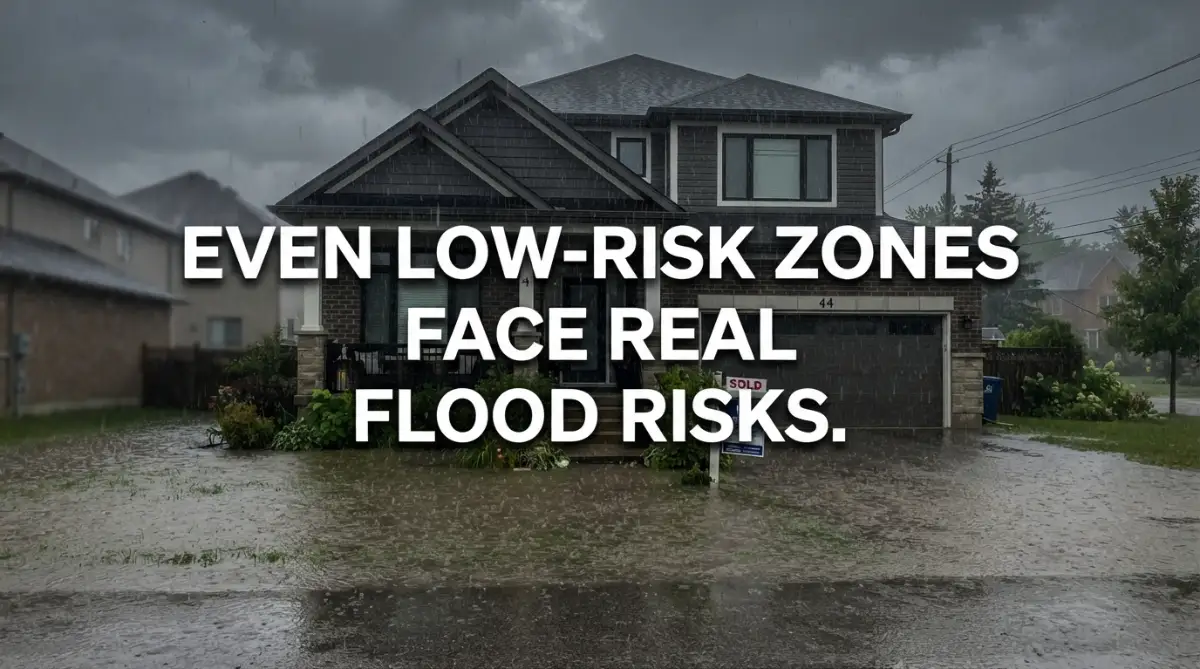
I bought my home because the listing said no flood insurance was required. The official maps showed we were in Zone X, which is a low-risk area. I felt completely safe and happy when signing the papers. My regular home insurance was cheap, and I thought I would never have to worry about water damage. Then, a massive summer rainstorm hit our neighborhood.
The street drains filled up fast, and water started creeping up my driveway. Within two hours, my beautifully finished basement had three inches of muddy water. I stood there in shock, watching my hard work get ruined. It was a painful wake-up call about how maps do not always match reality.
Many people think they are safe just because their mortgage company does not force them to buy flood coverage. You look at your beautiful dry lawn, read your home paperwork, and assume everything is fine.
But when the rain keeps falling, that peaceful feeling turns into pure panic. You watch the water rise, praying it does not reach your front door.
The real pain comes when you call your insurance agent the next morning. You expect them to help pay for the wet carpets and ruined drywall.
Instead, they tell you that your standard policy does not cover ground water. Your heart sinks. You are left with thousands of dollars in clean-up bills that you must pay out of your own pocket.
This heavy financial worry can ruin your sleep for months. Every time a storm is on the forecast, your chest gets tight.
You worry about your furniture, your family treasures, and your savings. It feels incredibly unfair because you followed all the rules. You checked the official maps, yet you still ended up with a soaked house and a drained bank account.
The Massive Misunderstanding of FEMA Flood Maps
FEMA maps are designed to show flood risk for insurance pricing and mortgage requirements. They are not magic tools that predict where water will flow.
When a map labels an area as a low-risk zone, it simply means the area has less than a one percent chance of flooding in any given year. It does not mean the risk is zero.
The terms non-flood zone or preferred risk zone are actually quite misleading. Every piece of land is in a flood zone; some are just lower risk than others.
Understanding Zone B, Zone C, and Zone X
When you look at a flood map, you will see different letters. These letters tell insurance companies and banks how likely a flood is to happen in your neighborhood.
Zone B and Shaded Zone X show moderate-risk areas. They are often located between high-risk zones and completely dry land.
Zone C and Unshaded Zone X represent low-risk areas. They are outside the moderate-risk zones but can still experience local drainage issues.
These designations mean that federally backed mortgage lenders will not force you to buy flood insurance. However, these maps are often old and do not show recent changes in your neighborhood.
New construction nearby can change how rainwater flows. If a new shopping center or housing development replaces local fields, the water has nowhere to go. It can easily end up in your yard or basement.
Why the Low-Risk Label Can Be Dangerous
Believing that low-risk means no-risk is one of the biggest mistakes a homeowner can make. Weather patterns are changing, and storms are becoming much heavier.
Over twenty percent of all National Flood Insurance Program claims come from these low-to-moderate risk zones. That means a huge portion of people who suffer flood damage were told they lived in a safe zone.
If you rely solely on the map label, you might be leaving your single largest asset unprotected. It is always better to look at the actual terrain of your land rather than just a colored line on an official map.
Can Lenders Force You to Buy Flood Insurance in Zone X?
A common question homeowners ask is whether a bank can make them buy flood insurance if they live in Zone X. The answer is yes.
While federal law only mandates flood insurance for high-risk zones, private lenders have their own rules. They want to protect the money they lent you to buy the home.
The Power of Private Lenders
When you sign a mortgage agreement, you agree to many terms. One of those terms is keeping the property fully insured.
If a lender believes your home faces a real threat of water damage, they can require a flood policy. They can do this even if FEMA says your area is low-risk.
This requirement usually happens if the lender has local knowledge of flooding. Perhaps the street has flooded before, or a nearby creek often overflows during heavy rains.
If they decide to require it, you must purchase the policy to keep your mortgage in good standing. Failing to do so could result in the lender buying a policy for you, which is often much more expensive.
What Happens with Federally Backed Mortgages?
For loans backed by the federal government, the rules are very clear. If your property is in a Special Flood Hazard Area, you must have flood insurance.
If you are in Zone X, Zone B, or Zone C, the federal government does not mandate it. This is why most buyers in these zones choose to skip the coverage to save money.
However, skipping coverage can backfire. If a flood occurs, federal disaster assistance is not a guaranteed fix.
Most disaster aid comes in the form of low-interest loans that you have to pay back. It is not free money to rebuild your home.
The Shocking Gap in Your Homeowners Insurance Policy
Many people assume that water damage is always covered by standard home insurance. This is a massive mistake that costs families thousands of dollars every year.
Standard policies have very strict rules about how water enters your home. Understanding this difference is key to protecting your savings.
The Rising Water Rule
Insurance companies divide water damage into two main categories: water from above and water from below.
If a storm blows shingles off your roof and rain pours into your bedroom, that is usually covered. The water came from the sky and entered through storm damage.
However, if water touches the ground before it enters your home, it is classified as a flood. This includes:
- Overflowing rivers or creeks.
- Rising water from heavy rains that pools in your yard.
- Mudflows or water backing up from local street drains.
Your standard homeowners policy will explicitly exclude this type of damage. Without a separate flood insurance policy, you will be left to handle the cleanup and repairs on your own.
- Water damage from a burst indoor pipe is covered by standard home insurance.
- Rain entering through a broken window is covered by standard home insurance.
- Heavy rain flooding the basement from the yard is not covered by standard home insurance.
- A nearby river overflowing into the living room is not covered by standard home insurance.
- A clogged street drain backing up into the garage is not covered by standard home insurance.
Evaluating Your True Risk: How to Read the Maps
To protect your home, you must look beyond the basic zone letter. You need to understand how water behaves around your specific property.
Watching a real visual breakdown can help you understand how FEMA maps are built and why they sometimes miss the mark.
Once you understand the basic mechanics of how maps are made, you can start looking at your own home with a critical eye. Start by walking around your property during a light rain.
Observe where the water pools. Does it flow away from your foundation, or does it sit near your basement windows?
You should also research the history of your neighborhood. Talk to neighbors who have lived on the street for a long time.
They can tell you if the road turns into a river during heavy storms. This local history is often much more accurate than a map created years ago.
How to Protect Your Home Without Breaking the Bank
Fortunately, getting flood insurance in a non-flood zone is much cheaper than in high-risk areas. Because your risk is technically low, insurance companies offer much lower rates.
The Preferred Risk Option
If you live in Zone X, you might qualify for a Preferred Risk Policy through the National Flood Insurance Program. These policies are designed specifically for low-to-moderate risk properties.
They offer the same great coverage as high-risk policies but at a fraction of the cost. You can often protect your home and your belongings for just a few hundred dollars a year.
My biggest mistake was assuming that flood insurance would cost me thousands of dollars every year. I later discovered that a basic policy for my low-risk home was incredibly cheap, and buying it sooner would have saved me from a massive financial headache.
Private Flood Insurance Alternatives
You do not have to rely only on government programs. The private insurance market has grown significantly.
Many private companies now offer flood policies for homes in low-risk zones. Sometimes, these private policies offer better coverage limits or shorter waiting periods than the government option.
It is highly recommended to get quotes from both the government program and private insurers. This helps you find the best coverage for your budget.
Practical Ways to Reduce Your Water Damage Risk Today
While insurance is your safety net, you should also take physical steps to protect your home. Many simple projects can keep water from ever entering your living space.
Fix Your Property's Slope
The ground around your home should always slope away from your foundation. If the soil slopes toward your house, rainwater will naturally run toward your walls.
You can easily fix this by adding extra soil near your foundation. Pat it down firmly to create a gentle downward slope leading away from your home.
Clean and Extend Your Gutters
Clogged gutters are a primary cause of basement flooding. When leaves and debris block your gutters, rain overflows and pours directly next to your foundation.
Clean your gutters at least twice a year.
Add downspout extensions to carry the water at least six feet away from your home.
Make sure the water drains onto a sloping grassy area or driveway, not back toward the house.
Install a High-Quality Sump Pump
If your home has a basement or a crawlspace, a sump pump is a must-have tool. It collects water that gathers around your foundation and pumps it safely away.
Make sure your sump pump has a battery backup. Heavy storms often cause power outages, which is exactly when you need your pump to work the most.
Keep Storm Drains Clear
If you have a storm drain near your property, keep an eye on it. Leaves, trash, and grass clippings can easily block the grate.
When the grate is blocked, water quickly backs up onto the street and into nearby yards. Taking a few minutes to clear the drain before a storm can prevent a major flood on your street.
The Smart Move for Peace of Mind
At the end of the day, flood insurance is about peace of mind. Your home is likely your biggest investment, and protecting it should be your top priority.
Do not let a simple map label fool you into thinking you are completely safe. Water does not care about lines on a map or official labels.
By understanding your true risk, reviewing your options, and taking action, you can keep your home safe and dry. It is a small step that can save your family from a massive financial disaster.
Advanced Strategies to Navigate Coverage Options
Protecting your home from water damage requires a smart approach that goes far beyond checking a basic color-coded government map. You need to gather real, actionable data that regular home buyers often ignore completely. This is how you build a solid defense plan that keeps your savings safe for years to come.
The first step is looking closely at historical records of the land you live on. Many smart buyers look at local historical societies or environmental databases to see how water behaved on the property in past decades. By using online environmental risk assessment tools, you can uncover hidden water patterns that do not show up on basic zoning documents.
Look Beyond Government-Issued Maps
Another advanced secret is learning how to negotiate with private insurers to find better rates. Many private companies use advanced satellite technology to determine the exact elevation of your front door. If your home sits higher than the street, you can use this data to get a major discount on your premium.
Additionally, when you buy a policy, you must focus on the fine print to avoid paying too much out of pocket. Many policies come with separate deductibles just for wind and water damage. By understanding out-of-pocket costs, you can choose a plan that fits your family budget perfectly without leaving you exposed.
You should also check if your city offers local grants for water mitigation projects. Many municipalities provide funds to help homeowners install backflow valves or improve backyard drainage systems. This is a great way to improve your property value while significantly reducing your overall risk.
Deciphering the Fine Print in Private Policies
Many small business owners try to save money by using open-source tools for their daily work, but they should never cut corners when it comes to property protection. If you run a business from your home, a standard residential policy might not protect your professional equipment from water damage. You need to make sure your coverage extends to both your personal belongings and your business assets.
You can also install modern smart water sensors that send alerts to your phone if they detect moisture. If you experience issues with these gadgets losing connection, learning how to fix older smart home devices dropping Wi-Fi will help keep your warning system online. These small devices are excellent tools for catching leaks before they turn into major floods.
Long-Term Maintenance of Your Protective Measures
To keep your property safe over the long term, you must create a routine check-up schedule. Inspect your foundation walls every spring for small cracks that water could seep through. Sealing these tiny openings early is a cheap way to prevent major foundation repairs down the road.
You should also ensure your family knows where the main water shut-off valve is located in the house. If a local storm causes water to backup through your pipes, turning off the main valve quickly can save your basement from major damage. It is all about being prepared before the emergency actually begins.
If you want to make sure your home is truly protected, you can consult with a licensed structural engineer. They can inspect your basement walls and tell you if you need a specialized drainage system. This expert advice might cost a little upfront, but it can save you tens of thousands of dollars later.
Lastly, always keep a detailed digital inventory of everything you own. Take clear photos of your furniture, electronics, and valuable documents, and store them securely in the cloud. Having this digital proof ready makes filing an insurance claim much simpler and faster.

Shattering the Illusions of Safety Before Disaster Strikes
One of the most heartbreaking things to see is a family losing their entire life savings because of a simple misunderstanding. They truly believed they were safe because a lender did not force them to buy extra coverage. This false sense of security leads to major financial ruin when a heavy storm finally hits.
Many homeowners make the mistake of waiting until a major storm is active on the radar to buy coverage. They do not realize that most policies have a strict thirty-day waiting period before they become active. If a storm damages your home during this waiting period, your insurer will not pay a single penny.
Another common trap is assuming that the federal government will step in and pay for everything if your area is declared a disaster. In reality, government disaster assistance is almost always a low-interest loan that you must pay back over time. This means you end up with a second mortgage on top of your existing bills.
The Danger of Assuming Standard Coverage Is Enough
People also frequently make the mistake of failing to read their actual policy documents. They assume that if they have a standard policy, it will cover all types of water damage. By reading complex legal documents carefully, you can see exactly where the coverage gaps lie.
This is especially true for business owners who buy standard commercial coverage. They often assume their business property is safe from rising ground water, only to find out too late that they have massive gaps in their coverage. If you own commercial land, avoiding coverage gaps is absolutely necessary to protect your business assets.
Another serious mistake is ignoring the changing physical environment around your home. As your town builds new roads, sidewalks, and driveways, the natural soil is covered with concrete. This concrete prevents water from soaking into the ground, forcing it to flow directly toward residential properties.
Underestimating the Costs of Rebuilding and Recovery
Homeowners also tend to underinsure the actual contents of their homes. They might buy enough coverage to rebuild the structure but forget to include their furniture, clothes, and appliances. If a flood occurs, replacing all your personal items out of pocket can easily bankrupt you.
Lastly, many people forget to perform a comprehensive policy review with an experienced agent. Insurance policies change, and your home value can go up over time. If you do not update your coverage levels regularly, you might find yourself underinsured when you need help the most.
Common Questions About Low-Risk Flood Zones
Is flood insurance required in Zone X if I have a mortgage?
Generally, federal law does not require you to buy flood coverage if your property is in Zone X. However, your private bank or lender still has the legal right to demand it as a condition of your loan.
How much does flood coverage typically cost in a non-hazard area?
Because the calculated risk is low, policies in these zones are surprisingly affordable. You can often protect your entire home for less than a dollar a day through the national insurance program or private markets.
Will my standard homeowners policy cover water from a heavy rainstorm?
If the rainwater pools on the ground outside and seeps into your home, it is classified as a flood and is not covered. Your regular home policy only covers water that enters before touching the ground, such as rain through a damaged roof.
How do I find out if my property has a history of flooding?
You can request a special property loss history report from your insurance agent or search local municipal records. You can also visit the official government portal to view updated maps and historical water flow reports for your area.
A Smart Action Plan to Secure Your Property
Taking action before a storm hits is the ultimate key to keeping your home safe and dry. You do not have to wait for a disaster to find out if your insurance plan is working. By reviewing your coverage today, you can make smart decisions that protect your family and your hard-earned savings.
Remember that peace of mind is worth much more than the small cost of a low-risk policy. It allows you to sleep peacefully through the heaviest summer storms without any fear. Take the time to check your property drainage, talk to an experienced agent, and close your coverage gaps.
I spent years worrying about heavy rains until I finally decided to get a simple, low-cost policy for my own home. That single decision removed a massive amount of daily stress from my life, and I want you to feel that same security. Do not wait for the next big storm to protect the place where your family makes their memories.
Disclaimer
This article is for informational and educational purposes only. It does not constitute professional financial, legal, or insurance advice. Flood insurance policies, regulations, and coverage options vary significantly based on your specific location, local municipal guidelines, and individual insurance providers.
Always consult with a licensed insurance agent, financial advisor, or legal expert to discuss your unique situation before making any purchasing decisions. The author and publisher are not liable for any financial losses or damages resulting from decisions made based on the information provided in this post.