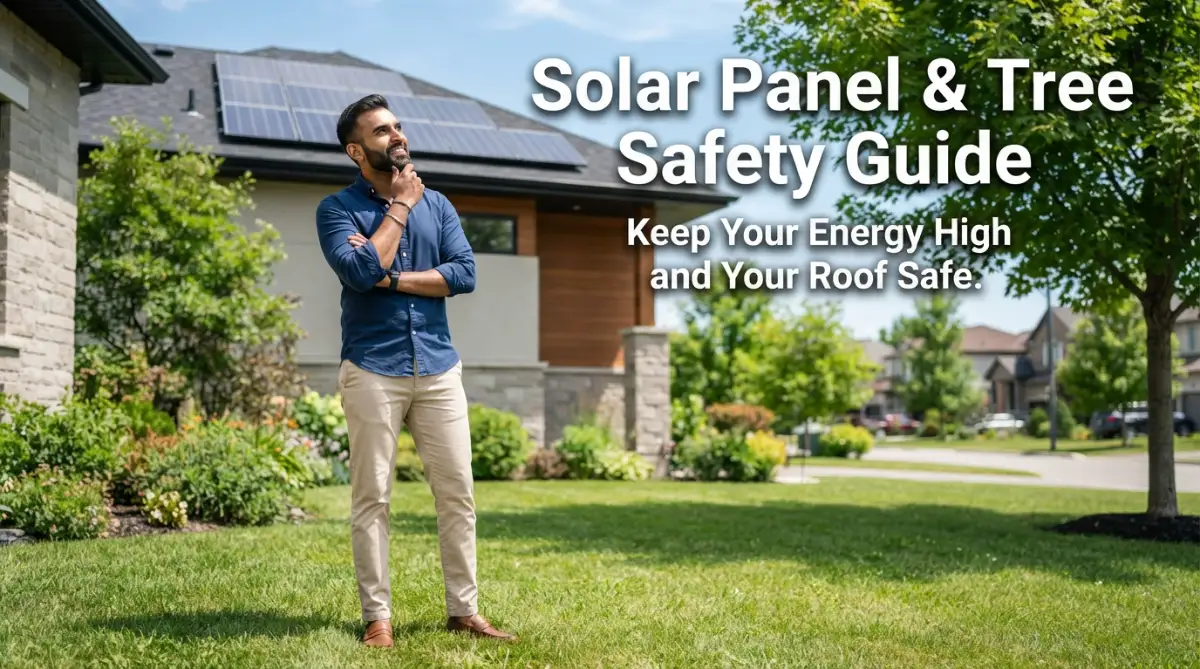
The Hidden Stress of Mixing Greenery with Solar Energy
You spent a lot of money on your solar panels. You felt proud the day they went up on your roof. It was a big step toward a cheaper, greener life.
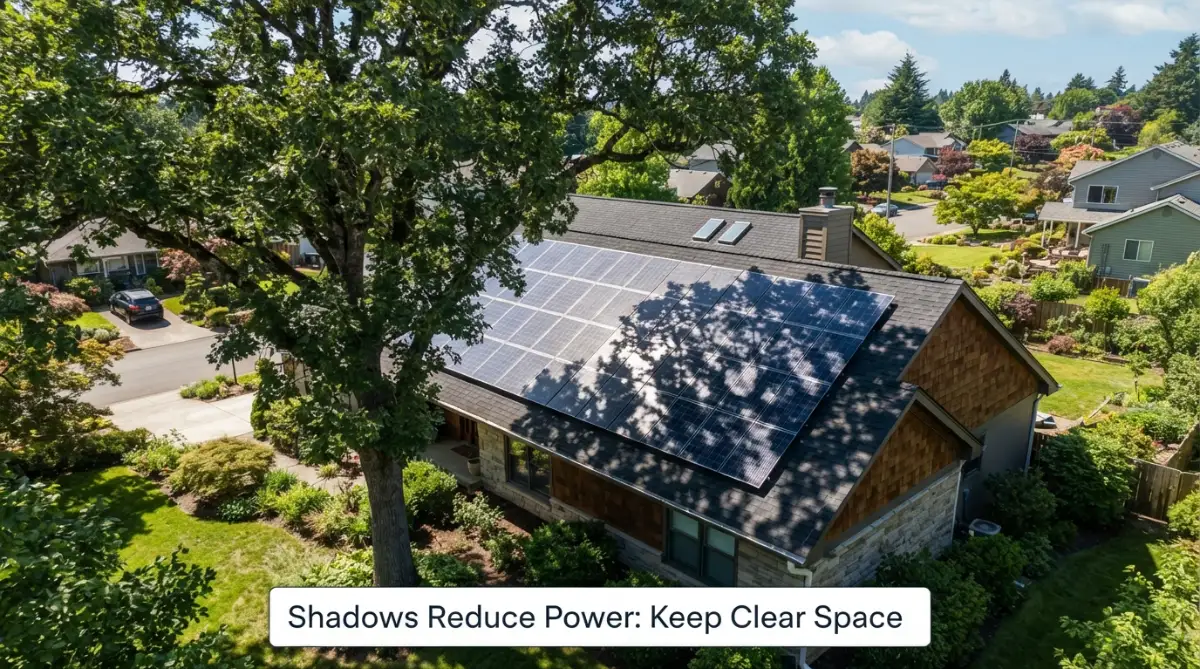
But then, you noticed something. Your energy bill isn't as low as you expected. You look up and see that beautiful, old oak tree in your yard. It’s casting a massive shadow across your expensive panels.
Suddenly, that tree doesn't look so beautiful anymore. It feels like a giant wall blocking your savings. Many homeowners feel this exact same frustration every single day.
I recently spoke with a homeowner named Sarah. She was so excited about her solar system. But after six months, her power output dropped by 40%.
The culprit? A fast-growing maple tree she thought was "far enough" away. She felt stuck between her love for nature and her need for affordable power.
It is a hard spot to be in. You want the shade for your yard, but you need the sun for your roof. This struggle can keep you up at night, wondering if you need to cut down your favorite tree just to keep the lights on.
The reality is that trees and solar panels can live together. You just need to know the rules of the game. It’s not just about shadows; it’s about falling branches, sap, and hidden roots.
Finding the Sweet Spot Between Nature and Power
To fix this issue, we have to look at the math and the science of your yard. It isn't just about how the tree looks today. It’s about how that tree will behave in five or ten years.
Understanding the Arc of the Sun
The sun doesn't stay in one spot. It moves across the sky in an arc that changes with the seasons. A tree that doesn't shade your roof in June might completely cover it in December.
You need to track the sun's path throughout the entire year. If a tree is to the south of your panels, it's a major threat.
In the northern hemisphere, the southern sky is where your panels get the most juice. Even a small branch can cause a "hot spot" on a panel, which can eventually damage the cell.
The Two-Times Height Rule
A very simple way to start is the "two-times height" rule. If a tree is 20 feet tall, you generally want it to be at least 40 feet away from your panels.
This gives a safety buffer for both shadows and falling debris. Of course, this isn't always possible in smaller suburban yards.
If you have a smaller space, you have to be much more careful about the species of tree you plant. Some trees grow wide, while others grow tall and thin.
Tracking Growth Rates of Common Trees
Not all trees are created equal. Some grow like weeds, while others take decades to reach their full height.
If you plant a Willow tree, you are looking for trouble. They grow incredibly fast and have weak wood that breaks in the wind.
On the other hand, a slow-growing hardwood might be easier to manage. You must research the "mature height" of any tree before you put it in the ground near your house.
Dealing with the Threat of Falling Limbs
It’s not just about the light. It’s about the physical weight of wood. A single heavy branch falling during a storm can crack a solar panel instantly.
Solar panels are tough, but they aren't meant to survive a direct hit from a large limb. If a tree has branches hanging directly over your roof, you are in the "danger zone."
Keep at least a 10-foot clear sky zone around your roof edges. This stops branches from scraping the panels or falling directly onto them during high winds.
How Roots Can Secretly Sabotage Your Solar Setup
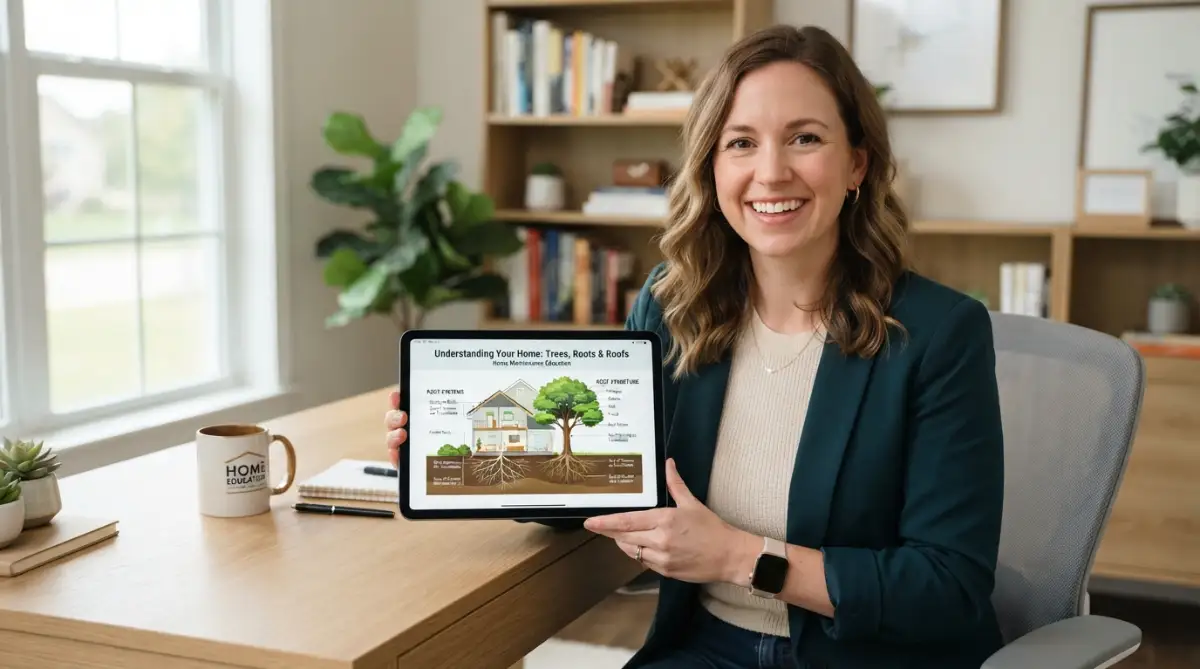
Most people only look up, but the real danger might be underground. Large trees have massive root systems that spread far beyond their branches.
These roots can push against your home’s foundation. If the foundation shifts even a little, it can put stress on your roof structure.
A stressed roof might develop leaks or cracks. If your solar mounting system is attached to a shifting roof, the panels can become unaligned.
The Danger of Pine Needles and Sap
Evergreen trees are a nightmare for solar owners. Pine needles are thin and can slide into the small gaps between your panels and the roof.
Once they get stuck, they trap moisture. This can lead to mold and rot on your roof shingles.
Then there is the sap. Tree sap is like glue. It catches dust and bird droppings, creating a thick layer of grime on your panels.
This grime is hard to wash off with just rain. You will end up spending more money on professional cleaning just to keep your panels working.
Why Small Shadows Cause Big Problems
You might think that a tiny shadow from a single branch doesn't matter. But solar panels are often wired in "strings."
Think of it like a garden hose. If you kink the hose in one spot, the water stops flowing everywhere.
In some solar systems, if 10% of the panel is shaded, the entire panel stops producing power. In worse cases, it can even slow down other panels in the same string.
Using Modern Tools to Map Your Shade
You don't have to guess anymore. There are apps and tools that can help you see the future.
Professionals use a tool called a "Solar Pathfinder." It shows exactly where shadows will fall every hour of every day of the year.
You can also use your smartphone. Many apps use augmented reality to show you the sun's path. Stand on your roof (safely!) and look through your phone to see if those branches will get in the way.
Selecting "Solar-Friendly" Greenery
If you are a gardener, you don't have to give up your hobby. You just need to be smart about what you plant.
Look for "dwarf" varieties of your favorite trees. A dwarf citrus or a small Japanese Maple might stay low enough to never bother your roof.
Also, consider deciduous trees. These are trees that lose their leaves in the winter.
In the winter, the sun is lower and weaker. Having no leaves on the branches allows more light to filter through to your panels when you need it most.
The Importance of Regular Pruning
You should treat tree trimming like an oil change for your car. It’s a part of regular home maintenance.
Don't wait for a branch to touch your roof. By then, it’s already too late.
Hire a professional arborist once a year. Tell them you have solar panels. They can "thin out" the canopy to let light through without killing the tree.
How Wind Direction Affects Your Safety
Think about the direction the wind usually blows during storms. In many places, storms come from the west or northwest.
If you have a large, weak tree on the windward side of your house, it’s a ticking time bomb. One big gust could send it right onto your solar array.
If you must have large trees, try to keep them on the opposite side of the house from your panels and the prevailing winds.
Structural Integrity and Roof Load
Solar panels add weight to your roof. Trees add the risk of "impact load."
When you combine a heavy roof with a falling tree, the results are catastrophic. Your roof rafters are designed to hold a certain amount of weight.
If a branch hits the panels, that force is transferred directly into your roof's frame. This can cause structural failure that costs tens of thousands of dollars to fix.
Creating a "No-Fly Zone" for Debris
Leaves are the enemy of efficiency. Even if they don't shade the panels, they trap heat.
Solar panels actually work better when they are cool. If leaves pile up under the panels, air can't circulate.
This causes the panels to overheat. When panels get too hot, they become less efficient at turning sunlight into electricity.
Why Distance Matters for Fire Safety
In many areas, fire safety is a huge concern. Trees near a roof can act as a "ladder" for fire.
If a bush catches fire, it can spread to the tree, and then to your roof. Solar panels have electrical components that can be damaged by extreme heat even if the fire doesn't touch them.
Keeping a safe distance of at least 10 to 15 feet between your roof and any major tree canopy is a standard fire safety recommendation.
Calculating the Economic Loss of Shading
Let’s talk about your wallet. If your tree causes just 20% shading, you are losing money every hour the sun is out.
Over 20 years, that 20% loss could add up to $5,000 or $10,000 in lost energy savings.
When you look at it that way, spending $500 to trim a tree is a great investment. It’s not just about the tree; it’s about the "Return on Investment" of your solar system.
Working with Your Neighbors
Sometimes the problem isn't your tree. It’s your neighbor's tree. This is a tricky situation.
You can't just go and cut down someone else's property. Most places have "Right to Light" laws, but they vary wildly.
The best approach is to talk to them. Explain your solar situation. Offer to pay for a professional trimming that benefits both of you.
A well-trimmed tree looks better and is safer for their house, too. It’s a win-win for everyone involved.
Planning for the Future Landscape
If you are building a new home, you have the best chance to get this right. Sketch out your "Solar Zone" on your site plan.
Mark it as a "No Tree Zone." Use this space for low-growing shrubs, flowers, or a vegetable garden.
Vegetables love the same sun that your solar panels do. This keeps the area productive without ever threatening your energy production.
Professional Advice: When to Call an Expert
Don't try to be a hero with a chainsaw. Trimming trees near a roof is dangerous for you and your panels.
One wrong cut and a heavy limb could swing right into your glass panels. Professional arborists have the tools and the insurance to do it right.
They also know how to prune a tree so it grows away from your house. This "directional pruning" can save your tree and your solar panels at the same time.
Final Thoughts on Safe Distances
There is no one-size-fits-all number. Every yard is different. Every roof is different.
But if you keep the "two-times height" rule in mind and maintain a 10-foot clear zone, you are ahead of most people.
Your solar panels are there to give you freedom. Don't let a poorly placed tree take that freedom away.
Take a walk outside today. Look at your trees. Look at your roof. If you see a shadow, it’s time to take action.
Your future self (and your bank account) will thank you for being proactive. Solar energy is a long-term game. Play it smart by managing your landscape today.
Mastering the Art of Solar-Friendly Landscaping
Managing a yard with solar panels is not a one-time job. It is a long-term commitment to keeping your roof clear and your energy high. Many people think once the panels are up, they can forget about the trees. But trees are living things that change every single day.
One of the best ways to stay ahead is by learning about micro-climates in your own backyard. Every yard has pockets of heat and cool air. If you have a large tree near your solar setup, it creates a pocket of humidity. This extra moisture can actually lead to faster wear and tear on your roof shingles.
You want to aim for a "breezeway" effect. This means keeping enough space between your tree line and your roof so that wind can flow through easily. This wind helps keep your solar panels cool. When panels get too hot, they actually lose power. By allowing air to move, you are helping your system work at its best.
If you are struggling with a specific tree that is just too big, consider thinning the canopy. Instead of cutting the whole tree down, a professional can remove specific inner branches. This lets more sunlight hit your roof while still keeping the tree healthy and beautiful. It is a smart way to balance your love for shade and your need for electricity.
Another pro tip is to keep a close eye on the "drip line" of your trees. This is the area directly under the outermost branches. You should never have your solar panels inside this line. Why? Because when it rains, water drips heavily from these branches. This water often carries dirt, tannins, and debris that stain your panels.
Maintaining this distance ensures that your panels stay cleaner for longer. If you do notice a buildup of dirt or tree sap, you should follow a step-by-step guide to cleaning roof solar panels safely at home to avoid scratching the glass. Keeping them clear of organic matter is the secret to a system that lasts for decades.
High-Tech Tools for Your Home Garden
You don't have to be a scientist to monitor your solar health. There are now smart sensors you can place in your yard that track sunlight levels. These sensors can tell you if a growing branch is starting to block the sun before you even notice the shadow with your eyes.
I also recommend using a simple laser measure. These tools are cheap and very accurate. Every few months, stand at the edge of your roof and measure the distance to the nearest branch. If that number gets smaller over time, you know it is time for a trim.
Remember that solar panels are a long game. Small changes today can save you thousands of dollars later. By treating your yard as a partner to your solar system, you create a home that is both beautiful and incredibly efficient.
The Price of Ignoring Nature: Mistakes That Cost Homeowners Dearly
It is easy to look at a small branch and think, "I'll deal with that next year." But nature does not wait for your schedule. One of the biggest mistakes homeowners make is underestimating the speed of growth. A tree that looks fine today can grow three feet in a single season.
I have seen people lose half their power output in just two years because they ignored a fast-growing pine. They thought they were saving money by not hiring a tree trimmer. In reality, they lost more money in wasted energy than the trimming would have ever cost. It is a painful lesson that many learn too late.
Another huge pitfall is planting the wrong species for the sake of aesthetics. People often choose trees because they look pretty in a magazine. But if that tree produces a lot of "helicopter seeds" or heavy sap, it becomes a nightmare for solar panels. These materials get stuck in the mounting hardware and can even cause small fires if they dry out and heat up.
There is also a common myth that shading only matters when the sun is directly overhead. This is completely false. Low-angle sun in the morning and late afternoon is very important for your total daily energy. Even a thin shadow from a distant tree can "choke" the electrical current in your panels.
Some people think that if it is a grey day, the shadows don't matter. But solar panels still produce power on cloudy days, and a tree branch can still block the diffuse light that the panels need. Ignoring these small details leads to what experts call "vampire shading," where your power slowly drains away without you noticing.
The worst mistake, however, is improper placement during the initial setup. Sometimes installers want to put panels in the easiest spot, not the sunniest spot. If you don't speak up about the trees you plan to keep, you might end up with a system that never reaches its full potential. To avoid this, make sure you understand these common placement mistakes before you sign any contracts.
The Danger of DIY Tree Work
I cannot stress this enough: please stay off the ladder with a saw. Every year, thousands of people are injured trying to trim trees near their homes. When you add the risk of slipping on solar panels or hitting a power line, the danger is extreme.
Not only is it dangerous for you, but it is dangerous for your panels. If you drop a heavy branch on a solar array, the glass will shatter. Most warranties will not cover damage caused by the homeowner. It is always cheaper and safer to hire a licensed professional who has the right insurance.
Your Action Plan for a Sun-Drenched Future
You now have the knowledge to protect your investment and your home. Having solar panels doesn't mean you can't have trees. It just means you need to be a better manager of your land.
Start by taking a "solar walk" around your house tomorrow morning. Look for any branches that are creeping toward your roof. Check the ground for roots that might be pushing up near your foundation. These small checks will give you peace of mind and keep your energy bills low.
If you find a problem area, don't panic. Call a local arborist and ask for a "solar trim." They will know exactly how to shape the tree to protect your roof while keeping the tree's health intact. This is a positive step toward a more sustainable and worry-free lifestyle.
Think of your roof as a power plant. Every bit of shade is a hole in that power plant's bucket. By keeping your trees at a safe distance, you are ensuring that every ray of sunshine is turned into clean, free energy for your family.
A Brighter, Greener Path Ahead
Nature and technology can work together perfectly when we respect the rules of both. You are now part of a growing group of smart homeowners who are taking control of their energy future.
Stay curious, keep your roof clear, and enjoy the feeling of watching your meter run backward. You have done the hard work of going solar. Now, just give those panels the space they need to shine. Your home is a masterpiece of modern living—keep it bright and keep it safe!
Disclaimer: The information provided in this blog post is for educational purposes only. Tree trimming and solar panel maintenance can be dangerous activities. Always consult with a certified arborist and a professional solar technician before performing work on your trees or roof. Local laws and home warranties vary; please check your specific agreements and municipal codes.