The Expensive Trap of Trying to Sell to Everyone
A lot of businesses do not fail because they have bad products. They fail because they try to talk to people who were never interested in buying. When your message is created for everyone, it usually feels personal to no one. The first step to better marketing is not more advertising — it is understanding the exact person you want to help.
I want you to think back to the last time you launched a new project, product, or blog post. You worked on it for days, perhaps even weeks, pouring your heart and soul into every single detail.
When it was finally ready, you hit publish and shared it with the world, expecting a rush of eager visitors. Instead, you were met with absolute silence.
Many business owners and creators go through this exact struggle every single week. They spend their hard-earned money on social media ads, targeting anyone and everyone who might listen.
They watch their bank accounts drain while their sales dashboards remain empty. The mental toll of this constant guessing game is heavy.
You begin to doubt your own abilities, wondering if your product is simply not good enough. But most of the time, the product is not the problem at all.
The real issue is that you are shouting into a crowded room without knowing who actually needs to hear your voice. When you try to speak to everyone, you end up speaking to nobody.
Let's change that today. Let's look at how you can stop guessing and start knowing exactly who your buyers are.

Key Takeaways: Stop Marketing Blindly
- Knowing your audience is more valuable than reaching a larger audience.
- Demographics explain who your customers are, but behavior explains why they buy.
- Real customer conversations often reveal insights that analytics cannot show.
- A clear buyer profile helps you create better products, content, and offers.
Decoding the Core Pillars of Audience Demographics
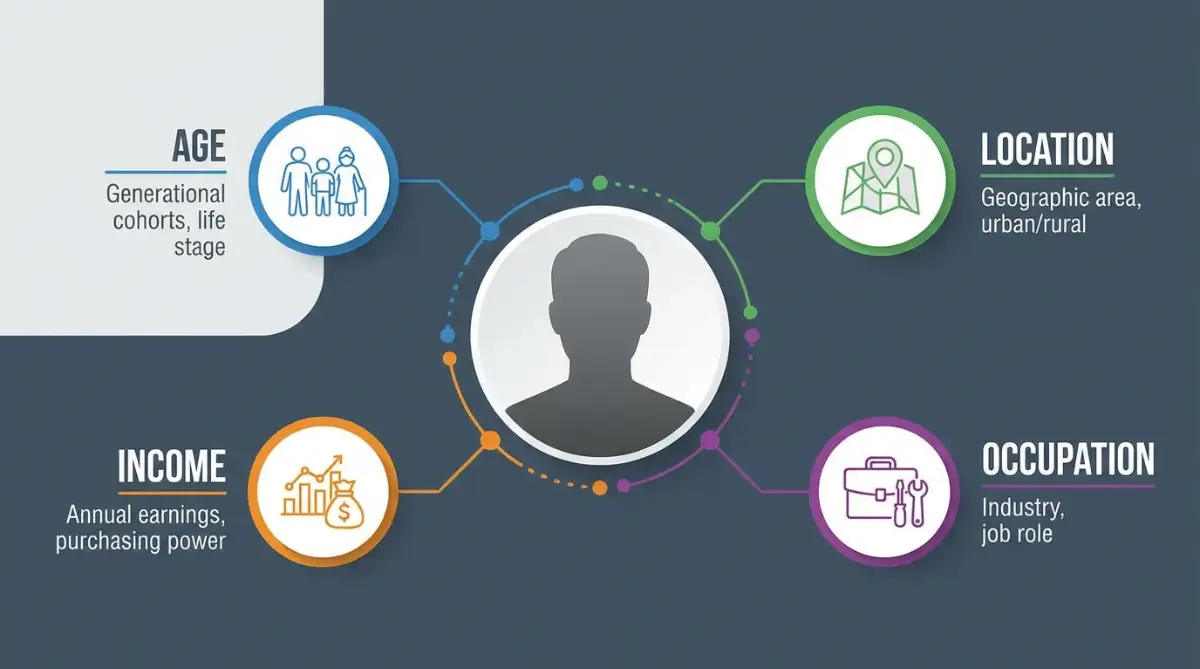
To build a successful business, you must understand the basic characteristics of the people you want to serve. These characteristics are what we call demographics.
Demographics are not just cold numbers on a spreadsheet. They represent real human beings with specific habits, budgets, and lifestyles.
The Audience Decision Filter
Before creating content or ads, ask:
The goal is not finding more people. The goal is finding the right people.
If we look closely at these traits, we can tailor our messages so they feel deeply personal to the reader. Let’s break down the most important demographic pillars that you need to study.
1. Age and Generation Gaps
Age dictates how people view the world and how they interact with technology. A person in their early twenties has completely different priorities than someone who is retiring.
For example, younger buyers might prefer quick, visual communication on platforms like TikTok. They care about social causes and fast trends.
On the other hand, older buyers often value deep detail, email communication, and long-term reliability. You cannot use the same tone of voice for both groups and expect them to buy.
2. Geographic Location and Climate
Where do your potential customers physically live? This simple question changes everything from your shipping policies to the words you use in your writing.
If you sell winter clothing, targeting people in sunny coastal regions is a waste of your resources. Even your timezone matters when you send emails or post updates.
Knowing their location helps you match their local climate, cultural values, and preferred language. It keeps your marketing relevant and highly practical.
3. Income Levels and Purchasing Power
You must align your prices with the financial reality of your target audience. If you sell luxury watches, you need to reach people with high discretionary income.
If you target college students, your offers must focus on affordability, discounts, and high utility. Trying to sell a premium service to budget-conscious buyers only leads to frustration for both sides.
4. Education and Occupation
The daily job of your customer shapes their vocabulary, their pain points, and their daily schedule. A busy corporate executive reads and processes information differently than a freelance graphic designer.
If your audience holds advanced degrees, they might expect a highly professional, academic tone. If your audience consists of busy parents, they will appreciate short, simple, and direct instructions.
Myth vs. Reality in Demographic Targeting
It is easy to fall into the trap of using stereotypes when analyzing your audience. Let us look at a few common myths and the actual reality behind them.
The Common MythThe Real World RealityOlder people do not buy products online.Older adults are highly active online and have more disposable income to spend.You must target every single demographic group to grow.Focusing on a tight, specific group brings higher conversions and lower ad costs.Demographics tell you exactly why people buy things.Demographics tell you who is buying; you still need psychographics to know why.
If you want a quick visual guide on how to spot your ideal customers online, check out this short video before moving on. It will help you make sense of the free data tools we discuss below.
How to Gather Accurate Customer Data Without a Large Budget
You might be wondering how a beginner can find this information without spending thousands of dollars on research agencies. The good news is that the best data is often completely free.
You just need to know where to look. Here is a simple, practical system to start gathering demographic data today.
Step 1: Mine Your Free Analytics Tools
If you already have a website or a social media profile, you are sitting on a goldmine of data. Tools like Google Analytics and Meta Business Suite collect this information automatically.
Open your dashboard and look for the "Audience" or "Demographics" tab. You will instantly see the age, gender, and location of the people who already visit you.
This data shows you who is actually interested in your content, rather than who you think should be interested. Use this as your starting point.
Step 2: Conduct Tiny, Non-Intrusive Surveys
You do not need to send out long, boring fifty-question surveys that people will immediately delete. Instead, ask one or two simple questions at a time.
You can use social media polls on Instagram or Twitter to ask about their current job roles or their biggest challenges. If you have an email newsletter, send a short welcome email asking them to reply with their current occupation.
People love to share their stories when you ask them directly and show that you genuinely care. Keep it short, sweet, and easy to answer.
Step 3: Study Your Competitors' Communities
If you are starting completely from scratch, look at your direct competitors who already have a large following. Go to their social media pages and look closely at the comment section.
Who are the people leaving reviews? Click on their profiles to see their general age bracket, their interests, and where they live.
Observe the language they use when they ask questions or complain about a product. This costs absolutely nothing but provides incredible insights into your shared audience.
Pro Tip: Never assume you know what your audience wants based on your own personal preferences. You are not your target customer. Always let the actual data guide your business decisions.
Building Your First Simple Buyer Profile
Once you have gathered your data, it is time to organize it into a simple, readable format. This is often called a buyer persona.
Think of it as a mock profile of your perfect customer. Let us look at an example of how this profile should look.
- Name Profile: Freelancing Fiona
- Age Range: 24 to 30 years old
- Physical Location: Urban areas in North America
- Job Title: Independent Graphic Designer
- Income Bracket: Moderate ($45,000 to $60,000 per year)
- Preferred Communication: Instagram and quick email newsletters
- Primary Challenge: Finding high-paying clients consistently
Having a profile like Fiona’s makes writing your blog posts or creating your products much easier. Whenever you sit down to write, imagine you are speaking directly to Fiona.

Buyer Persona Reality Check
A useful customer profile should answer:
- What problem makes this person search for a solution?
- What words would they use when describing their frustration?
- What could stop them from buying today?
A detailed profile is not about creating a fictional character. It is about understanding a real customer's situation.
Would she understand this word? Would this price point make sense to her?
This simple mental shift removes all the guesswork from your creative process. It ensures that every word you publish hits the mark.
For a long time, I resisted building customer profiles because I thought it was just a useless corporate exercise. But once I sat down and mapped out a single person with a real name and specific struggles, my copywriting instantly became stronger and my ad spend dropped. Do not skip this step; having a real face in mind when you write changes everything.
Tailoring Your Voice to Match Customer Expectations
Now that you have your profile, you must adjust how you talk to your readers. If your data shows that your readers are busy professionals, write short paragraphs and use bullet points.
If your audience consists of students, use a casual, friendly tone with relatable everyday examples. Avoid technical terms and industry jargon unless you are absolutely sure your readers use them daily.
Simple, clear communication is always more powerful than trying to look smart. Your readers will thank you for making their lives easier.
The Dynamic Nature of Audience Data
Remember that human beings change over time. An audience demographic profile is not a static document that you write once and throw into a desk drawer.
People change their habits, their economic situations change, and new platforms emerge. Make it a habit to review your audience data at least once every six months.
Look for any shifts in age groups, new top locations, or changes in how they access your website. Staying aligned with your audience is an ongoing journey, not a one-time task.
Keeping Your Research Simple and Stress-Free
It is incredibly easy to feel overwhelmed by all the charts, graphs, and metrics available to you. Do not let data analysis paralyze your progress.
Start by identifying just two key things: their average age bracket and their biggest daily headache. Master those two details first.
As your business grows, you can start looking at more complex details like income levels and specific household sizes. Progress step by step, and keep your focus on helping the real human behind the screen.
Wrapping Up This Section
Finding your target audience demographics is the foundation of every successful business and blog. It saves you from wasting your valuable time and budget on people who will never buy from you.
By looking at real data, talking to your community, and building simple profiles, you can create content that truly connects. Stop shouting into the void.
Take a few minutes today to look at your analytics, find out who is actually reading your work, and start writing just for them. Your journey to better engagement and higher conversions starts with understanding the person on the other side of the screen.
Going Deeper: Advanced Tactics to Track and Adapt to Your Changing Audience
Now that you understand the basic pillars of audience research, it is time to look at how the pros handle this data. Gathering basic age or location statistics is only the first step. To build a lasting business, you must learn to track how these groups change over time.
Think of your target audience as a living, breathing group that is always learning and growing. If your business does not grow with them, you risk becoming irrelevant very quickly. Let us look at some highly effective ways to keep your finger on the pulse of your market.
Layering Your Data with Micro-Segmentation
Many beginners make the mistake of grouping their audience into massive, generic blocks. They might say, "My target customer is any woman aged twenty to thirty-five."
This is simply too broad to be useful for your daily work. Instead, you need to use a method called micro-segmentation.
This means breaking down your main group into much smaller, highly specific pockets. For example, instead of targeting all young women, look for those who work remotely, live in noisy cities, and struggle to find time for healthy meal prep.
This level of detail helps you speak directly to a person's exact daily experience. It turns a generic sales pitch into a highly personal solution that feels like it was custom-made for them.
Matching Demographics with Digital Habits
Once you have your smaller groups, you must study how they navigate the digital space. Where do they spend their time online, and what devices do they use the most?
Recent studies on internet and smartphone adoption trends show that online habits vary wildly across different age groups[1]. Some demographics use their phones for literally everything, while others prefer the comfort of a larger desktop screen.
Knowing these differences helps you decide how to style your website and where to focus your attention. If eighty percent of your target market reads your posts on a mobile screen while riding a train, your layout must be incredibly clean and fast.
Automating Your Audience Insights
You do not have to spend hours every single day tracking these behavioral patterns by hand. Modern tools can do most of the heavy lifting for you while you focus on creating great content.
This is where finding and choosing the right CRM software for scaling small businesses becomes incredibly useful. A good system automatically tracks how different demographics interact with your emails, links, and products over time.
It keeps your records neat and organized, allowing you to see sudden shifts in customer behavior before they affect your bottom line. Investing a little time into setting up these systems now will save you hundreds of hours of manual work later.
The Power of a Dedicated Team
As your database grows, managing all this information can quickly become overwhelming. Trying to handle customer support, product creation, and demographic tracking all by yourself is a recipe for quick burnout.
This heavy load is a primary reason why solo founders fail and how early teams win in the modern market. Bringing in even one helper to focus on customer feedback can completely change your business journey.
It allows you to keep collecting high-quality data without losing your mental peace or sacrificing the quality of your work. Always remember that sharing the load makes long-term growth much easier to maintain.

Major Blindspots: The Costly Mistakes Most Creators Make with Demographic Data
Even with the best tools in the world, it is incredibly easy to make mistakes when analyzing your market. These errors might seem small at first, but they can quickly lead to wasted budgets and empty websites. Let us look at the most common trapdoors so you can avoid them entirely.
Falling into the Trap of Lazy Assumptions
The most common mistake is relying on outdated social stereotypes rather than looking at hard, cold data. For example, some creators assume that older adults never buy products online, or that younger buyers only care about cheap items.
These lazy assumptions are rarely true in the modern marketplace. If you build your entire strategy around a stereotype, you will end up targeting an audience that does not actually exist.
Always test your assumptions by looking at your actual website traffic and social media comments. Let your readers show you who they really are through their actions, not your guesses.
Treating Customer Profiles Like Stone Tablets
Another massive error is creating an audience profile once and never looking at it again. Some business owners write a detailed profile, save it to their computer, and ignore it for years.
But communities change, economic situations shift, and new online platforms appear constantly. If your customer profile is outdated, your messaging will quickly start to feel out of touch.
Make it a habit to check and update your audience notes at least twice a year to stay aligned with reality. It keeps your brand fresh, helpful, and highly responsive to new market needs.
Building Plans on False Foundations
Many people jump straight into launching a business without doing any real audience research beforehand. They spend months writing a massive, complicated guide on how they plan to grow.
Unfortunately, this is one of the most common and huge misconceptions about writing your first business plan. A plan that is not built on real, verified customer data is just a collection of wishes.
Save yourself the future heartache by talking to your target market before you write a single page of your business strategy. Your plans should always bend to fit the needs of your audience, not the other way around.
Your Path Forward: Turning Audience Insights Into Real Growth
We have covered a lot of ground today, and it is completely normal if you feel a bit overwhelmed by all these steps. But remember, you do not have to build a flawless system overnight to start seeing great results.
The secret to success is simply taking that very first small step today. Let us look at a simple, three-part action plan you can easily complete this week.
First, open your website analytics or your social media dashboard and write down the top three physical locations of your visitors. Second, send a short, one-question email to your newsletter asking them what their single biggest daily challenge is.
Third, use that simple information to write your very first mock buyer profile on a single sheet of paper. Keep this paper right next to your computer keyboard so you can look at it every time you write a new post.
Understanding your target audience is not a chore, it is the most rewarding shortcut to building a real business. Open your analytics tab tonight, take a look at who is already there, and start writing specifically for them. You have something amazing to offer, and your ideal customers are waiting to connect with you.
Professional Disclaimer
This blog post is designed for educational and informational purposes only. The strategies, tools, and methods discussed here are based on general business practices and should not be taken as professional financial, legal, or formal marketing advice. Every business is unique, and individual results may vary depending on your industry, budget, and local regulations. Always perform your own thorough research before making major financial investments or launching marketing campaigns.