The Midnight Receipt Mountain: Why Business Numbers Keep You Awake
Many business owners are comfortable creating products, serving customers, and building their brand. But when it comes to tracking money, many suddenly feel lost. The good news is that you do not need advanced accounting skills to understand your business finances. You only need a simple system that helps you see where your money comes from, where it goes, and what decisions you should make next.
Imagine sitting at your desk late on a Sunday night. The house is completely quiet, but your mind is racing with anxiety.
You are staring at a shoe box overflowing with faded paper receipts. There are crumpled coffee shop stubs, parking tickets, and inventory invoices from months ago.

Key Takeaways: Build Financial Control Without Being an Accountant
- Separate business and personal money before financial confusion begins.
- A simple weekly bookkeeping habit is better than yearly financial panic.
- Understand basic reports so you can make smarter business decisions.
- Clean records help with taxes, growth planning, and professional decision-making.
The Golden Rule of Business Finances: Setting Your Ground Rules
Before we even look at spreadsheets, we must establish one major rule. You must separate your personal life from your business transactions completely.
Many new business owners make the mistake of using one bank account for everything. They buy groceries and pay for client software with the exact same card.
This creates a massive puzzle that is nearly impossible to untangle later. It makes tracking your actual profits incredibly hard and leaves you open to tax errors.
The Great Account Separation
The easiest first step is to open a dedicated business checking account. Do this even if you are just starting out as a simple freelancer.
The Money Separation Test
Ask yourself these three questions:
If you cannot answer these easily, your financial system needs improvement.
Use this new account only for business income and business expenses. If you need to pay yourself, transfer a set amount to your personal account.
This simple separation keeps your records clean and easy to read. It saves you hours of sorting through bank statements at the end of the month.
Why Clean Boundaries Save Your Sanity
When your business has its own account, your financial story becomes clear. You can see exactly how much money is coming in from clients.
You also see exactly where your hard-earned cash is going each month. This clarity gives you the confidence to make smart spending decisions.
It also protects you in case your business is ever audited by tax authorities. Clean records are your best shield against financial headaches.
Cash vs. Accrual Accounting: Which Path Is Yours?
When you set up your books, you must choose an accounting style. There are two main methods, and choosing the right one keeps your records accurate.
Do not let these technical terms scare you off. The difference between them is actually very easy to understand once you see an example.
The Cash Method: Tracking as It Happens
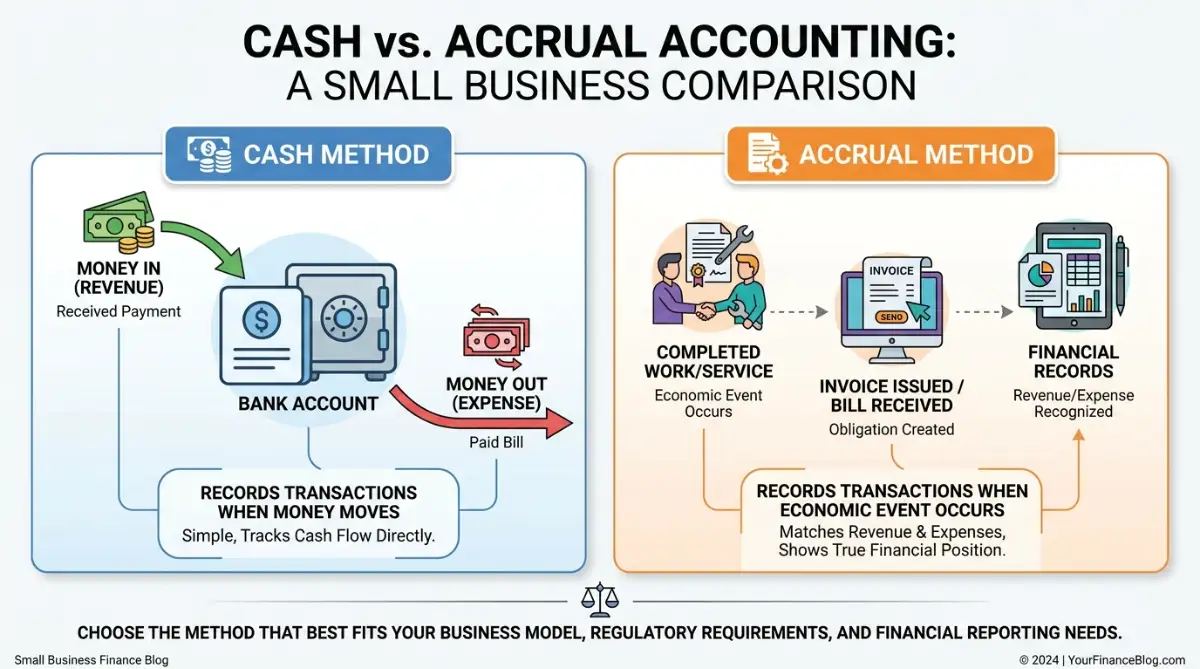
The cash method is the simplest way to manage your small business finances. In this system, you only record transactions when the cash actually moves.
If you send an invoice today, you do not write it down as income yet. You only record it when the client actually sends money to your bank account.
The same rule applies to your business bills and expenses. You only record the cost when the money leaves your wallet or bank.
Many tiny businesses and sole proprietors prefer this easy approach. It gives you a highly accurate picture of the physical cash you have on hand.
The Accrual Method: Tracking the Deals
The accrual method works a bit differently because it focuses on when transactions happen. You record income as soon as you complete the work and send the invoice.
It does not matter if the client takes thirty days to pay you. The money is written down on your books the day the deal is finalized.
This method gives you a long-term view of your business health. It shows your true sales and debts, even if the cash has not shifted yet.
Larger companies use this method to plan their yearly budgets. However, it can make tracking your daily available cash a bit more complex.
Choosing Your Financial Toolkit: Spreadsheets vs. Software
You do not need fancy, expensive tools to keep your business records clean. The best tool is simply the one you will actually use every single week.
Let us look at the two main options to help you choose the right fit. Your choice depends on your business size and how much time you want to save.
FeatureSimple SpreadsheetsDedicated SoftwareSetup CostCompletely FreeMonthly FeeLearning CurveVery LowMediumAutomationManual EntryAutomatic Bank SyncBest ForBrand New FreelancersGrowing Small BusinessesTax ReadinessManual SortingOne-Click Reports
If you want a step-by-step visual tour of how to set up your very first bookkeeping system, watch this short video. It will show you exactly how easy it is to manage your cash before you read about our manual spreadsheet setup below.
The Spreadsheet Route: Great for Beginners
If you are just starting with a few clients, a simple spreadsheet is perfect. You can use Google Sheets or Microsoft Excel to track your cash.
Create one sheet for your monthly income and another sheet for your business expenses. Keep the columns simple with fields for date, category, and amount.
This manual method helps you understand every single transaction deeply. It costs nothing and gives you complete control over your layout.
The Software Route: Great for Growing Brands
As your client list grows, manual data entry can become quite boring. This is when dedicated online accounting software becomes highly useful.
These tools connect directly to your business bank account securely. They import your daily transactions automatically, saving you hours of manual typing.
You simply categorize each transaction with a quick click on your screen. This automation keeps your books updated in real-time with very little effort.
Your Weekly Playbook: The 15-Minute Bookkeeping Routine
Bookkeeping is not a chore you should save for the end of the year. Doing it all at once in April is a recipe for extreme stress.
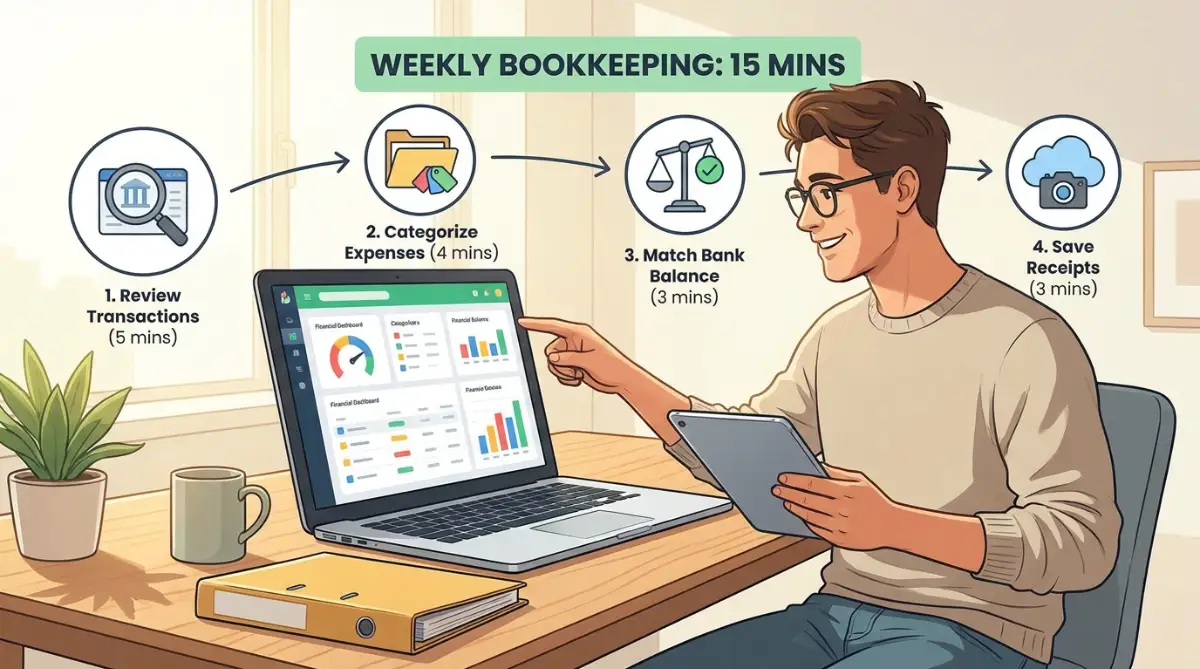
Instead, build a tiny weekly habit to stay on top of your money. Spending just fifteen minutes every Friday keeps your records perfectly fresh.
My biggest mistake was waiting until the very end of the year to sort through twelve months of bank statements, which took me three painful days of manual work. Once I forced myself to spend just fifteen minutes every single Friday afternoon doing a quick review, bookkeeping stopped being a monster in my closet. It is the single best routine I ever built for my business sanity.
Step 1: Capture and Categorize
Open your spreadsheet or bookkeeping software and look at your new transactions. Label each expense so you know exactly where your cash went.
Did you buy a new printer? Label it as office equipment. Did you pay for web hosting? Group it under software services.
Consistent categorization is key for tax deductions later. It helps your accountant find write-offs that save you money.
Step 2: Match the Bank Balance
This process is called bank reconciliation, but do not let the big word worry you. It simply means checking your bookkeeping records against your actual bank balance.
Make sure the numbers on your screen match the cash in your physical bank. If they do not match, look for missing fees or forgotten transactions.
Catching these tiny errors weekly is incredibly easy. Finding them six months later is like searching for a needle in a haystack.
Step 3: File the Receipts
Never let your paper receipts pile up on your desk or in your car. Use your smartphone to take a quick picture of every single physical receipt.
Store these digital copies in organized folders on Google Drive or Dropbox. You can organize them by year and then by expense category.
The IRS accepts digital receipts as long as they are highly legible. This habit keeps your desk clean and your mind completely at ease.
Myth vs. Reality: Common Bookkeeping Misconceptions
There are many common rumors about business money that cause needless worry. Let us clear up the confusion by looking at the facts.
Myth 1: "I Need to Be Good at Math"
Reality: Modern bookkeeping does not require complex calculus or algebra. It is simple addition and subtraction that anyone can easily handle.
Your computer or software does all the hard math for you. Your real job is simply to keep things organized and categorized correctly.
Myth 2: "My Business Is Too Small to Care"
Reality: No business is too small to benefit from organized books. Good financial habits help you scale your business safely from day one.
If you do not track your money now, growing will only make the chaos worse. Start small so you are ready for big success.
Myth 3: "Software Does Everything Automatically"
Reality: While accounting software is amazing, it still needs human guidance. It cannot guess if a dinner was for a client or a personal friend.
You must still log in regularly to review and approve the entries. The software is your helper, but you are still the manager.
Reading Your Financial Map: Three Key Reports to Understand
Once your books are clean, they tell an exciting story about your business. You can read this story using three simple financial reports.
These reports help you make smart decisions about hiring, buying, and pricing. Let us look at what they mean in plain English.
1. The Income Statement (Profit and Loss)
The Profit and Loss report is often called the P&L statement. It shows your total revenue minus your business expenses over a set time.
The final number at the bottom shows if you made a profit or lost money. It is the easiest way to see if your business model is actually working.
Review this sheet monthly to see if your sales are growing. If expenses are creeping up, you can catch them before they become a problem.
Monthly Money Review: 15-Minute Founder Check
Every month, review:
- Revenue: Did sales increase or decrease?
- Expenses: Which costs grew unexpectedly?
- Cash: How many months can the business survive?
A short review helps you make decisions before small problems become expensive problems.
2. The Balance Sheet
The balance sheet is a quick snapshot of your business health at a specific moment. It lists three key things: assets, liabilities, and equity.
- Assets: Everything your business owns, like cash, inventory, and equipment.
- Liabilities: Everything your business owes, like credit cards or business loans.
- Equity: The value that remains for you after subtracting your debts from your assets.
This report helps you see the actual value of your business structure. It is what banks look at if you ever apply for a business loan.
3. The Cash Flow Statement
This report tracks the physical cash moving into and out of your business. It is different from profit because it focuses strictly on timing.
You can have a profitable month on paper but still have zero cash in the bank. This happens if clients are slow to pay their outstanding invoices.
Understanding your cash flow keeps you from running out of money. It helps you plan for dry seasons when sales might naturally slow down.
Pro Tips to Avoid Tax-Time Panic
The ultimate goal of clean bookkeeping is a painless tax season. Here are some smart tips to keep your tax prep quick and stress-free.
Keep a Separate Tax Reserve
Never spend every dollar that enters your business bank account. A portion of that money belongs to the government for income tax.
Create a separate savings account just for your future tax bills. Every time a client pays you, transfer twenty to thirty percent into this account.
When tax day arrives, you will have the cash ready to go. This eliminates the panic of trying to find extra money under pressure.
Learn What You Can Deduct
Tax deductions are business expenses that lower your taxable income. The more legal deductions you have, the less tax you will pay.
Common deductions include office supplies, software tools, business travel, and education. Keep detailed notes on how these purchases helped your business.
If you work from home, you might even deduct a portion of your rent and internet. Talk to a tax advisor to find every write-off available to you.
Knowing When to Call a Professional
You can easily handle the daily basics of bookkeeping on your own. However, there comes a point where expert help is worth every penny.
If your transactions become highly complex, consider hiring a freelance bookkeeper. They can manage the weekly organization while you focus on your clients.
An accountant is also a wonderful partner for end-of-year tax planning. They can review your books to ensure you comply with federal laws.
Think of a financial professional as an investment in your peace of mind. They help you save money and protect the business you worked hard to build.
Take a deep breath and start with one small step today. Open that business bank account, and watch your financial clarity grow.
Smart Growth Secrets: Taking Your Business Records to the Next Level
Now that you have built a strong daily routine, it is time to look at some advanced strategies. You do not need to be a financial expert to use these pro-level methods.
These simple strategies will help you protect your business savings and plan for the future. They will give you a clear view of your business path, letting you make decisions based on real facts instead of random guesses.
The Cash Runway: Knowing Your Survival Number
One of the best financial habits you can build is calculating your cash runway. Your runway is the number of months your business can survive if all your income suddenly stops.
To find this number, look at your average monthly operating costs first. Then, divide your total bank balance by that monthly cost.
If you have ten thousand dollars in the bank and you spend two thousand dollars a month, your runway is five months. Knowing this number gives you massive peace of mind when times are tough.
Try to build a cushion of at least three to six months of operating expenses in your business account. This safety net protects you from unexpected market dips or slow client payments.
Mastering Your Aging Invoice Reports
If you bill your clients using invoices, you must keep a close eye on your accounts receivable. This is the money that clients owe you but have not paid yet.
Most bookkeeping systems can generate an aging invoice report automatically. This simple sheet groups your outstanding bills by how long they have been unpaid.
You will see bills categorized as thirty days late, sixty days late, or even ninety days late. Checking this report weekly helps you spot slow-paying clients before they hurt your bank balance.
Do not feel shy about sending gentle, automated reminders as soon as a bill is past its due date. Clean communication keeps your cash flowing and maintains a healthy relationship with your clients.
When setting up your invoice terms, check the official guidelines on payment terms from authoritative sources. For example, look into the U.S. Small Business Administration guide on managing cash flow to see how to shorten your billing cycle.
Automating Customer and Financial Records
If you have a growing client list, you will quickly find that managing customer details is hard without help. When you are choosing the right CRM software for scaling small businesses, make sure it integrates directly with your invoicing tools.
This connection ensures your sales data matches your financial ledger automatically. It saves you from typing the same client names and invoice amounts into multiple systems.
Knowing who buys your products and when they pay helps you predict future revenue. Take time for finding your target audience demographics to understand your clients' spending habits.
When you know your customers' buying patterns, you can plan your inventory and cash flow needs much better. This coordination prevents you from tying up too much cash in products that do not sell.

Hidden Financial Traps: Missteps That Quietly Drain Your Profits
Even the most careful business owners can slip into bad financial habits if they are not paying close attention. Let us examine the major mistakes that can quietly damage your business health.
Avoiding these traps is much easier when you know exactly what to look out for. Let us shine a light on these costly pitfalls.
Treating Your Business Account Like a Personal Bank
It is incredibly tempting to use your business card for a quick personal purchase when your personal card is out of reach. You might tell yourself that you will fix the transaction details later in your spreadsheet.
This is a dangerous path that leads to messy accounting records and massive tax headaches. It blurs the legal line between you and your business entity, which can destroy your liability protection.
To avoid this, pay yourself a set, regular owner's draw or a formal salary check. Transfer this money to your personal bank account before you spend it on personal needs.
Keep your business card locked away unless you are specifically buying something for your company. This clean boundary makes your weekly bookkeeping much faster and completely stress-free.
The Invisible Leak: Ignoring Small Cash Outlays
Many business owners are great at tracking large bills like rent or software subscriptions. However, they completely ignore small purchases like parking fees, client coffees, or postage stamps.
These small costs seem minor at first glance, but they accumulate rapidly over several months. If you do not record them, you are losing out on legal tax write-offs that keep your money in your pocket.
Every single dollar you spend on your business should be documented, no matter how small. Use your phone to snap photos of tiny receipts right at the cash register.
You will be shocked at how much money you save at the end of the year by tracking these tiny leaks. Your true profit margin will finally be accurate and clear.
Procrastination: The Year-End Tax Rush Disaster
Waiting until the end of the year to organize your financial records is a massive mistake. You will have to dig through hundreds of old emails and bank statements to remember what you bought.
This rush leads to severe errors, forgotten deductions, and immense stress as the tax deadline approaches. You might end up paying way more in taxes than you actually owe.
Many owners ignore these risks because they built their company on a weak foundation. This is one of the misconceptions about writing your first business plan that we see too often.
People assume a plan is only for getting bank funding, but it actually helps you map your cash needs. It sets a healthy standard for your daily operations right from the start.
If you find your cash flow drying up unexpectedly, you might need quick access to backup funding. Knowing the tricks to getting approved for unsecured loans without the stress can save your company during a dry spell.
A small line of credit keeps your operations running smoothly while you wait for clients to pay. However, you can only secure these loans if your financial books are perfectly clean and organized.
To avoid severe penalties, always double-check what is legally allowed as a business write-off. Read the IRS guide on deductible business expenses to make sure you do not flag your tax return for audits.
Your Action Plan: Simple Steps to Take Control Today
You do not have to fix your entire financial system in a single afternoon. Taking small, steady actions will help you build deep confidence without feeling overwhelmed.
Let us look at a simple plan you can start using tomorrow morning. These quick tasks will get your books in order quickly.
Action Plan for Tomorrow Morning
- Step 1: Call your bank and open a separate business checking account if you do not have one yet.
- Step 2: Buy a small plastic folder to hold any paper receipts you collect during the week.
- Step 3: Set a recurring calendar reminder for fifteen minutes every Friday afternoon to review your spending.
code
Text
[ ] Open Business Bank Account
[ ] Create Digital Receipt Folder
[ ] Set Friday Calendar Reminder
These three quick tasks require less than an hour of your time in total. Yet, they will completely change how you view your business money.
You will feel a wonderful sense of control as you watch your records become organized. The dark cloud of financial worry will naturally start to fade away.
Your Quick Weekly Financial Checklist
To keep your momentum going, follow this simple checklist every single week. It keeps your records fresh and prevents work from piling up.
- Review: Open your bank account online and look at your new transactions.
- Categorize: Label each expense in your spreadsheet or bookkeeping software.
- Match: Ensure your recorded ledger balance matches your physical bank balance.
- Scan: Take pictures of any paper stubs and save them to your digital drive.
By keeping this list short, you ensure that you will actually stick to the routine. It turns a scary chore into a simple, mindless habit.
You will soon realize that managing your business money can actually be highly rewarding. It shows you the direct results of your hard work in real-time.
Your Path to True Financial Confidence
Taking charge of your business bookkeeping is a wonderful act of self-care for your company. It transforms you from a stressed business owner into a confident manager.
You no longer have to guess if you can afford that new tool or hire that helper. The answers are right there on your clean, beautiful sheets.
Remember that every large, successful brand started with these exact same basic steps. They learned to value every penny, track every cost, and respect their cash flow.
You have the power and the tools to master this simple financial system. Start with your very next transaction, and build the thriving business you deserve.
Disclaimer
This article is for educational and informational purposes only. It does not constitute professional financial, legal, or tax advice. For specific guidance regarding your business finances, taxes, or legal structure, please consult with a certified public accountant (CPA) or a registered financial professional.