Navigating the Uncertainty of Mid-Year Career Transitions
I still remember the knot in my stomach the day I handed in my resignation letter. Stepping away from a familiar job brings a rush of excitement, but the quiet anxiety about health benefits creeps in almost immediately. My mind raced with questions about doctor visits, prescription refills, and what would happen if an unexpected medical emergency popped up before my new plan kicked in. Changing jobs in the middle of the year feels like walking across a tightrope without a safety net, especially when your family's medical security hangs in the balance.
That sudden vulnerability can disrupt your peace of mind and turn everyday routines into sources of stress. You start second-guessing every upcoming dental appointment and worrying about the cost of routine medications. Instead of focusing on the fresh start of a new career adventure, you find yourself buried in paperwork, insurance glossaries, and confusing policy dates. The fear of facing a coverage gap can make anyone lose sleep at night.
It helps to remember that you are not alone in feeling this way. Millions of professionals navigate these exact hurdles every single year. Breaking down the transition process into clear, manageable steps brings back a sense of control. Let us walk through how health coverage shifts during a mid-year career change and how you can protect your wellbeing every step of the way.
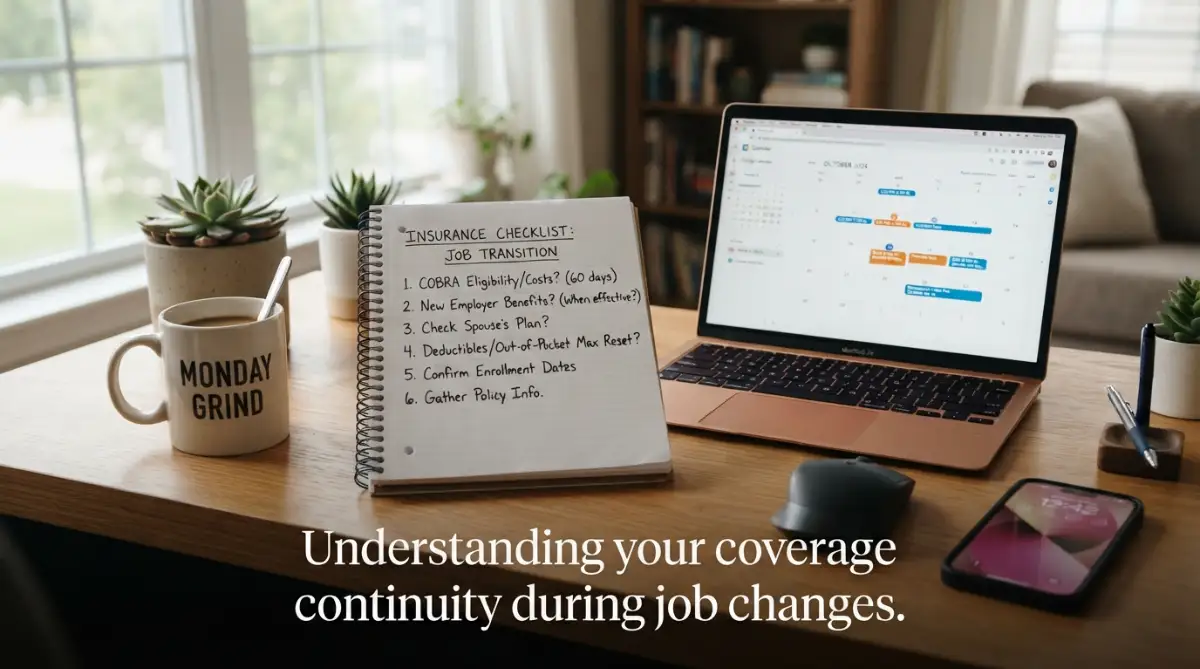
Understanding Your Coverage Timeline and Transition Rights
The Reality of Your Final Day on the Job
Your existing employer-sponsored health plan usually does not vanish the exact second you walk out the door. In many cases, your coverage remains active until the final day of the month in which you leave your job. Knowing this specific end date gives you a clear runway to plan your next moves. Always check with your human resources department to confirm your exact termination date and benefits expiration.
Bridging the Gap With Continuation Coverage
When your current health plan ends, federal laws like COBRA often step in to offer a temporary safety net. COBRA lets you keep your exact same workplace health insurance for a limited time after leaving your job. The catch is that you must pay the full premium yourself, which often includes the portion your employer used to cover. While it can feel expensive, having that familiar coverage active can provide immense peace of mind during a short employment gap.
Pro Tip: When I left my previous role, I realized that enrolling in COBRA does not have to be an all-or-nothing panic move. You actually have a retroactive enrollment window of sixty days to elect coverage, meaning you can wait and see if you experience any medical needs before paying the retroactive premium.
Exploring Alternative Health Insurance Options
If COBRA proves too costly for your budget, the open insurance marketplace offers a variety of flexible alternatives. Leaving a job that provided health coverage qualifies you for a special enrollment period. This means you can shop for individual health plans outside of the standard yearly enrollment window. Comparing plans carefully ensures you find a policy that fits your health needs and monthly budget.
Aligning Your New Employer Benefits
Starting a new job brings relief, but matching your new medical benefits with your timeline requires careful attention. Many companies enforce a waiting period ranging from thirty to ninety days before your new health insurance becomes effective. Planning for this waiting period prevents unexpected medical bills from catching you off guard.
Watch this helpful guide on managing insurance gaps during job transitions:
Coordinating Care During the Handover
Switching doctors can be stressful if your primary care provider does not accept your new insurance network. Take time before your transition to check whether your preferred physicians and specialists are in-network with your upcoming plan. Refilling necessary prescriptions ahead of time also ensures you never run out of vital medications while your paperwork clears. Staying proactive turns a stressful administrative hurdle into a smooth and manageable shift.
Mastering Your Healthcare Transition Like a Seasoned Professional
Proactive Strategies for Seamless Medical Coverage
Taking control of your healthcare needs requires looking beyond the immediate paperwork and planning for the long haul. When you manage your benefits properly, you save money and protect your physical health from unexpected surprises.
One smart habit is maintaining a dedicated folder for all your medical documents, receipts, and plan details. Having everything organized in one place makes it much easier to track deductible progress and coordinate care between doctors.
Keeping an emergency savings fund specifically for out-of-pocket medical costs brings incredible peace of mind. Knowing you have a financial cushion helps you sleep better at night while adjusting to a new workplace plan.
Leveraging Health Savings Accounts for Future Security
Health savings accounts offer a fantastic way to set aside pre-tax dollars for future medical expenses. If your new job offers a high-deductible health plan paired with an account, consider contributing regularly.
These funds often roll over from year to year, building a reliable financial safety net over time. You can use this money for routine checkups, dental care, or unexpected pharmacy visits without straining your monthly budget.
Building Relationships Within Your New Provider Network
Finding doctors who truly listen and understand your health history takes time and patience. Once your new insurance kicks in, schedule introductory visits with local in-network providers right away.
Establishing these relationships early prevents you from scrambling to find care when a sudden illness strikes. Your future self will thank you for taking care of these foundational steps before urgent needs arise.

Navigating the Hidden Pitfalls of Job Transitions
The Danger of Assuming Instant Coverage
One of the most common mistakes people make is assuming their new insurance starts on day one of the new job. Many companies enforce a waiting period before benefits become active, leaving a dangerous window without protection.
If you skip checking this detail, you might face heavy out-of-pocket bills for routine doctor visits or emergency care. Always verify your exact start date for coverage with your human resources department before making assumptions.
Forgetting to Review Your Prescription Drug Formulary
Not every health plan covers medications in the exact same way or at the same price tier. Assuming your regular prescriptions will automatically be covered at your preferred pharmacy can lead to unpleasant financial shocks.
Take a few minutes to look up your daily medications on your new provider's drug list ahead of time. Discussing alternative generic options with your doctor can save you significant money and prevent sudden gaps in your treatment.
Overlooking Retroactive Enrollment Windows for Safety Nets
Many workers panic and immediately spend too much on expensive short-term plans when a coverage gap occurs. They often forget that options like COBRA offer a retroactive window to enroll only if an emergency happens.
Rushing into costly decisions without exploring all your flexible alternatives can drain your savings unnecessarily. Take a deep breath, review your actual medical needs, and weigh your choices carefully before committing funds.
Your Path Forward to Complete Peace of Mind
Navigating a mid-year career shift brings plenty of changes, but your health coverage does not have to be a source of constant stress. By staying organized, understanding your transition rights, and planning ahead for waiting periods, you protect both your physical wellbeing and your financial security.
Every smart choice you make today builds a sturdier foundation for your new professional chapter. Take things one step at a time, trust your ability to adapt, and embrace the fresh opportunities ahead of you.
I know how overwhelming career changes can feel when medical security is up in the air. Trust me, taking a few quiet moments today to map out your insurance steps will give you the confidence to chase your goals tomorrow.
Disclaimer
The information provided in this article is for educational and informational purposes only and should not be construed as professional medical, legal, or financial advice. Always consult with a qualified insurance broker, human resources professional, or healthcare provider regarding your specific situation and benefits needs.
Questions People Frequently Ask About Job Transitions and Health Insurance
What happens to my old health insurance the day I leave my job?
Your existing employer-sponsored coverage typically remains active until the final day of the month in which your employment ends. Always confirm this exact termination date directly with your human resources department to avoid surprises.
Can I really wait to sign up for COBRA until I actually need medical care?
Yes, federal guidelines allow a sixty-day retroactive enrollment window for COBRA coverage after your previous plan ends. This means you can choose to elect and pay for it retroactively only if you experience a medical event during that transition window.
How do I handle prescription refills during a gap between jobs?
You can often ask your doctor for a slightly larger supply or an early refill before your old coverage officially expires. Exploring discount pharmacy programs can also help bridge short gaps affordably if you run out of essential medications.
Will my new employer automatically cover my pre-existing health conditions?
Modern federal regulations prevent group health plans from denying coverage or charging more based on pre-existing medical conditions. Your new plan will cover your ongoing health needs once the official waiting period concludes.
Disclaimer
The information provided in this article is for educational and informational purposes only and should not be construed as professional medical, legal, or financial advice. Always consult with a qualified insurance broker, human resources professional, or healthcare provider regarding your specific situation and benefits needs.