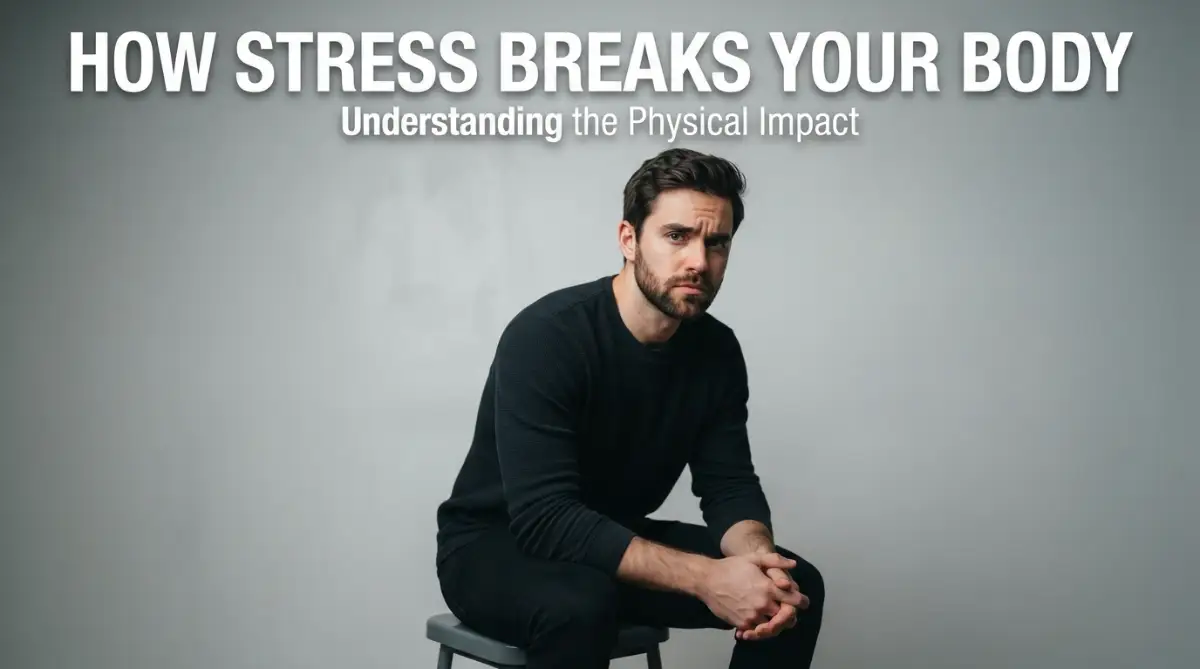
The Invisible Weight: Why Your Body Feels Like It’s Breaking
Do you ever wake up feeling like you’ve already run a marathon? You haven't even stepped out of bed, but your shoulders are tight, your jaw is clenched, and your stomach feels like it’s tied in knots.
This isn't just "being busy" or "having a bad day." This is the reality of living with chronic stress, a silent force that slowly eats away at your physical well-being.
I want you to imagine Sarah. Sarah is a 30-year-old professional who loves her job but constantly feels "on."
She ignores the small headaches and the occasional heart palpitations, thinking they are just part of life. But over months, her hair starts thinning, her skin breaks out, and she catches every cold that passes through the office.
Sarah’s body is screaming for help, but she doesn't know how to listen. Does this sound like you?
We often think of stress as something that stays in our heads. We think it’s just a "feeling."
But the truth is much more physical. When your mind feels threatened, your body goes into a war-like state.
It pumps out hormones like cortisol and adrenaline, preparing you to fight or run away. This is great if a bear is chasing you.
It is a disaster if the "bear" is actually your overflowing email inbox or a stack of unpaid bills. When this state lasts for weeks or years, your physical systems start to fail.
You deserve to feel light again. You deserve to have a body that works with you, not against you.
In this guide, I will show you exactly what is happening inside your organs right now. We will look at why you feel so tired and how you can finally break the cycle of physical exhaustion.
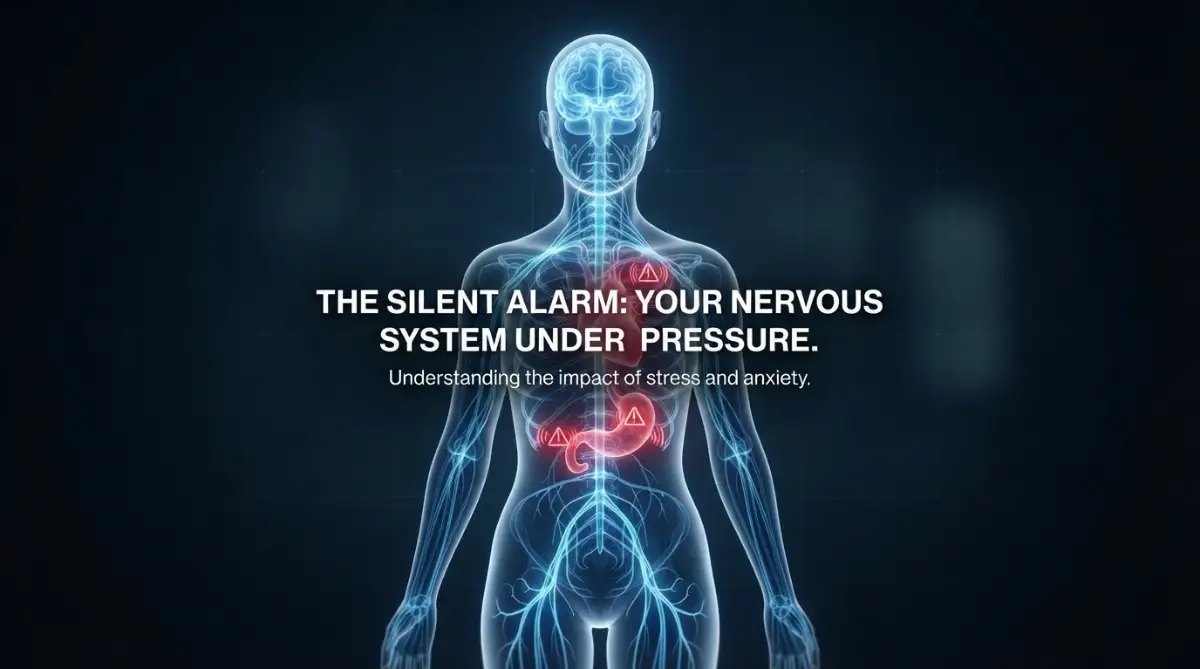
The Science of the "Silent Alarm" Inside Your Cells
To understand why you feel this way, we need to talk about your autonomic nervous system. Think of it as the autopilot for your body.
It controls things you don't think about, like your heartbeat, your breathing, and how you digest your lunch. It has two main modes: the "Fight or Flight" mode and the "Rest and Digest" mode.
Chronic stress keeps you stuck in the "Fight" mode. This is like red-lining your car engine while it's still in the garage.
The engine gets hot, the oil burns up, and eventually, things start to break. Your body wasn't built to stay in this high-alert state for very long.
How Your Heart Bears the Burden
When you are stressed, your heart is the first to know. It starts beating faster to pump blood to your muscles.
Your blood vessels constrict, and your blood pressure rises. If this happens every single day, your arteries start to get damaged.
They become stiff and scarred. This makes it harder for blood to flow smoothly.
Over time, this can lead to serious issues like hypertension or even heart disease. You might notice your heart "skipping a beat" when you think about a deadline.
That is your heart telling you that it is overworked. It needs a break from the constant rush of adrenaline.
The Gut-Brain Connection: Why Your Stomach Hurts
Have you ever noticed that you get a stomach ache before a big presentation? Or maybe you lose your appetite when you are worried?
There is a massive network of nerves in your gut, often called the "second brain." When stress hits, your brain tells your gut to stop digesting food.
It wants to save that energy for survival. Chronic stress ruins your digestion.
It can lead to bloating, gas, and even conditions like IBS (Irritable Bowel Syndrome). It also changes the balance of good bacteria in your gut.
When your gut bacteria are out of balance, it affects your mood and your immune system. It's a vicious cycle that leaves you feeling sluggish and uncomfortable.
The Immune System Shutdown
You might think that stress makes your immune system work harder, but it’s actually the opposite. Cortisol suppresses the immune system.
In the short term, this helps reduce inflammation. But when cortisol levels stay high for a long time, your immune cells become "deaf" to its signals.
This leads to uncontrolled inflammation throughout your body. You become more likely to get sick, and it takes you much longer to recover.
If you find yourself catching every "bug" going around, your stress levels are likely to blame. Your body is too busy fighting the "stress ghost" to fight actual viruses.
Muscle Tension and the "Armor" Effect
When we are stressed, our muscles tense up instinctively. It is a way of "armoring" ourselves against a physical attack.
If you never relax, those muscles stay tight. This is why you have chronic neck pain, backaches, and tension headaches.
You are literally carrying the weight of your worries in your shoulders. Over time, this can lead to permanent changes in your posture and chronic pain conditions.
Moving your body becomes harder, which makes you want to exercise less. This only makes the physical stress worse.
Practical Steps to Reset Your Physical Functions
Knowing the problem is only half the battle. You need a way to tell your body that the "war" is over.
You can't just tell your heart to slow down or your gut to start working. You have to use physical triggers to flip the switch back to "Rest and Digest."
Step 1: Control the "Master Switch" with Your Breath
The fastest way to reach your nervous system is through your breath. It is the only part of your autopilot system that you can control.
When you take deep, slow breaths, you send a signal to your brain. You are telling it, "I am safe right now."
Try the 4-7-8 technique today. Inhale for 4 seconds, hold for 7 seconds, and exhale slowly for 8 seconds.
Doing this just five times can lower your heart rate. It forces your body to leave the "Fight" mode and enter a state of calm.
Step 2: Use "Grounding" to Calm Your Senses
Stress often makes us feel like we are floating in a cloud of worry. Grounding pulls you back into your physical body.
Try the 5-4-3-2-1 method. Look around and name five things you can see, four things you can touch, three things you can hear, two things you can smell, and one thing you can taste.
This simple act breaks the stress loop in your brain. It reminds your body that you are in the present moment, not in a future catastrophe.
It is a great way to stop a panic attack before it starts. It also helps reduce that "jittery" feeling in your chest.
Step 3: Prioritize "Sleep Hygiene" for Cellular Repair
Your body does most of its healing while you sleep. But chronic stress makes it very hard to get deep sleep.
You might fall asleep, but you wake up at 3 AM with your mind racing. To fix this, you must create a "No-Stress Zone" in your bedroom.
Stop looking at screens 60 minutes before bed. The blue light from your phone tells your brain it is daytime, which keeps cortisol high.
Instead, read a physical book or listen to calming music. Lower the temperature in your room.
A cool room helps your body's core temperature drop, which is a signal for sleep. When you get better sleep, your body can finally start repairing the damage done during the day.
Myth vs. Reality: Understanding Stress Recovery
The MythThe RealityStress is only mental and doesn't hurt the body.Stress causes real, measurable physical damage to organs.You can "power through" chronic stress with caffeine.Caffeine often makes physical stress symptoms worse.Stress relief takes hours of meditation every day.Even 2 minutes of deep breathing can reset your system.If you don't feel "worried," you aren't stressed.Your body can be stressed even if your mind feels numb.
Rebuilding Your Internal Balance
We often wait for a "big sign" to change our lives. We wait for a doctor to tell us we have a problem.
But you don't have to wait for a crisis. You can start listening to your body today.
Notice the small things. Notice the way your breath gets shallow when you check your email.
Notice how your jaw feels at the end of the day. These are your body's ways of communicating with you.
The Power of Gentle Movement
You don't need to do a high-intensity workout to lower stress. In fact, if you are very stressed, a hard workout might actually raise your cortisol more.
Instead, try low-impact movement. A 20-minute walk in nature can do wonders.
Stretching or yoga helps release the physical "armor" in your muscles. It tells your nervous system that it is okay to let go of the tension.
The goal isn't to burn calories. The goal is to move the stress through your body and out of your system.
Eating to Support Your Adrenals
What you eat determines how well your body handles stress. When we are stressed, we crave sugar and junk food.
This is because your brain wants a quick hit of energy to "fight the bear." But sugar causes a crash that makes you feel even more stressed later.
Focus on magnesium-rich foods like spinach, almonds, and dark chocolate. Magnesium is often called the "calm mineral" because it helps muscles relax.
Stay hydrated with plain water. Even mild dehydration can raise cortisol levels.
By eating better, you give your body the tools it needs to stay resilient. You are building a stronger foundation for your physical health.
Setting Physical Boundaries
We often talk about boundaries with people, but we need them for our bodies too. This means knowing when to stop working.
It means saying "no" to that extra coffee when you already feel shaky. It means taking a 5-minute break every hour to stand up and stretch.
These small acts of self-care add up. They tell your body that you are on the same team.
When you protect your body, it will protect you. You will find that you have more energy and focus than you ever thought possible.
Moving Forward with Confidence
Living with chronic stress feels like being trapped in a cage. But you have the key to that cage.
It starts with understanding that your physical symptoms are real. They are not "all in your head."
By using the steps we discussed—breathing, grounding, and movement—you can start to heal. You can reclaim your health and your happiness.
Your body is incredibly resilient. It wants to heal. It just needs you to give it the chance.
Take a deep breath right now. Feel your ribs expand and your shoulders drop.
That is the first step toward a healthier, more vibrant you. You have the power to change how you feel, one breath at a time.
Keep going. You are doing a great job by simply being aware.
In the next part of your journey, we will look at more advanced ways to optimize your physical functions. We will explore how to stay calm in the middle of a storm.
For now, focus on the small wins. Focus on being kind to your physical self.
The Invisible Weight: Why Your Body Feels Like It’s Breaking
Do you ever wake up feeling like you’ve already run a marathon? You haven't even stepped out of bed, but your shoulders are tight, your jaw is clenched, and your stomach feels like it’s tied in knots.
This isn't just "being busy" or "having a bad day." This is the reality of living with chronic stress, a silent force that slowly eats away at your physical well-being.
I want you to imagine Sarah. Sarah is a 30-year-old professional who loves her job but constantly feels "on."
She ignores the small headaches and the occasional heart palpitations, thinking they are just part of life. But over months, her hair starts thinning, her skin breaks out, and she catches every cold that passes through the office.
Sarah’s body is screaming for help, but she doesn't know how to listen. Does this sound like you?
We often think of stress as something that stays in our heads. We think it’s just a "feeling."
But the truth is much more physical. When your mind feels threatened, your body goes into a war-like state.
It pumps out hormones like cortisol and adrenaline, preparing you to fight or run away. This is great if a bear is chasing you.
It is a disaster if the "bear" is actually your overflowing email inbox or a stack of unpaid bills. When this state lasts for weeks or years, your physical systems start to fail.
You deserve to feel light again. You deserve to have a body that works with you, not against you.
In this guide, I will show you exactly what is happening inside your organs right now. We will look at why you feel so tired and how you can finally break the cycle of physical exhaustion.

The Science of the "Silent Alarm" Inside Your Cells
To understand why you feel this way, we need to talk about your autonomic nervous system. Think of it as the autopilot for your body.
It controls things you don't think about, like your heartbeat, your breathing, and how you digest your lunch. It has two main modes: the "Fight or Flight" mode and the "Rest and Digest" mode.
Chronic stress keeps you stuck in the "Fight" mode. This is like red-lining your car engine while it's still in the garage.
The engine gets hot, the oil burns up, and eventually, things start to break. Your body wasn't built to stay in this high-alert state for very long.
How Your Heart Bears the Burden
When you are stressed, your heart is the first to know. It starts beating faster to pump blood to your muscles.
Your blood vessels constrict, and your blood pressure rises. If this happens every single day, your arteries start to get damaged.
They become stiff and scarred. This makes it harder for blood to flow smoothly.
Over time, this can lead to serious issues like hypertension or even heart disease. You might notice your heart "skipping a beat" when you think about a deadline.
That is your heart telling you that it is overworked. It needs a break from the constant rush of adrenaline.
The Gut-Brain Connection: Why Your Stomach Hurts
Have you ever noticed that you get a stomach ache before a big presentation? Or maybe you lose your appetite when you are worried?
There is a massive network of nerves in your gut, often called the "second brain." When stress hits, your brain tells your gut to stop digesting food.
It wants to save that energy for survival. Chronic stress ruins your digestion.
It can lead to bloating, gas, and even conditions like IBS (Irritable Bowel Syndrome). It also changes the balance of good bacteria in your gut.
When your gut bacteria are out of balance, it affects your mood and your immune system. It's a vicious cycle that leaves you feeling sluggish and uncomfortable.
The Immune System Shutdown
You might think that stress makes your immune system work harder, but it’s actually the opposite. Cortisol suppresses the immune system.
In the short term, this helps reduce inflammation. But when cortisol levels stay high for a long time, your immune cells become "deaf" to its signals.
This leads to uncontrolled inflammation throughout your body. You become more likely to get sick, and it takes you much longer to recover.
If you find yourself catching every "bug" going around, your stress levels are likely to blame. Your body is too busy fighting the "stress ghost" to fight actual viruses.
Muscle Tension and the "Armor" Effect
When we are stressed, our muscles tense up instinctively. It is a way of "armoring" ourselves against a physical attack.
If you never relax, those muscles stay tight. This is why you have chronic neck pain, backaches, and tension headaches.
You are literally carrying the weight of your worries in your shoulders. Over time, this can lead to permanent changes in your posture and chronic pain conditions.
Moving your body becomes harder, which makes you want to exercise less. This only makes the physical stress worse.
Practical Steps to Reset Your Physical Functions
Knowing the problem is only half the battle. You need a way to tell your body that the "war" is over.
You can't just tell your heart to slow down or your gut to start working. You have to use physical triggers to flip the switch back to "Rest and Digest."
Step 1: Control the "Master Switch" with Your Breath
The fastest way to reach your nervous system is through your breath. It is the only part of your autopilot system that you can control.
When you take deep, slow breaths, you send a signal to your brain. You are telling it, "I am safe right now."
Try the 4-7-8 technique today. Inhale for 4 seconds, hold for 7 seconds, and exhale slowly for 8 seconds.
Doing this just five times can lower your heart rate. It forces your body to leave the "Fight" mode and enter a state of calm.
Step 2: Use "Grounding" to Calm Your Senses
Stress often makes us feel like we are floating in a cloud of worry. Grounding pulls you back into your physical body.
Try the 5-4-3-2-1 method. Look around and name five things you can see, four things you can touch, three things you can hear, two things you can smell, and one thing you can taste.
This simple act breaks the stress loop in your brain. It reminds your body that you are in the present moment, not in a future catastrophe.
It is a great way to stop a panic attack before it starts. It also helps reduce that "jittery" feeling in your chest.
Step 3: Prioritize "Sleep Hygiene" for Cellular Repair
Your body does most of its healing while you sleep. But chronic stress makes it very hard to get deep sleep.
You might fall asleep, but you wake up at 3 AM with your mind racing. To fix this, you must create a "No-Stress Zone" in your bedroom.
Stop looking at screens 60 minutes before bed. The blue light from your phone tells your brain it is daytime, which keeps cortisol high.
Instead, read a physical book or listen to calming music. Lower the temperature in your room.
A cool room helps your body's core temperature drop, which is a signal for sleep. When you get better sleep, your body can finally start repairing the damage done during the day.
Myth vs. Reality: Understanding Stress Recovery
The MythThe RealityStress is only mental and doesn't hurt the body.Stress causes real, measurable physical damage to organs.You can "power through" chronic stress with caffeine.Caffeine often makes physical stress symptoms worse.Stress relief takes hours of meditation every day.Even 2 minutes of deep breathing can reset your system.If you don't feel "worried," you aren't stressed.Your body can be stressed even if your mind feels numb.
Rebuilding Your Internal Balance
We often wait for a "big sign" to change our lives. We wait for a doctor to tell us we have a problem.
But you don't have to wait for a crisis. You can start listening to your body today.
Notice the small things. Notice the way your breath gets shallow when you check your email.
Notice how your jaw feels at the end of the day. These are your body's ways of communicating with you.
The Power of Gentle Movement
You don't need to do a high-intensity workout to lower stress. In fact, if you are very stressed, a hard workout might actually raise your cortisol more.
Instead, try low-impact movement. A 20-minute walk in nature can do wonders.
Stretching or yoga helps release the physical "armor" in your muscles. It tells your nervous system that it is okay to let go of the tension.
The goal isn't to burn calories. The goal is to move the stress through your body and out of your system.
Eating to Support Your Adrenals
What you eat determines how well your body handles stress. When we are stressed, we crave sugar and junk food.
This is because your brain wants a quick hit of energy to "fight the bear." But sugar causes a crash that makes you feel even more stressed later.
Focus on magnesium-rich foods like spinach, almonds, and dark chocolate. Magnesium is often called the "calm mineral" because it helps muscles relax.
Stay hydrated with plain water. Even mild dehydration can raise cortisol levels.
By eating better, you give your body the tools it needs to stay resilient. You are building a stronger foundation for your physical health.
Setting Physical Boundaries
We often talk about boundaries with people, but we need them for our bodies too. This means knowing when to stop working.
It means saying "no" to that extra coffee when you already feel shaky. It means taking a 5-minute break every hour to stand up and stretch.
These small acts of self-care add up. They tell your body that you are on the same team.
When you protect your body, it will protect you. You will find that you have more energy and focus than you ever thought possible.
Moving Forward with Confidence
Living with chronic stress feels like being trapped in a cage. But you have the key to that cage.
It starts with understanding that your physical symptoms are real. They are not "all in your head."
By using the steps we discussed—breathing, grounding, and movement—you can start to heal. You can reclaim your health and your happiness.
Your body is incredibly resilient. It wants to heal. It just needs you to give it the chance.
Take a deep breath right now. Feel your ribs expand and your shoulders drop.
That is the first step toward a healthier, more vibrant you. You have the power to change how you feel, one breath at a time.
Keep going. You are doing a great job by simply being aware.
In the next part of your journey, we will look at more advanced ways to optimize your physical functions. We will explore how to stay calm in the middle of a storm.
For now, focus on the small wins. Focus on being kind to your physical self.
Master-Level Hacks to Reclaim Your Physical Health
If you have been feeling tired for a long time, simple relaxation might not be enough. You need to look at how your body handles pressure at a deep, cellular level.
One of the most effective "secret" tools used by health experts is Vagus Nerve Stimulation. The Vagus nerve is the longest nerve in your body.
It acts like a high-speed data cable between your brain and your heart, lungs, and gut. When this nerve is healthy, your body can switch off the stress response quickly.
You can "wake up" this nerve in very simple ways at home. Try splashing ice-cold water on your face for 30 seconds every morning.
The sudden cold triggers a natural reflex that slows your heart rate. It forces your nervous system to reset itself almost instantly.
Another expert tip is to practice humming or chanting. Since the Vagus nerve passes through your vocal cords, the vibration helps calm your internal organs.
Harmonizing with the Sun: Your Internal Clock
Your body has a natural rhythm that tells it when to be alert and when to heal. Chronic stress breaks this clock.
To fix this, you need to get natural sunlight in your eyes within 30 minutes of waking up. This tells your brain to stop producing melatonin and start a healthy cortisol cycle.
When your cortisol peaks in the morning, it actually helps you stay calm later in the day. If you stay in a dark room all morning, your body stays in a "foggy" state of high stress.
Studies from the National Center for Complementary and Integrative Health show that aligning with natural light improves sleep and lowers inflammation. This is a simple habit that costs nothing but changes everything.
The Magic of Magnesium and Mineral Balance
When you are stressed, your body uses up magnesium very quickly. Magnesium is the "brake pedal" for your muscles and nerves.
Without it, your muscles stay tight and your brain stays "wired." Eating pumpkin seeds, leafy greens, or taking a high-quality supplement can help.
However, always talk to a doctor before starting new supplements. You want to make sure your body is getting what it actually needs.
Reducing the stress of big life decisions can also help your physical state. For example, the stress of buying a house can be huge, but learning about home inspection red flags can prevent future physical and mental headaches.
Why Micro-Breaks Save Your Heart
You don't need an hour of meditation to see results. Science shows that 60-second micro-breaks every hour can lower your blood pressure.
During these breaks, simply stand up and look at something 20 feet away. Shake your arms and legs to release built-up tension.
This prevents your body from staying in a "static" stress pose for too long. It keeps your blood flowing and stops your muscles from locking up.
It also helps to manage your financial worries, which are a major source of body tension. Understanding that you don't need a twenty percent down payment for a home can lift a huge weight off your shoulders.
Image Here-----------------
The Stealthy Traps: Common Mistakes That Keep You Stuck
Many people try to fix their stress but end up making it worse. One of the biggest mistakes is the Caffeine Cycle.
When you feel tired from stress, you reach for coffee or energy drinks. This gives you a quick boost but forces your adrenal glands to pump out even more stress hormones.
You are basically whipping a tired horse to make it run faster. Eventually, the horse will collapse.
If you feel "tired but wired" at night, your caffeine habit is likely the reason. Try cutting back slowly to let your body find its own energy again.
The Illusion of "Digital Relaxation"
We often think that sitting on the couch and scrolling through social media is "relaxing." In reality, your brain is processing thousands of images and bits of information.
This keeps your nervous system in a state of high alert. Your eyes get strained, and your neck stays in a bad position.
This "fake rest" doesn't allow your body to enter the true healing mode. True rest happens when your senses are quiet.
Try sitting in silence for just five minutes without your phone. You might find it hard at first because your body is addicted to the noise.
Ignoring the "Whispers" of the Body
Your body always talks to you in whispers before it starts shouting. A "whisper" is a slight headache, a tight jaw, or a bit of bloating.
Most people ignore these signs and take a painkiller to keep going. This is like covering a "Check Engine" light with a piece of tape.
The problem is still there; you just can't see it. If you keep ignoring these signs, they turn into chronic illnesses.
Research from the Harvard Health Publishing explains that long-term neglect of these signals leads to permanent changes in how your body works.
The Trap of "All-or-Nothing" Thinking
Many people think they have to change their whole life to be healthy. They think they need to quit their job or move to a beach.
When they realize they can't do that, they give up and do nothing. This is a dangerous mistake.
Health is built in the small moments. It is the one extra glass of water you drink.
It is the choice to walk for ten minutes instead of watching TV. Don't let the perfect be the enemy of the good.
Financial stress often leads to this type of thinking. People wait until they have a "perfect" amount of money to move forward.
For instance, understanding where your earnest money goes during a house sale can reduce the fear of the unknown. Knowledge is the best way to stop the "stress of the unknown."
Your Action Plan for Physical Freedom
You have walked through the science and the secrets of how stress affects your body. Now, it is time to take the first step toward a lighter life.
Healing is not a race. It is a slow and steady process of building trust with your own body.
Start by picking just one thing from this guide to try today. Maybe it is the cold water on your face or the 1-minute breathing break.
A Daily Checklist for a Stress-Resistant Body
- Morning Light: Spend 10 minutes outside after you wake up.
- Nerve Reset: Splash cold water or hum during your morning shower.
- Hydration: Drink water before you have your first cup of coffee.
- Movement: Take a short walk after lunch to help your digestion.
- Digital Sunset: Put your phone away 30 minutes before you sleep.
When you do these things, you are telling your heart that it can slow down. You are telling your stomach that it can digest properly.
You Are Worth the Effort
I want you to know that your health is the most important thing you own. Without a healthy body, it is hard to enjoy your family, your work, or your hobbies.
You have the power to change your physical story. You are not stuck with the tension and the pain forever.
Listen to your heart, care for your gut, and breathe deep. Your body is waiting for you to lead the way back to peace.
By taking control of your physical environment, you reduce the load on your mind. Even simple tasks, like understanding what really happens during escrow, can lower the ambient stress in your life.
Every small choice you make today creates a healthier "you" tomorrow. You can do this, and I am rooting for you every step of the way.
A Note on Long-Term Wellness
Remember that chronic stress didn't happen overnight. It took months or years to build up in your tissues.
Be patient with yourself as you peel back the layers. Some days will be easier than others.
If you have a stressful day and forget your breathing exercises, don't worry. Just start again the next morning.
The goal is consistency, not perfection. Your body is a masterpiece of nature, and it has an incredible ability to bounce back.
Trust the process, keep learning, and keep moving. Your journey to physical freedom starts right now.
Medical Disclaimer:
The information on this blog is for educational and informational purposes only and is not intended as medical advice. Always seek the advice of a qualified healthcare provider regarding any physical or mental health condition. Never ignore professional medical advice or delay seeking it because of something you have read here.