The Blank Page and My Run-In with the Typing Machine
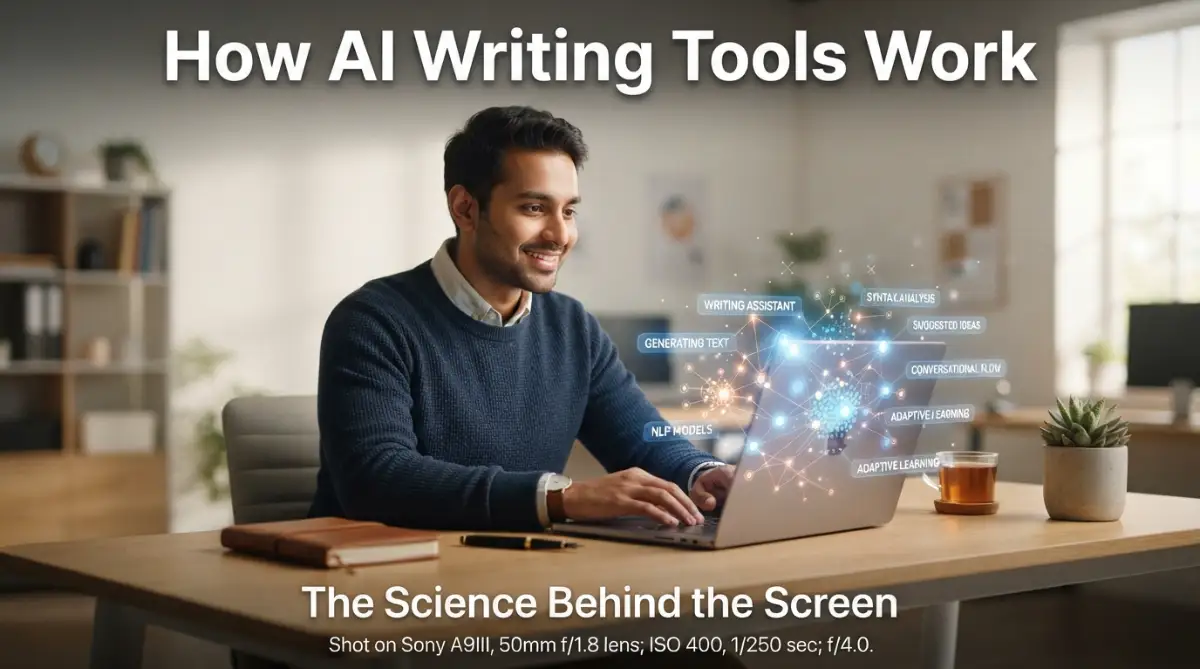
I still remember sitting at my wooden desk, staring at a blank document for three hours. My head throbbed, and my cup of coffee had gone cold twice. I felt completely stuck, and my deadline was only two hours away.
In desperation, I opened an AI writing tool, typed a quick prompt, and watched the cursor fly. The words spilled onto the screen like water from a tap, and my jaw dropped. It felt like magic, but a strange fear instantly crept over me.
Many people today face this exact same roller coaster of emotions. They feel overwhelmed by the pressure to create more content every single day. Writers, students, and small business owners are constantly tired.
They turn to these new tools for help, but they often feel lost. It feels like everyone else has a secret manual while they are left in the dark. This creates a silent mental strain that many do not talk about.
People worry that their skills are becoming useless overnight. They struggle to trust the words on their screen because they do not know where they came from. When the tool makes a mistake or lies, it adds to the frustration.
This constant guessing game ruins their daily peace of mind. They spend hours trying to make the machine sound like a real person. Instead of saving time, they end up fighting with the software.
This makes them feel like they are losing control of their own work. We deserve to understand what is happening inside these black boxes. Knowing the actual science can help us regain our confidence and write better.
I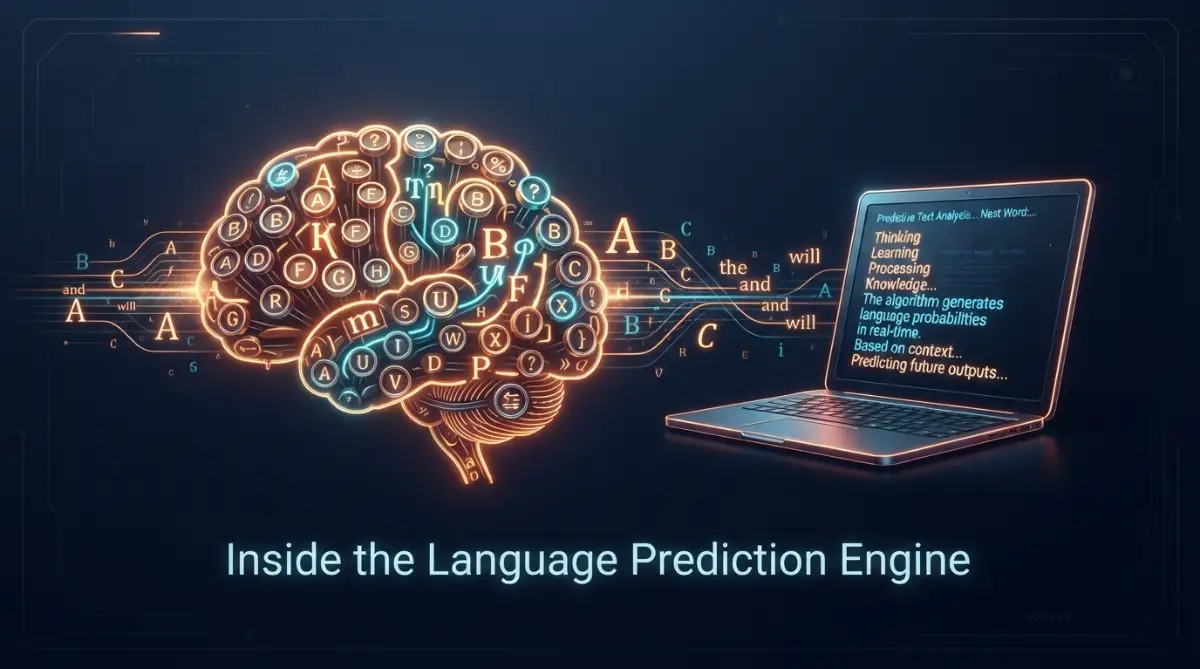
Inside the Digital Brain: How AI Predicts Your Next Word
To understand these tools, we have to look past the glowing screen. Think of the software as a highly advanced version of your phone's predictive text. When you type a word on your phone, it guesses the next one.
AI tools do the same thing, but on a massive scale. They do not think like human beings, and they do not have feelings. Instead, they look at patterns to guess what word should come next.
This process relies on complex math rather than actual human understanding. The tool reads your prompt and starts calculating which words fit best together. It builds sentences one piece at a time, based on what it learned during training.
Tokenization: How AI Cuts Up Your Sentences
Before the software can write, it has to chop your text into pieces. These tiny pieces of words are called tokens. A token can be a single letter, a whole word, or even a part of a word.
For example, the word "amazing" might be split into "am" and "azing" by the tool. By breaking text down this way, the system can process language much faster. It turns words into numbers that the computer can easily calculate.
Once everything is turned into numbers, the system can look for connections. It compares your words to billions of other sentences it has seen before. This helps it understand the context of what you are trying to say.
The Huge Library: Training the Neural Network
How did these tools get so smart in the first place? They learned by reading a massive library of text from the internet. This includes books, articles, websites, and public discussions.
The system scans this data to find common patterns in how humans write. It notes which words usually follow other words in different situations. This helps the tool learn the basic rules of grammar and style.
However, this training does not mean the tool actually knows facts. It only knows that certain words belong together in a specific order. If it reads a lie many times, it will likely repeat that lie to you.
Traditional Search vs. AI Generation
Reinforcement Learning: The Human Teachers in the Background
Even with all that reading, the software can still make weird mistakes. To fix this, human trainers step in to guide the system. This process is called Reinforcement Learning from Human Feedback.
Trainers read the drafts created by the AI and rate them. They reward the system when it writes helpful, safe, and accurate answers. They correct it when it writes nonsense or says something harmful.
Through this feedback, the tool learns what humans actually want to read. It helps the software sound less like a cold robot and more like a helpful assistant. Over time, the tool becomes better at matching our natural speech.
Understanding Prompts: The Key to Getting Better Results
Want to see exactly how to write prompts that get amazing results every time? Watch this simple, step-by-step video guide to master prompt engineering in minutes.
The way you write your prompt determines the quality of the output. If you give a simple, lazy prompt, you will get a generic answer. If you give details, the machine can narrow down its predictions.
Think of your prompt as a set of rules for the digital writer. You should tell the tool who it is writing for and what tone to use. Giving examples of what you want can also help the tool match your style.
The Role of Context Windows: How Much Can the AI Remember?
Every AI writing tool has a limit on how much text it can look at at one time. This limit is called the context window. It represents the memory space of the tool during a single chat.
If you write a very long prompt, the tool might forget the beginning by the time it reaches the end. Newer models have much larger context windows to help solve this problem. However, it is still best to keep your instructions clear and direct.
When you write a book or a long report, do it in small parts. This keeps the tool focused on the specific topic without getting confused. It also makes your job as an editor much easier.
Temperature Settings: Balancing Logic and Creativity
Most AI writing software has an internal setting called temperature. This setting controls how random or creative the word predictions will be. You can think of it as a dial for imagination.
A low temperature setting makes the tool highly logical and predictable. It will choose the most common words, which is great for technical writing. It keeps the text focused and direct.
A high temperature setting encourages the tool to choose less common words. This is helpful when you are brainstorming ideas or writing creative stories. However, it also increases the chance of the tool making mistakes.
The Danger of Hallucinations: Why AI Makes Stuff Up
Sometimes, these tools will write something that looks true but is completely wrong. In the tech world, this is called a hallucination. It happens because the tool is focused on writing smooth sentences, not finding the truth.
The system does not check facts in real-time unless it has search access. It simply builds a beautiful sentence based on math. If a false fact sounds grammatically correct, the tool will write it anyway.
This is why you must always double-check the facts in any text you generate. You cannot treat the software as an ultimate source of truth. It is a drafting partner, not an editor or a scientist.
Pro Tip: I used to copy and paste AI text directly onto my website without checking it. My readers quickly noticed the robotic tone, and my traffic started to drop. Now, I always rewrite at least half of the sentences to make sure my true voice shines through.
Myth vs. Reality in AI Writing
Let us look at some common myths about these writing tools.
- Myth: AI writing tools are thinking and feeling beings.
- Reality: They are mathematical prediction engines that do not understand what they write.
- Myth: You can create a high-quality book in five minutes using AI.
- Reality: You will get a very generic draft that needs hours of human editing to be actually good.
- Myth: AI will completely replace human writers very soon.
- Reality: AI is a tool that helps writers work faster, but it lacks human experience and emotion.
How to Edit AI Content to Make It Sound Truly Human
If you want your text to stand out, you must edit it heavily. Start by removing overused words that these tools love to write. Look out for phrases like "it is important to note" or "in today's world."
Next, change the length of your sentences to create a nice rhythm. AI tends to write sentences that are all the exact same length. Break up long blocks of text and add short, snappy sentences.
Finally, add your own personal stories and opinions to the piece. A machine cannot share a memory of a cold cup of coffee or a late-night struggle. These human touches are what keep your readers coming back for more.
Looking Ahead: The Changing Way We Create
We are entering a time where writing is becoming a team sport between humans and machines. You do not have to fear these tools, nor should you rely on them completely. Instead, learn how they work so you can use them safely and effectively.
When you understand the math behind the screen, the magic stops being scary. You can use it to overcome writer's block and get your work done faster. Just remember to always keep your own voice at the center of your work.
Advanced Techniques for Mastering AI Writing Systems
When you first start using these writing engines, you might write simple requests like "write an email." However, to get expert-level results, you must learn to give deeper instructions. Advanced content creators do not just accept the first draft the machine spits out.
Instead, they use specific strategies to guide the mathematical predictions of the software. One of the best ways to do this is by setting a clear role for the system before it begins typing. You can tell the tool to act as a veteran editor, a friendly teacher, or a smart consumer advisor.
This simple step changes the database of words the tool pulls from, which completely alters the tone of the draft. For example, understanding what is generative AI can help you see why this role-play technique is so effective at shaping the final output. When you give the system a specific persona, you are narrowing down its word pool to match that exact professional style.
Another highly effective secret is called prompt chaining, which means breaking your main task into smaller, connected steps. Instead of asking the machine to write a massive article all at once, ask it to build a simple outline first. Once you approve the outline, ask the software to write only the first section of the text.
This step-by-step method keeps the machine focused and stops it from losing track of your main goal halfway through. When you are switching to open-source software, like we see with businesses adopting open-source tools, breaking down complex steps is the secret to success. It allows you to check for accuracy at every single stage of the writing process before moving forward.
You should also use negative constraints in your prompts to block the machine from using boring, robotic language. Tell the software to avoid specific words that sound too technical or dry, like "revolutionize" or "moreover." This forces the system to find simpler, more human-like alternatives that keep readers engaged.
This approach matches the technical guidance found in the landmark Attention Is All You Need research paper, which showed how attention models focus on specific words. By blocking certain words, you are directing the system's focus toward more natural sentence structures. The result is a much cleaner draft that requires far less editing.
Finally, try giving the tool high-quality examples of your own writing before you ask it to generate anything new. This is called few-shot prompting, and it teaches the machine to copy your unique writing style. It looks at how you build sentences and select words, then attempts to mimic those exact patterns.
Using these advanced steps helps you build a highly reliable system for creating helpful and trustworthy articles. It changes your relationship with the software from a simple guessing game into a controlled, professional partnership. Over time, you will find that your drafts require far less polishing before they are ready to share.

Hidden Traps: The Common Pitfalls of Relying on AI Text
Many beginners fall into dangerous traps when they first start using machine-generated content. One of the biggest mistakes is the "set and forget" approach, where users copy and paste text directly to their blogs. This is a massive mistake because language models do not actually check facts or verify sources.
They can state a false fact with absolute confidence, which can destroy your reputation with your readers. Much like reducing home insurance bills by managing risk, double-checking your facts is a form of risk reduction for your brand. If you post incorrect data, your readers will quickly lose trust in your expertise.
Another quiet danger is the complete loss of your unique personal voice. If you rely too much on the machine, all your articles will start to sound exactly like every other website on the web. Avoiding empty spaces in your writing style is as important as finding ways to avoid commercial property insurance gaps in business.
Imagine a reader visiting your site, hoping to connect with a real human being. Instead, they find a cold list of robotic instructions with no human warmth or personal stories. This makes your brand feel empty and uninviting, which drives visitors away.
As studied by the Stanford Natural Language Processing Group, human speech relies on deep emotional context that machines cannot truly feel or replicate. The software can only copy the mechanics of language, not the actual human spirit behind it. If you do not add your own experiences, your writing will always feel a bit hollow.
Furthermore, these tools love to write long, repetitive sentences that make reading on mobile screens very difficult. For a better look at how machines process our words, you can check IBM's documentation on natural language processing to see how computers handle text structures. You will notice that computers love symmetry, but human readers prefer variety in sentence length.
Just as tech issues require troubleshooting, like fixing older smart home devices dropping Wi-Fi, keeping your writing running smoothly requires careful proofreading. If your paragraphs are too long and boring, your readers will simply hit the back button. You must actively break up long blocks of text to keep your audience engaged and happy.
Your Tomorrow Action Plan for Harmonious Writing
To build a reliable writing process, you must learn to balance human creativity with machine efficiency. You should treat the software as an assistant that handles the first draft, while you remain the chief editor. This ensures your final articles are both highly informative and deeply personal.
Learning the base jargon of machine learning is similar to studying complex terms like copays, coinsurance, and deductibles before making a final choice on a health plan. Once you know the basic rules of how these systems predict words, you can navigate them with ease. You stop expecting the tool to do everything, and you start using it for what it does best.
To help you get started immediately, here is a practical checklist you can use for your very next writing project.
To learn more about modern tech choices, try visiting platforms like Trust Picks HQ to see how real-world editors balance technology and clear communication. Following safety and truthfulness principles matches the risk guidelines set by the National Institute of Standards and Technology for managing artificial intelligence systems safely. By keeping your work grounded in real research, you protect both your readers and your brand.
When I finally stopped letting the software do all the heavy lifting, my actual writing process became a joyful partnership. I realized that my own experiences are what truly matter to my readers, and the machine is just here to help me express them. I hope you take these ideas today and start building your own unique style with confidence.
Common Questions About How AI Writing Tools Work
Do AI writing tools actually understand the meaning of the words they generate?
No, these tools do not understand the meaning of words. They use complex mathematical formulas to predict which word should follow the previous one based on patterns they learned from reading the internet. They do not have thoughts, feelings, or actual awareness of the topics they write about.
Can search engines detect if an article was written by an AI tool?
Yes, search engines have advanced systems that look for highly predictable word patterns, which are very common in machine-generated text. However, search engines do not automatically punish text just because it was made by a machine, as long as the content is helpful, accurate, and written to assist human readers.
Why do AI writing assistants make up fake facts and references?
This happens because the software is trained to build grammatically perfect sentences, not to act as a database of real facts. If a fake fact or a made-up quote sounds natural within a sentence, the system's math will choose it without realizing it is completely untrue.
How can I make my AI-generated drafts sound more human?
You can make your drafts sound more human by deleting overused robotic words, mixing very short sentences with longer ones, and adding your own real-life stories. Always read your drafts aloud and rewrite any section that sounds too dry or formal.
Disclaimer: The information provided in this article is for educational and informational purposes only. While we explain the mechanics of writing software, we do not guarantee specific rankings or search engine results. Always verify facts and review all generated text to ensure it complies with your local regulations and professional standards.