Feeling Left Behind by the AI Buzz? You Are Not Alone
I still remember sitting at my desk, looking at social media, and feeling completely lost. Everyone was talking about tools that write essays, paint pictures, and write songs in seconds.
I tried to read tech articles to understand what was happening, but they were full of scary words like "neural networks" and "large language models." My brain just shut down because it felt like trying to read a foreign language.
I felt like the world was moving ahead without me while I was stuck in the past. It was a lonely and frustrating feeling to feel so out of the loop with technology.
Many people experience this exact same stress every single day when they hear about new tech tools. You might worry that you will lose your job or that you are just not smart enough to keep up with these changes.
It is hard to feel peaceful when your social feeds are filled with warnings about the future of work. We are told to use these tools, but nobody takes the time to explain them without using confusing jargon.
This lack of clear information makes us feel anxious and stupid, even though we are actually very capable. It ruins your day when you feel like you are falling behind in your own career or hobbies.
I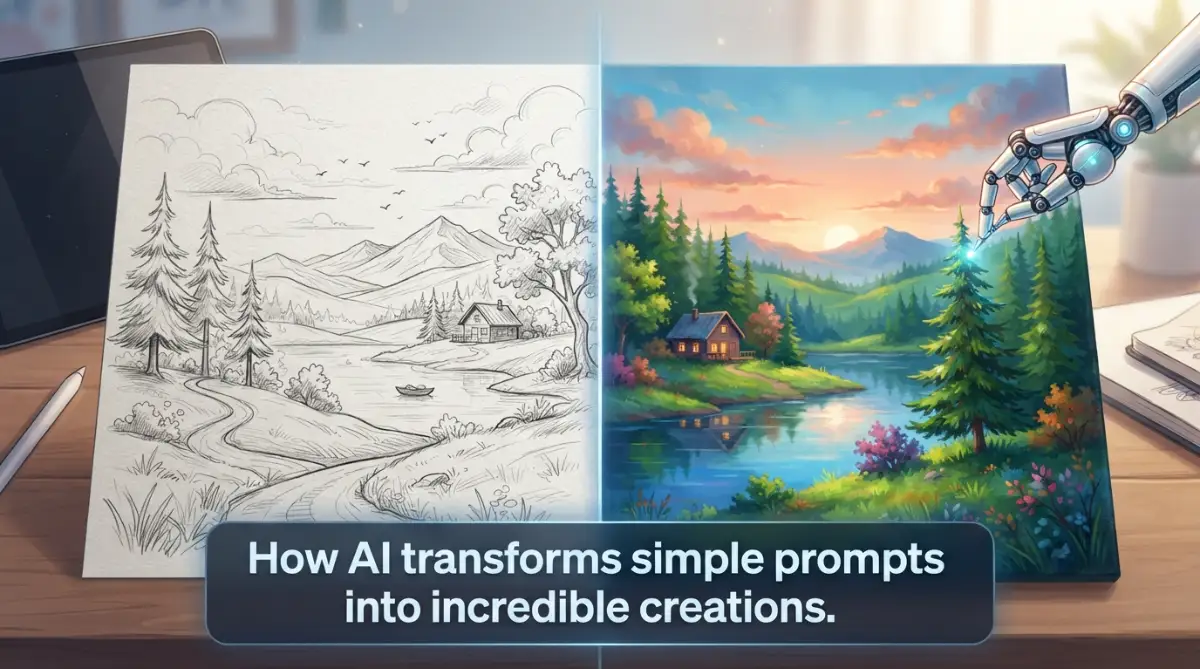
Demystifying the Magic: What is Generative AI in Plain English?
To understand this technology, we need to throw away the complex textbooks and look at a simple definition. At its heart, generative AI is a type of computer system that can create brand new things from scratch.
Unlike older computer programs that only sorted or analyzed existing data, this technology actually builds new content like text, images, and audio. Think of older AI as a librarian who helps you find a book, while generative AI is the writer who actually writes a new book for you.
Let us look at a simple analogy to make this even clearer. Imagine a talented baker who has tasted thousands of chocolate cakes in his life.
This baker does not just copy one specific recipe that he memorized. Instead, he understands what makes a cake taste good overall, like the balance of sugar, flour, and cocoa.
When you ask him to make a new cake, he uses that deep knowledge to bake a completely original dessert you have never seen before. This is exactly how generative AI works with words, images, and music.
It looks at millions of examples of human work, learns the patterns, and then creates something brand new based on those patterns. It does not just copy and paste; it creates.
How Does It Actually Work? The Three Simple Steps of the Creative Process
To make this feel less like magic and more like science, we can break the process down into three basic steps. These steps happen behind the screen every time you type a request into an AI tool.
Step 1: The Massive Reading and Viewing Phase (Training)
The AI starts its life by looking at a huge pile of data, like books, articles, and pictures on the internet. It does not memorize these things word-for-word, but instead looks for common patterns and connections between them.
For example, it learns that the word "apple" is often found near words like "fruit," "sweet," or "pie." It notices that pictures of skies usually have the color blue at the top and clouds in the middle.
This training phase takes a lot of computer power and time. Once it is done, the AI has a massive map of how words and images relate to each other.
Step 2: The User Prompt (Your Command)
Next, you give the AI a specific instruction, which we call a prompt. This can be as simple as asking the AI to "write a short story about a brave dog."
The AI reads your prompt and immediately begins searching its digital brain for the patterns that match your request. It looks for everything it knows about "brave," "dog," and "short story."
The clearer and more detailed your prompt is, the better the AI can find the right patterns to use. This is why human input is still the most important part of the process.
Step 3: Creating the Output (Prediction)
Finally, the AI starts writing or drawing, guessing what should come next based on what it learned. If it is writing a sentence, it predicts the most logical next word, one word at a time, until the story is finished.
It feels like magic to us because it happens in a few seconds. In reality, it is a very advanced game of connect-the-dots based on math and patterns.
Watch This Simple Video to See Generative AI in Action
If you want to see a visual explanation of how these smart tools work, this quick video explains the core concepts beautifully in just a few minutes.
Traditional AI vs. Generative AI: A Quick Comparison
To help you understand how much technology has changed, let us look at how the old tools compare to the new ones. It is like comparing a smart calculator to a creative writer.
As you can see, the main difference is creativity. Traditional systems help you make decisions, while generative systems help you make new things.
How AI Generates Different Types of Content
This technology is not just limited to writing text. It can create many different kinds of media, and each one works in a slightly unique way.
1. Generating Written Text (Chatbots)
When you use a chatbot to write an email, the system uses a technology called a language model. It reads your prompt and starts writing word by word.
It does not think about the whole sentence at once. Instead, it asks itself: "Based on the words I have already written, what is the most likely next word?"
Because it has read billions of human sentences, its guesses are incredibly accurate and natural. This is why the text feels like it was written by a real person.
2. Generating Images from Words
Creating pictures is a bit different and uses a process called diffusion. The AI starts with a completely messy image made of random pixels, which looks like television static.
It then slowly cleans up the static, step by step, to form a clear picture that matches your prompt. It is like a sculptor who starts with a messy block of clay and slowly chips away the extra pieces to reveal a statue.
The AI knows what a "cat" looks like because it has seen millions of labeled cat pictures. It shapes the random pixels until they match the shape and colors of a cat.
My Personal Pro Tip:
When I first started using these tools, I made the mistake of giving very short commands and expecting perfect results. I soon realized that writing specific prompts with clear details makes a massive difference in what the AI gives you back. Treat the AI like a helpful but literal assistant who needs clear directions to do a great job.
Myth vs. Reality: Clearing Up the Common Confusions
Because this technology is so new, there are many incorrect ideas floating around. Let us clear up some of the most common myths so you can feel more confident.
- Myth: AI actually thinks like a human being and has its own feelings.
- Reality: It is just a highly advanced computer program that uses math to guess patterns. It does not feel, think, or understand things the way we do.
- Myth: Generative AI is going to steal all human jobs immediately.
- Reality: It is a tool designed to help humans work faster, not to replace our unique creativity and human touch.
- Myth: Everything the AI creates is always correct and true.
- Reality: Sometimes the AI makes mistakes or invents facts, which is called "hallucination," so you must always double-check its work.
Understanding these truths helps you use these tools safely and without fear. They are helpers, not sci-fi monsters.
Why Generative AI is Changing the Way We Work and Learn
This technology is popular because it is incredibly useful in daily life. People in many different fields are finding creative ways to use it to save time.
Writing and Content Creation
People use these tools to brainstorm ideas, write emails, or draft blog posts when they have writer's block. It helps you get started on a project so you do not have to stare at a blank screen.
It is like having a friendly writing partner who is always ready to suggest ideas. You can edit their suggestions to match your personal style.
Art and Design
Artists use these systems to generate mood boards, sketch ideas quickly, and find inspiration for their physical paintings. It allows non-artists to put their thoughts into visual formats without needing advanced drawing skills.
This makes visual communication much easier for small business owners who cannot afford expensive graphic designers. You can quickly show your ideas to others.
Education and Learning
Students and teachers use AI as a personal tutor that can explain complex ideas in simple terms. You can ask it to explain physics like you are five years old, and it will do so patiently.
It never gets tired of answering questions, making it a wonderful tool for curious learners. You can learn at your own pace without feeling rushed.
How to Start Using Generative AI Today Without Any Tech Skills
You do not need to be a computer wizard to start playing with these tools. Here are three simple ways you can try them out today for free.
1. Use a Chatbot for Daily Tasks
Try asking a free chatbot to help you plan your weekly meals or write a polite email to your boss. This is the easiest way to see how responsive and helpful the system can be.
You can ask it to make changes if the first try is not exactly what you wanted. It is as simple as sending a text message to a friend.
2. Create Your First Digital Image
Use a free image generator to turn a funny thought into a picture, like "a cat wearing a space suit on Mars." It is a fun and risk-free way to practice giving clear prompts.
Seeing your words turn into a brand new picture is a great way to understand the power of diffusion models. It shows how the system interprets human language.
3. Brainstorm New Ideas
If you are planning a birthday party or looking for gift ideas, ask the AI for a list of ten unique suggestions. You will be surprised by how creative and helpful the suggestions can be.
It can give you fresh options that you might not have thought of on your own. It is a perfect way to break through mental blocks.
Understanding the Limitations: What AI Cannot Do
While these systems are amazing, they are far from perfect. Knowing what they cannot do is just as important as knowing what they can do.
No Real Human Empathy
An AI can write sweet words, but it does not feel love, sadness, or joy. It cannot replace the genuine connection you feel when talking to a real human friend.
Because of this, we must be careful not to rely on it for deep emotional support or personal relationships. The human touch is still irreplaceable.
No True Originality
The AI only remixes things that humans have already created and put on the internet. It cannot invent a completely new artistic movement or a revolutionary scientific theory out of nothing.
It needs human creativity to feed it new ideas and perspectives. Without us, the AI has nothing new to learn from.
No Common Sense
Computers do not live in the physical world, so they lack basic common sense about everyday life. They might suggest recipes that taste terrible because they do not actually eat food or understand taste buds.
Always use your own human judgment when reviewing what the AI makes. You are still the boss.
Unlocking the Quiet Power: Master Techniques to Direct AI Creators
Getting the best results from these creative tools is not about luck. It is about learning how to talk to them in a way that makes sense to their pattern-matching systems.
When you learn how to guide these tools correctly, you save hours of frustration. You also get much smarter, more customized answers that fit your specific needs perfectly.
Assigning a Clear Role to Your Helper
One of the best secrets of prompt writing is giving the system a specific job or identity. If you just ask it to write a recipe, you will get a very standard, boring response.
Instead, tell the system to act as a professional Italian chef with thirty years of cooking experience. This simple shift tells the system to focus on high-quality patterns related to authentic Italian cooking.
It filters out the generic home-cook recipes and uses terms and methods that a real expert would use. You can apply this role-play trick to almost any topic, from business writing to learning mathematics.
Breaking Down Complex Tasks Step by Step
If you ask the system to do a massive project all at once, it will often get confused and produce messy work. Just like a human assistant, it performs much better when you give it one small task at a time.
For example, do not ask it to write a complete research report in a single prompt. Start by asking it to create a simple outline for your chosen topic first.
Once you approve the outline, ask it to write the first section, then the second, and so on. This step-by-step approach keeps the system focused and ensures each part is of high quality.
Setting Clear Boundaries and Constraints
To avoid getting a long, rambling wall of text, you must set specific boundaries in your prompt. Tell the system exactly how long the output should be and what tone it should use.
You can ask for a response in bullet points, a short paragraph, or even a simple table. You can also tell it to avoid certain words or topics that are not relevant to your goal.
Setting these rules helps you get clean, ready-to-use information without wasting time editing. It gives you complete control over the creative process.
Staying Connected in a Digital Space
Using smart online systems sometimes requires us to think about how we connect our devices and protect our digital lives. When you set up new systems at home, you might face simple connection problems that slow you down.
If you ever run into issues with your network setup, you can learn how to fix smart home devices dropping connections to keep your workspace running smoothly. Having a stable connection is the first step to exploring creative online systems without interruptions.
Understanding how to keep your home tech running is just as important as learning how to use the software. It gives you peace of mind so you can focus on being creative.
Managing Your Security as You Grow
As you spend more time online experimenting with new tools, you must also think about your overall security and protection. This applies not just to your digital files, but also to your physical safety nets and career.
Learning about your safety options can help you feel secure while you explore new technological frontiers. For example, self-employed creators should understand how much disability coverage you need to protect their income if they cannot work.
Taking care of these practical life details allows you to focus your energy on learning and growing. When your safety nets are in place, you can experiment with confidence.
According to a detailed Stanford University study on generative AI perspectives, how we interact with these systems plays a massive role in their overall usefulness. The research highlights that human guidance is the key to getting meaningful results.
I
The Silent Traps: Dangerous Missteps to Watch Out For
When people first start using these creative computer tools, they often make simple errors that can cause big problems. It is easy to get so excited by the speed of the system that you forget to use caution.
These mistakes can hurt your reputation, waste your time, and even cause financial or legal issues. Let us look at the most dangerous traps so you can steer clear of them easily.
The Danger of Believing Everything You Read
The most common mistake is trusting the system's output without checking the facts first. These tools do not actually search a library of true facts when they write; they only guess the next most likely word.
Sometimes, the system will invent facts, dates, or historical events that sound completely real but are entirely made up. In the tech world, we call this AI hallucination.
If you share these false facts in a report or on a website, people will lose trust in your work. Always treat the system like an assistant who is creative but sometimes tells convincing lies.
Losing Your Unique Human Voice
Another huge mistake is copying and pasting text directly from the computer screen without editing it. AI-generated text often has a very specific, robotic pattern that is easy to spot once you know what to look for.
It tends to use repetitive phrases and lacks the warm, natural flow of a real human voice. If you rely too much on raw outputs, your writing will start to sound dry and boring.
Your readers want to connect with you, your personal stories, and your unique opinions. Use the system to build the foundation of your work, but always add your own personality to the final draft.
Protecting Your Private Information
Many people do not realize that the information they type into these online tools is often used to train future systems. This means you should never type secret business plans, private client details, or personal passwords into the prompt box.
If you share sensitive data, it could theoretically be shown to other users in the future. Protecting your private information is a key part of staying safe in the digital age.
Just as you would not share your banking passwords with a stranger, you must keep your private data out of public databases. Be smart about what you share with the machine.
Understanding Risk and Safety in Your Daily Life
Making mistakes with online tools can carry real-world consequences, much like making errors with your home or business decisions. In both technology and daily life, we have to manage risks carefully to avoid expensive surprises.
For instance, business owners must learn smart ways to avoid property coverage gaps to keep their offices safe from unexpected damage. A small gap in your protection can cause a massive financial loss when you least expect it.
Similarly, taking steps to secure your assets can help you save money on your monthly bills. You can find out how risk management helps lower your home insurance costs to keep your overall budget in balance.
These practical strategies show us that prevention is always better than cure. By thinking ahead, you can avoid the most common pitfalls in both technology and life.
To understand these risks better, we can look at the MIT Sloan guide on generative AI and machine learning, which explains that using the wrong type of tool for a specific job is a major reason why many new projects fail. Choosing the right system for your specific task is a necessary step for success.
Your Path Forward: Actionable Steps for Tomorrow
The world of creative technology can feel overwhelming, but it is also filled with incredible opportunities for growth. You do not need to learn everything in a single day to start benefiting from these tools.
Instead, focus on taking small, simple steps that help you build your confidence over time. Treat this journey as a fun experiment rather than a difficult chore.
Building Your Personal Protection Plan
As you learn to use new digital systems, remember to keep your wider life protected and balanced. Technology is just one piece of the puzzle when it comes to building a secure and happy future.
Just like you protect your computer from viruses, you should protect your family and your health with the right knowledge. For example, learning about the exclusions in term life insurance policies can help you avoid painful surprises when securing your family's future.
It is also wise to understand how your basic health services work so you can manage your personal healthcare budget. Taking a look at a beginner's guide to copays, coinsurance, and deductibles will help you make smart choices at the doctor's office.
By combining modern technology with smart personal planning, you can build a stable and worry-free lifestyle. You can always visit our homepage at Trust Picks HQ to find more helpful guides on keeping your life and home secure.
As we look toward the future, these systems will continue to grow and change. The team at IBM has explained that the technology is shifting toward independent agentic AI systems, which can complete complex, multi-step tasks with very little human supervision.
This exciting shift means that learning the basics today will prepare you for even more powerful tools tomorrow. The skills you build right now are the foundation for your future success.
When I first looked at this technology, I was terrified of being left behind in a world of smart machines. But once I took a deep breath and started playing with these systems like a curious child, my fear turned into excitement.
I encourage you to take that first small step today, type your first fun prompt, and see what you can create.
Answers to Your Toughest Questions About Creative AI
How is generative AI different from a normal internet search?
A normal internet search is like a index helper that shows you a list of links to pages that already exist. Generative AI actually reads those pages, understands the patterns, and writes a completely new, summarized answer specifically for your question.
Can generative AI tools steal my personal data?
These tools do not actively steal your data, but they do save the text you type into them to train future versions. This is why you should never type private passwords, bank details, or secret business plans into the prompt box.
Do I need to know how to write code to use these tools?
No, you do not need any coding skills at all to use generative AI. You interact with these tools using everyday human language, which makes them accessible to anyone who can write a simple text message.
Why does the AI sometimes make up false facts?
This happens because the system does not actually understand truth or reality; it only knows word patterns. When it does not have enough data, it will guess the most logical next words to finish the sentence, even if those words are factually incorrect.
Is the content created by AI free to use for business?
Most popular AI tools allow you to use their outputs for commercial purposes, but the laws around copyright are still changing. It is always safest to edit the content and add your own unique voice before using it to sell products or services.
Disclaimer: This article is for informational purposes only and does not constitute professional tech, financial, or legal advice. The systems mentioned are changing constantly, so always verify important facts and consult with certified experts before making major business or life decisions.