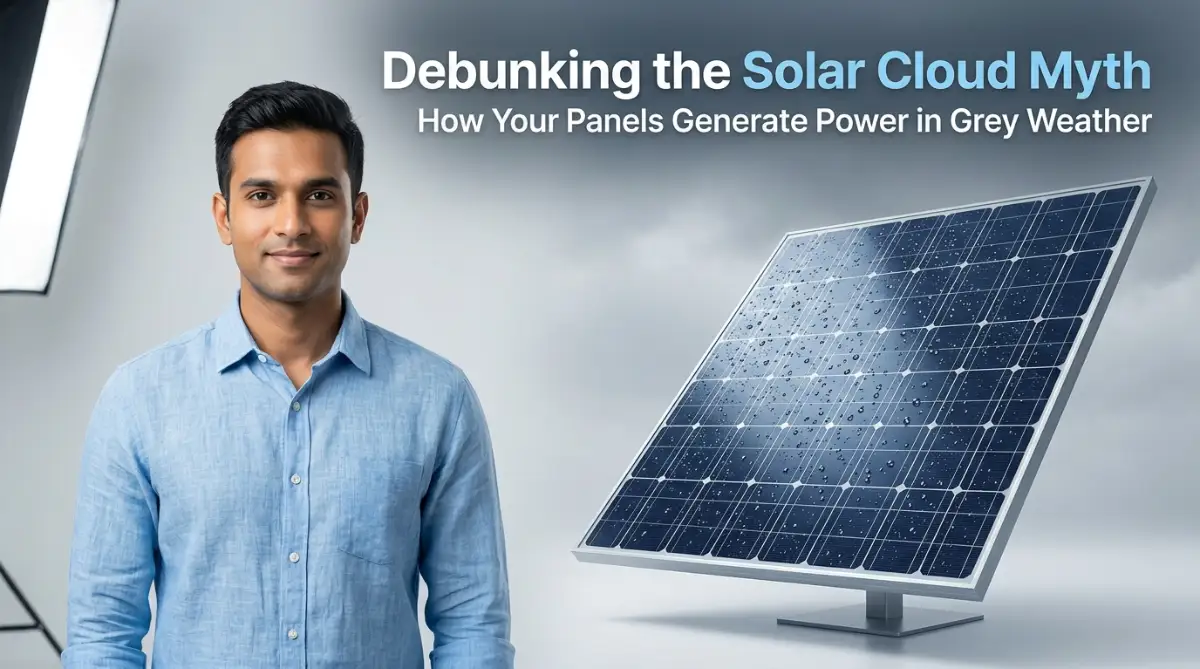
The Wet and Grey Worry: What Happens to Solar Savings Under Dark Clouds?
You wake up to the sound of soft rain hitting your window. You look outside, and all you see is a heavy, dark grey sky. The bright sun you hoped for is completely gone.
A sudden feeling of worry hits you in the chest. You think about the expensive solar panels sitting on your roof. Right now, they look cold, wet, and useless.
You open your phone to check your solar app. The screen shows a tiny fraction of the power you usually get. Your heart sinks. You start to worry if you made a huge mistake.
Did you spend thousands of hard-earned dollars on a system that fails the moment a cloud rolls in? This worry is incredibly stressful. It makes you feel like you are losing money with every raindrop.
You worry about your next electricity bill. You feel helpless, wondering if your dream of a self-sufficient green home is just a fantasy. Many homeowners feel this exact same pain every time the weather changes.
It can truly steal your peace of mind. You find yourself constantly staring at the sky, wishing for a break in the clouds. It feels like you are at the mercy of the weather, unable to control your own home's energy costs.
How Solar Technology Keeps Working Even Under Heavy Grey Clouds
To find peace of mind, we must look at how solar technology actually works. Many people believe that solar panels are like giant mirrors that need direct, hot sunlight to function. This is a common misunderstanding.
Solar panels do not need heat to create electricity. In fact, they do not even need direct sunlight. They work using daylight, which is always present during the day, even when the sky is completely covered.
The Science of Diffuse Light
When clouds block the sun, the light does not simply vanish. Instead, the light hits the water molecules and ice crystals in the clouds. This causes the light to scatter in all directions.
This scattered light is called diffuse solar radiation. It is the reason why you can still see your surroundings clearly on a cloudy day without turning on outdoor lights.
Your solar panels are built with highly sensitive silicon wafers. These wafers are designed to capture these scattered packets of light, which are called photons. Once these photons hit the silicon cells, they set electrons in motion, creating an electrical current.
So, while your panels will produce less power than they do on a bright summer afternoon, they are still active. They can still generate a steady stream of clean energy to run your home.
Why Rain Is Actually a Secret Blessing for Your System
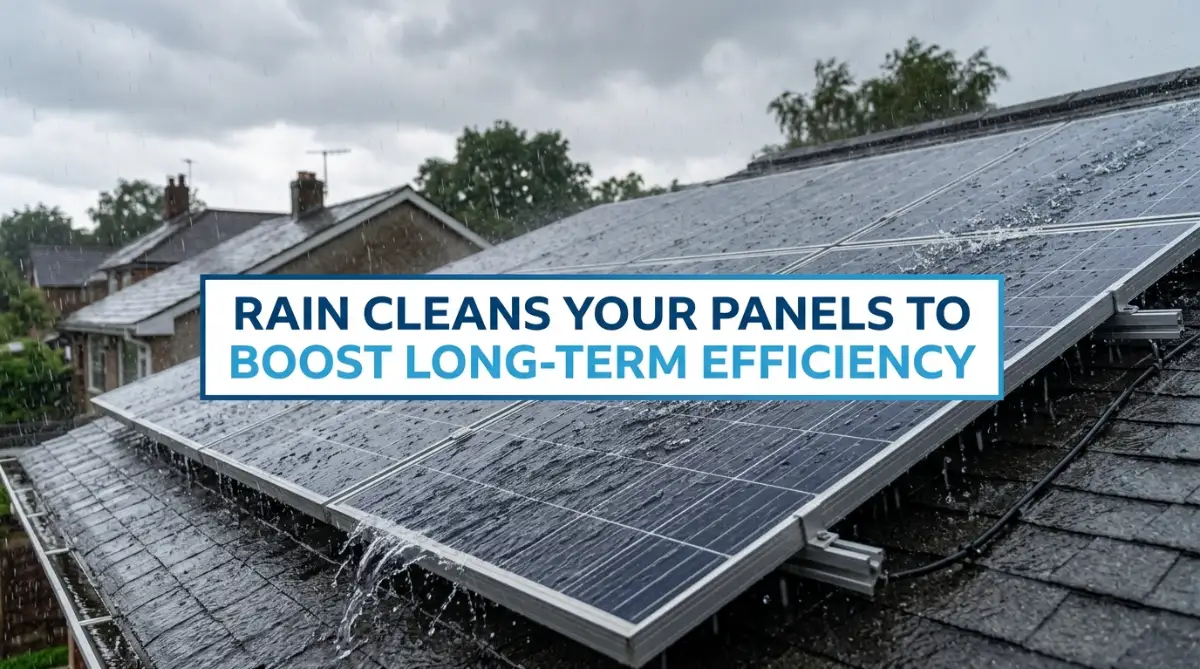
It might sound strange at first, but rain is actually a great natural helper for your solar installation. Over weeks and months, your panels collect a thin layer of dust, pollen, bird droppings, and wild leaves.
This buildup acts like a tiny, permanent cloud sitting directly on top of your system. It blocks light from reaching the silicon cells beneath the glass. This layer of dirt can slowly drag down your daily energy production without you even realizing it.
A heavy rain shower acts as a free, professional cleaning service. The water washes away all the accumulated grime, leaving your panels clean and shiny.
Once the storm passes and the sky clears, your clean panels will perform much better. This natural cleaning cycle helps you maintain a high energy output over the long run.
The Surprising Cold Weather Advantage
Another common belief is that solar panels love hot weather. This is actually incorrect. Solar panels are electronic devices, much like your smartphone, tablet, or laptop computer.
If you leave your phone in the hot sun, it can overheat and slow down. Solar panels experience a similar struggle. When temperatures rise above room temperature, panels lose some of their efficiency.
This means a scorching hot day in the middle of summer might not be the best day for solar production. The heat can cause the silicon cells to lose energy as heat rather than converting it into electricity.
Understanding the Cooling Effect
On a cool, cloudy, or rainy day, the temperature of your panels drops significantly. This cooler environment is highly beneficial for the flow of electricity.
The silicon cells can process light with much less resistance when they are kept cool. This cooler temperature boosts their internal efficiency.
Because of this, a cool, bright, overcast day can sometimes produce surprisingly high amounts of energy. The cool air offsets the loss of direct light, helping your system work at its absolute best.
Myth vs. Reality: The Truth About Weather and Solar Energy
Let us clear up some of the most common misunderstandings about solar power and bad weather. It is important to look at the facts so you can feel confident in your investment.
Common Solar MythThe Scientific RealityActual Impact on Your HomePanels produce zero power on cloudy daysPanels use diffuse light to generate 10% to 25% of their capacityYou still generate clean energy even during heavy overcast skiesRain damages solar panels and reduces lifePanels are waterproof and rain washes away dust and blocking debrisYour panels get a free wash which improves long-term outputSolar panels work best in hot desert climatesPanels lose efficiency in extreme heat and work better in cool weatherCool, bright spring days are often the most productive of allSolar energy is only for sunny statesGermany and Seattle are solar leaders despite having many cloudy daysYour location does not need to be a desert to benefit from solar
As you can see from this simple comparison, the reality is much more positive than the myths suggest. Your system is far more resilient than you might think.
Step-by-Step Ways to Optimize Your Solar Output on Gloomy Days
While you cannot control the weather, you can certainly take action to get the most power possible from your system. Here are several practical steps you can take starting today.
Position Your Panels to Catch Every Angle of Light
The angle at which your panels are installed plays an important role in how they handle cloudy weather. If you live in an area that gets a lot of grey, overcast skies, a flat angle might be helpful.
Flatter angles allow your panels to face the entire sky. This helps them capture diffuse light coming from all directions rather than just one angle.
Before you install your system, talk with a professional installer about your local weather patterns. They can help you find the sweet spot for your specific geographic location.
Upgrade to High-Efficiency Monocrystalline Panels
Not all solar panels are built the same way. If you are planning a new system, the type of panel you choose is a key decision.
Monocrystalline panels are made from a single, pure crystal of silicon. This pure structure gives electrons more room to move freely, making them highly efficient.
These premium panels are exceptionally good at converting low-light and diffuse light into usable power. While they cost a bit more upfront, they are highly recommended for rainy or cloudy regions.
Utilize Smart Microinverters for Individual Panel Power
Traditional solar installations use what is called a string inverter. In this setup, all your panels are linked together like a string of holiday lights.
If a single panel is shaded by a cloud or a tree branch, the power of the entire string drops down to match that weak panel. This can cause a major drop in your total energy generation.
By upgrading to microinverters, you give each individual panel its own inverter. This means each panel works completely on its own.
If a cloud passes over one section of your roof, only those specific panels are affected. The rest of your panels will continue to produce energy at their maximum possible level.
Invest in a Home Battery Backup System
The absolute best way to manage cloudy days is to store your own power. On bright, sunny days, your solar panels often produce far more electricity than your home actually needs.
Instead of sending this extra energy back to the power grid for a low return, you can store it in a home battery system. This battery acts like a personal power bank for your house.
When the clouds roll in or the rain starts to fall, your home can seamlessly switch to battery power. This keeps your household running on clean, free energy, even during a multi-day storm.
Real-World Lessons from Cloudy Regions
To truly understand how well solar works in grey weather, we can look at some of the cloudiest places in the world. These real-world examples show that solar is a smart choice anywhere.
The Success of Solar in Germany
Germany is not famous for having warm, sunny, tropical weather. In fact, many parts of the country are grey and rainy for a large portion of the year.
Yet, Germany has been a global leader in solar energy adoption for many years. Millions of German homeowners have installed solar panels on their roofs.
They did not do this because they have endless sunshine. They did it because they realized that daylight is more than enough to make solar power a highly profitable investment.
The Growing Solar Market in Seattle
Seattle, Washington is famous for its misty rain and constant cloud cover. Many people assume that solar panels would be completely useless in this Pacific Northwest city.
However, solar adoption in Seattle is growing at a rapid pace. Homeowners there are successfully using solar to cut their energy costs.
They find that the long, bright days of summer easily make up for the shorter, grey days of winter. Over the course of a full year, the financial savings are highly substantial.
An Analogy: Think of Solar Panels Like Your Skin
To make this concept even easier to understand, let us think about how we get sunburned. Have you ever spent a cloudy day at the beach and ended up with a painful sunburn?
You might have wondered how that was possible without direct sunshine. The answer lies in the way light waves travel.
The ultraviolet (UV) rays that cause sunburns can easily pass through thick clouds. Your skin absorbs these rays even when you cannot see the sun itself.
Solar panels work in a very similar way. The light spectrums they use to create electricity can easily penetrate cloud layers. Just as your skin still reacts to the light, your solar panels still react and produce power.
How to Manage Your Energy Smartly on Overcast Days
To get the most out of your system during bad weather, you should make a few simple adjustments to your daily routine. These habits can help you lower your reliance on the expensive power grid.
Shift Your Heavy Energy Use to Peak Hours
Even on a cloudy day, there is still a peak period of daylight. This peak usually occurs between 11:00 AM and 2:00 PM when the sun is highest in the sky.
Try to schedule your high-energy chores during this window of time. Run your washing machine, turn on your dishwasher, or charge your electric vehicle during these hours.
By using appliance power when your panels are producing the most energy, you avoid buying expensive grid electricity later in the evening.
Monitor Your Daily Generation and Adjust
Get into the habit of checking your solar monitoring app on a regular basis. This will help you understand how your specific system responds to different weather patterns.
You will soon learn to predict how much energy your home makes on a misty morning versus a dark, stormy afternoon. This knowledge allows you to plan your household tasks with confidence.
It takes away the mystery and replaces it with clear, useful data. You will feel much more in control of your home's energy footprint.
The Edge-of-Cloud Effect: A Surprising Power Spike
There is a fascinating scientific phenomenon that many solar owners have never heard of. It is called the edge-of-cloud effect.
Sometimes, when a cloud is moving away from the sun, the outer edges of the cloud act like a giant magnifying glass. They reflect and focus extra sunlight directly onto your roof.
During these brief moments, your solar panels can actually receive more light than they would on a perfectly clear day. This can cause your energy production to spike above its normal maximum rating.
It is a wonderful, unexpected surprise that helps offset the lower production periods of a stormy day. It shows just how dynamic and adaptable modern solar technology can be.
Finding Comfort in Long-Term Solar Success
It is easy to get caught up in daily numbers and worry about a few cloudy hours. However, it is important to remember that solar energy is a long-term journey.
Your financial savings are not built on one single afternoon of perfect sunshine. Instead, they are built over months, seasons, and decades.
A few rainy days here and there will not ruin your overall return on investment. The highly productive sunny days will easily make up for the slower, grey days.
So, the next time you hear rain tapping on your roof, do not worry. Your panels are getting a free wash, your system is still working, and you are continuing to save money while helping the planet.
Maximizing the Harvest: Pro-Level Strategies for Grey-Day Solar Yield
Even when dark, heavy clouds cover the sky, you do not have to sit back and watch your solar energy production hit rock bottom. Solar experts know that smart preparation can help your system squeeze every last drop of power out of a rainy day.
Harnessing the Power of Double-Sided Generation
If you want to upgrade your system or are building a new one, you should look closely at bifacial solar panels. Standard solar panels only capture light on their front side.
Bifacial panels have glass on both sides, allowing them to capture light from the front and the back. When rain falls, the ground around your home becomes highly reflective.
This wet surface reflects a surprisingly large amount of diffuse light back up toward the sky. Bifacial panels catch this reflected light on their underside, which helps boost your power generation when the sky is dark grey.
The Science of Temperature Coefficients and Your System
To get the most out of your panels, you must understand a key technical term called the temperature coefficient. This number tells you exactly how much efficiency your panels lose for every degree the temperature rises above 25 degrees Celsius.
During hot, dry summer days, panels can easily overheat, causing their efficiency to drop significantly. According to technical data shared on Clean Energy Reviews, panels with a lower temperature coefficient perform much better because they keep their strength in the heat.
When cool rain falls, it lowers the temperature of your solar cells immediately. This cooling action reduces the electrical resistance inside the silicon wafers, allowing electrons to flow much more easily.
Because of this, cool rain storms can actually prime your system to run with incredible efficiency the moment the sun breaks through the clouds. It is a natural reset button for your entire system.
Advanced Inverter Settings for Low-Light Tracking
Most modern solar installations use smart software inside their inverters to find the absolute best operating point. This is called Maximum Power Point Tracking or MPPT.
During a cloudy day, the light levels on your roof change constantly as clouds move across the sky. High-quality inverters have advanced MPPT algorithms that can scan and adapt to these changes in milliseconds.
Talk to your solar technician about updating your inverter firmware to the latest version. This simple software update can improve your system's ability to track and harvest low-light energy on cloudy days.
Keeping Your Glass in Pristine Condition
While rain does a great job of washing away light dust, it cannot clean off sticky tree sap, dried bird droppings, or thick pollen. These sticky spots block diffuse light from reaching the silicon cells beneath the glass.
Following a detailed guide to cleaning roof solar panels safely at home ensures that you keep your system working at peak performance. Regular cleaning allows the weak, scattered rays of a cloudy day to pass directly into your solar cells without any blockages.
Clean glass can make a noticeable difference in your winter and autumn energy bills. It ensures that not a single photon of light is wasted.
Integrating Electric Vehicles with Low-Light Days
If you own an electric car, matching your charging habits with your solar system is highly smart. During a cloudy day, you want to avoid drawing sudden, heavy spikes of power from the grid.
Knowing how to set up your first home EV charger without tripping your breaker can help you manage your home's total electrical load when solar output is lower. It allows you to balance your household needs without putting too much stress on your electrical panel.
Additionally, you should learn the best ways to keep your electric car battery healthy for years so that you can store your clean energy safely. This long-term care helps you get the most value out of your green investments.

The Costly Traps: Common Mistakes Homeowners Make in Gloomy Weather
When the sky turns dark and the rain starts to fall, many solar owners panic. This panic often leads to making simple mistakes that can hurt their systems and cost them money over time.
The Mistake of Turning Off the System
One of the most common errors is when homeowners turn off their solar inverter during long, heavy storms. They assume that since the panels are producing very little power, keeping the system on is a waste of electricity.
This is a major mistake that can actually harm your installation. Solar inverters are designed to run continuously and use very little standby power when the sun is down.
Turning the system off and on repeatedly can cause unnecessary wear and tear on the delicate electronic parts inside. It also stops the system from capturing the small amounts of diffuse light that can still help run your home.
Neglecting Your Shading Issues During Winter
Many people believe that because cloudy light is scattered, tree branches do not matter as much on overcast days. This assumption is completely false.
Even on a cloudy day, a thick tree branch hanging over your roof will block a large portion of the ambient light. This shade will drag down the generation of any panel caught underneath it.
Keep your nearby trees trimmed neatly throughout the year. Do not let summer growth block the pathways of light that your panels need to survive the grey winter months.
Ignoring Your Smart Battery Settings
If you have a home battery system, leaving it on a basic setting during a long storm can leave you in the dark. Many homeowners forget to adjust their battery settings when they see a multi-day storm warning on the news.
If your battery is set to discharge fully every night, you might find yourself with zero backup power during a daytime blackout. During extended rainy periods, you should change your battery settings to reserve mode.
This keeps your battery fully charged using the grid if necessary, ensuring your home stays safe if the storm knocks out local power lines. It is a simple habit that protects your family when the weather turns bad.
Relying Too Heavily on Rain to Do All the Cleaning
As we discussed, rain is a wonderful tool for washing away light dust. However, some homeowners rely on rain so much that they never inspect their panels.
This can lead to a build-up of tough, baked-on grime that rain simply cannot remove. Over time, this grime hardens and creates a permanent barrier over your solar cells.
Make it a habit to inspect your panels visually at least twice a year. If you see dark spots or thick layers of dirt, it is time for a manual clean to restore your system's efficiency.
Your Clear Path Forward to Energy Freedom
Owning a home solar system is a journey of patience and understanding. Weather will always change, but modern solar technology is built to handle everything nature throws its way.
Your Action Plan for Grey Weather
- Check the Forecast: Keep an eye on the weekly weather report so you can plan your high-energy chores around the brightest days.
- Monitor Your App: Use your solar monitoring software to learn exactly how much power your panels make during different types of cloud cover.
- Balance Your Loads: Shift your heavy appliance use to the middle of the day, even when it is cloudy, to use your clean power directly.
- Keep Things Clean: Make sure your glass stays free of stubborn grime so that diffuse light can pass through easily.
A Word from the Solar Expert
Do not let a few cloudy days steal the joy of owning a green home. Your solar panels are incredibly resilient, working silently to protect your wallet and the planet every single day.
By understanding the science of diffuse light and avoiding simple mistakes, you can master your home's energy use. You are part of a wonderful movement toward a cleaner, self-sufficient future.
Embrace the rainy days as a time for your panels to get a free wash, and enjoy the cool weather that makes your system work with amazing efficiency. The sun will always return, and your panels will be clean, ready, and waiting to catch every single ray of light.
Disclaimer
The information provided in this article is for educational and informational purposes only. Solar system specifications, efficiency ratings, and installation requirements can vary greatly depending on your specific location, climate, equipment brand, and household energy needs. Always consult with a certified, licensed solar professional and electrical technician before making any structural changes, system upgrades, or performing maintenance on your rooftop solar array.