
The Unexpected Quiet of a Dead Engine on a Rainy Tuesday
I remember sitting in my driveway on a rainy Tuesday morning, late for a huge meeting, when my car simply refused to start. I turned the key, heard nothing but a click, and felt that sinking feeling in my stomach knowing my day—and my wallet—were about to take a major hit. It was a stressful wake-up call that made me realize I had been neglecting the basic health of my car for way too long.
Imagine you are already late for a major morning meeting. You rush out of the door, slide into the driver's seat, and turn the key.
Instead of the healthy hum of your engine, you hear a sickening click. Or maybe you start driving, only to see a scary cloud of white steam rising from your hood.
Your heart sinks instantly. You feel that sudden, sharp pain in your chest because you know what comes next.
You have to call a tow truck. You have to explain to your boss why you are missing.
Then comes the real nightmare: waiting for the mechanic to call you with a massive repair bill. This is not just about a broken car.
It is about your daily peace of mind being completely shattered. The worst part is knowing that this whole disaster could have been avoided.
Most engine failures do not happen overnight. They start with a tiny leak, a slow drop in fluid, or a neglected reservoir.
We often treat our cars like magical machines that run forever on fuel alone. But the truth is, your engine relies on a network of liquids to stay alive.
When you ignore these liquids, you are basically playing Russian roulette with your wallet. Let us change that story starting today.
You do not need to be a professional mechanic with expensive tools to protect your ride. You just need your own eyes, a clean rag, and five minutes of your time.
The Secret Life of Car Fluids: Why They Matter
Modern engines are absolute marvels of human engineering. They are built with incredibly tight spaces between moving metal parts.
Because of this, they are far more sensitive to fluid levels than older cars. Think of fluids as the blood supply of your vehicle.
They lubricate, they cool, they clean, and they transmit power. Without them, metal rubs against metal at thousands of revolutions per minute.
That friction creates extreme heat in seconds. If that heat is not managed, your engine will literally melt itself together.
Checking these fluids at home is the single best way to catch major issues before they ruin your day. It gives you a clear window into the actual health of your motor.
Let us walk through the simple steps to keep your car happy and your wallet full.
The Engine Oil Check: Your Car's Daily Vitamin
Engine oil is the most critical fluid under your hood. It coats every spinning gear and sliding piston to stop friction.
If your oil runs too low, your engine will seize up and become useless scrap metal. Thankfully, checking it is incredibly easy.
Early on, I once ignored the oil level for months because I thought the car "seemed fine" while driving. I learned the hard way that engine issues don't just appear out of nowhere; they start small and grow into massive repairs if you aren't looking. Now, I make it a habit to check my levels every two weeks, and it honestly saves me so much anxiety whenever I hit the road.
Getting Your Car Ready for the Check
First, you must park your vehicle on completely flat ground. If you park on a slope, gravity will tilt the oil to one side.
This will give you a completely false reading on your dipstick. Next, make sure your engine has been turned off for at least ten minutes.
This waiting time allows all the oil inside the engine to drain back down into the pan. If you check it right after driving, the level will look much lower than it actually is.
Pull, Wipe, Dip, and Read
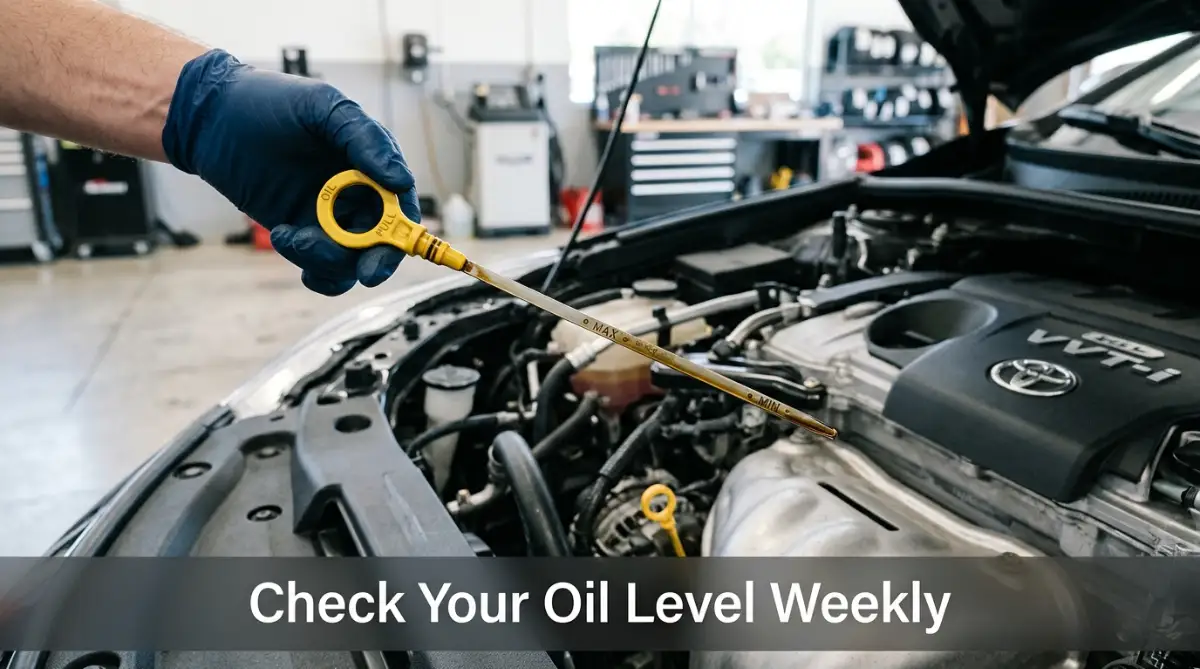
Pop your hood and secure it safely with the prop rod. Look for a brightly colored handle, usually yellow or orange, near the engine block.
Pull this handle straight up and out of its sleeve. You will see oil coating the end of the metal strip.
Do not look at this reading yet because oil splashes around while you drive. Take your clean paper towel or rag and wipe the dipstick completely clean.
Now, push the clean dipstick all the way back into its tube until it clicks. Pull it out once more, holding it horizontally so the oil does not run up or down.
Look closely at the tip of the dipstick. You will see two markings, which might be dots, lines, or a crosshatched pattern.
Your oil level should sit comfortably between these two marks. If it is right at or below the bottom mark, you need to add a quart of oil immediately.
Reading the Oil Color Like an Expert
The level of your oil is only half the story. You also need to look at its color and feel its texture.
Healthy oil has a clear, honey-like amber color. As it works, it naturally darkens to a deep brown or black.
This is normal because the oil is doing its job of cleaning dirt and carbon from the engine. However, if the oil looks thick, grimy, or smells like burnt toast, it is time for an oil change.
If you see a milky, light-brown color that looks like a milkshake, you have a major problem. This usually means engine coolant is leaking into your oil, often due to a blown head gasket.
If you see this, do not drive the car. Call a professional mechanic right away.
Check out this simple visual guide to learn how to properly check your oil like an expert. Seeing the process in action will give you the confidence to pop your hood and perform this essential check in your own driveway today
Myth vs Reality: The Oil Change Interval
Many quick-lube shops still tell you to change your oil every 3,000 miles. Let us look at the facts versus the old myths.
The Old MythThe Modern RealityYou must change your oil every 3,000 miles without fail.Modern synthetic oils easily last 7,500 to 10,000 miles.Black oil on the dipstick means you need an immediate change.Black oil just means the additives are cleaning your engine.Any brand of oil works as long as it is cheap.You must use the exact viscosity grade listed in your owner's manual.
Keeping Your Cool: The Engine Coolant Check
Your engine generates enough heat to melt a block of solid iron. Coolant is a special mix of water and antifreeze that absorbs this heat and carries it to the radiator.
Without it, your engine will overheat in minutes, warping vital metal components.
The Golden Rule: Never Open a Hot Cap
Before we even talk about coolant, we must cover a major safety warning. Never, under any circumstances, open a radiator cap while the engine is hot.
The cooling system operates under extreme pressure. If you open that cap, boiling liquid and steam will blast out like a volcano.
This can cause severe, life-altering burns on your face and hands. Always wait until the engine is completely cold to the touch.
Spotting the High and Low Marks
To check your coolant safely, you do not even need to open the system. Look for a semi-transparent plastic tank near your radiator.
This is called the coolant recovery tank or overflow reservoir. On the side of this clear plastic tank, you will see molded lines labeled "Full" and "Low" or "Hot" and "Cold."
Simply look through the plastic to see where the colored fluid sits. If the liquid is sitting below the low mark, you need to top it up.
The Danger of Using Plain Tap Water
If you need to add fluid, do not just grab the garden hose. Plain tap water contains minerals like calcium and magnesium.
These minerals will quickly build up inside your radiator, blocking the tiny passages. This scale buildup reduces the system's ability to cool your engine.
Additionally, pure water boils at a lower temperature and freezes easily in winter. Always use a 50/50 mixture of distilled water and the correct antifreeze type for your car.
Many stores sell pre-mixed coolant, which is incredibly convenient for quick top-offs.
Brake Fluid: Your Ultimate Safety Line
When you press your brake pedal, you are not actually mechanical pulling a stopper. You are pushing liquid through a set of tight tubes to squeeze your brake pads against the wheels.
If your brake fluid is low or dirty, your brakes will feel soft, spongy, or might fail to stop you altogether.
Finding the Brake Fluid Reservoir
Open your hood and look at the back of the engine bay on the driver's side. You will see a small, clear plastic reservoir mounted to the firewall.
Like the coolant tank, this reservoir has maximum and minimum markings on the side. You should be able to see the level without removing the cap.
why You Should Keep the Cap Closed
Try to avoid opening the brake fluid cap unless you absolutely have to add fluid. Brake fluid is highly hygroscopic, which is a fancy way of saying it loves to absorb moisture from the air.
If moisture gets into your brake system, it can rust your metal brake lines from the inside out. Water also boils at a much lower temperature than brake fluid.
Under hard braking, that water can turn into steam bubbles, causing your brake pedal to go straight to the floor without stopping the car.
Reading the Color of Your Stop Juice
Take a close look at the color of the liquid through the plastic walls.
- Brand new brake fluid is almost completely clear with a light yellow tint.
- Aged brake fluid turns a dark, muddy brown or black color.
If your fluid looks like dark soy sauce, it has absorbed too much water and dirt. This means you need to have your brakes flushed and filled with fresh fluid.
Transmission Fluid: Smooth Shifting Without the Grind
Your transmission transfers the raw power of your engine to your wheels. It uses specialized fluid to lubricate the gears and help change speeds.
If this fluid runs low, your gears will start to slip, hesitate, or grind.
The Running Dipstick Test
Unlike engine oil, many cars require the engine to be running and warm when checking transmission fluid. Park on flat ground, keep the engine idling, and put the car in park.
Locate the transmission dipstick, which is often further back in the engine bay and colored red or blue.
Note: Many modern cars now have sealed transmissions that do not have a dipstick. If you cannot find one, check your owner's manual to see if your car has a sealed system.
Pull the dipstick out, wipe it clean, put it back in, and pull it out again. Read the level against the "Warm" or "Hot" markings on the metal strip.
The Sniff and Color Test
Drop a small splash of the fluid onto a clean white paper towel.
Healthy transmission fluid is a bright pinkish-red color and has a sweet, oily smell. If it looks dark brown or black, or smells like burnt plastic, your transmission is running too hot.
This is a warning sign that your transmission gears are wearing out rapidly.
Power Steering Fluid: Easy Turns, No Screeches
Have you ever tried to turn the steering wheel of a car that is completely turned off? It feels incredibly heavy and difficult to move.
Power steering fluid provides the hydraulic pressure that makes turning your steering wheel completely effortless.
Spotting the Power Steering Cap
Look for a small reservoir with a cap that has a steering wheel icon printed on it. Some cars use a small dipstick attached to the underside of the cap itself.
Other cars use a simple clear reservoir with lines on the side.
Check the level to make sure it sits between the markings. If you notice the steering wheel whining or squealing when you turn a corner, low power steering fluid is almost always the cause.
Windshield Washer Fluid: Clear Sight for Safe Trips
This is the easiest check of them all, but it is highly important for safe driving. A dusty windshield or a sudden splatter of mud can completely block your view of the road.
Filling Up the Reservoir
Look for a large plastic reservoir cap with a symbol that looks like a miniature windshield wiper spraying water.
Unlike other systems, you do not have to worry about overfilling this tank. Simply open the cap and pour in your favorite washer fluid until you can see the liquid near the top of the neck.
In winter weather, make sure to use a washer fluid mix that contains antifreeze. This stops the liquid from freezing solid on your windshield while you are driving in cold temperatures.
The Ultimate Quick Reference Fluid Matrix
To make your home garage inspections as easy as possible, keep this handy reference table nearby during your next inspection.
Fluid NameHow Often to CheckIdeal ColorRed Flag Warning SignsEngine OilEvery 2 weeksAmber / HoneyMilky brown color, gritty texture, or burnt smellEngine CoolantOnce a monthPink, Green, or BlueCloudy appearance, floating rust particles, or oily filmBrake FluidEvery 3 monthsLight straw / ClearDark brown or black color, soft brake pedal feelTransmissionEvery 6 monthsBright RedDark black color, burnt smell, slipping gearsPower SteeringEvery 6 monthsClear Red or AmberWhining noise when turning, stiff steering wheelWasher FluidAs neededBlue or PurpleDry reservoir, smeared windshield dirt
Simple Tools You Need in Your Home Garage
You do not need a massive toolbox to keep your fluids in check. In fact, you probably already have everything you need lying around your house.
- A Good Flashlight: Engine bays are full of dark corners and deep shadows. A bright LED light makes reading plastic reservoir levels incredibly easy.
- A Clean Rag or Microfiber Cloth: Needed for wiping dipsticks clean without leaving lint behind.
- A Plastic Funnel: Keeps you from spilling oil or coolant all over your hot engine parts.
- A Set of Safety Glasses: Protects your eyes from unexpected splashes of chemicals.
By spending just five minutes every few weeks looking under your hood, you can catch major engine issues before they turn into expensive nightmares. You do not have to be an expert to take control of your vehicle's health.
All it takes is a little bit of attention and the simple steps we shared today. Your car will run smoother, last longer, and keep your hard-earned money right where it belongs—in your pocket.
Pro-Level Secrets to Keep Your Fluids Fresh and Your Engine Purring
Checking your fluids is just the first step on your journey as a self-reliant car owner. To truly save money, you must understand how these liquids age and react to your daily driving habits.
Most car owners believe their engine oil degrades at a steady rate regardless of how they drive. In reality, short trips of under ten minutes are incredibly hard on your motor oil.
During short drives, your engine never reaches its optimal operating temperature. This allows water condensation to build up inside the engine crankcase, which dilutes your oil and reduces its ability to protect moving parts.
If you mostly drive short distances, you should check your oil more frequently than someone who takes long highway trips. It is also wise to take your car for a longer thirty-minute drive once a week.
This longer drive allows the engine to get hot enough to boil off any accumulated moisture. This simple habit will extend the life of your oil and protect your engine bearings.
Another secret that professional mechanics use is tracking fluid levels over time with a simple glovebox logbook. Every time you open your hood, write down the date and the exact levels of each fluid reservoir.
If you notice your coolant level drops by a tiny fraction every month, you likely have a very slow, hidden leak. Spotting this early allows you to fix a minor hose leak before it turns into an expensive head gasket failure.
Additionally, we must consider the environmental impact of working with these chemicals at home. When you drain your engine oil or replace old fluids, never pour them on the ground or down household drains.
One single gallon of dirty motor oil can contaminate up to one million gallons of clean drinking water. You can learn how to manage and recycle these chemicals safely by reviewing the official guidelines on managing and recycling used oil from the Environmental Protection Agency[1].
Almost all local auto parts stores will accept your used oil and filters for free, turning them back into useful products[2]. Taking care of your car should also mean taking care of the environment we all share.
As the automotive industry shifts toward cleaner transportation, you might find yourself moving away from traditional internal combustion engines. If you are considering making the switch, you will find that electric vehicles have entirely different maintenance requirements.
While they do not require weekly engine oil checks, keeping their high-voltage systems running smoothly is still a top priority. For instance, you can read about easy ways to keep your electric car battery healthy for years to see how simple habits can prevent expensive battery failures.
Similarly, stopping a vehicle changes completely when you move to a cleaner energy platform. Traditional vehicles rely purely on hydraulic brake fluid to slow down, which requires frequent inspection and replacement.
Electric cars use a clever system that uses the motor to slow the vehicle down, which saves wear on your brake pads and fluid. To understand how this works, take a look at our guide on how regenerative braking works in electric cars.
No matter what type of car you drive, keeping it in top shape gives you the freedom to travel whenever you want. If you are planning a long-distance road trip after finishing your fluid checks, organizing your gear is another great way to ensure a stress-free trip.
To maximize your cargo space and keep your cabin comfortable, check out our practical tips on how to pack for months of travel using compression bags. A well-maintained engine and an organized trunk are the perfect combination for any great adventure.

The Costly Blunders That Can Quietly Destroy Your Vehicle
When we start doing our own maintenance, it is easy to become overconfident and make small errors that lead to massive disasters. A simple misunderstanding of how car parts work can turn a free five-minute check into a multithousand-dollar repair bill.
One of the most common and devastating errors is mixing different colored engine coolants together. Many drivers assume that coolant is just colored water, so they mix green coolant with pink or blue coolant.
These fluids have entirely different chemical formulas designed for specific metal alloys inside your engine block. When you mix incompatible coolants, they react chemically and turn into a thick, jelly-like sludge.
This sludge instantly plugs up the tiny cooling passages inside your radiator, causing your engine to overheat and warp. To fix this mistake, you will have to pay for a complete cooling system flush, a new radiator, and potentially a new water pump.
Another quiet killer of modern engines is overfilling your engine oil. It is easy to think that if some oil is good, more oil must be better for lubrication.
When you put too much oil into your engine, the spinning crankshaft will whip the oil like egg whites in a bowl. This turns your liquid oil into a thick, frothy foam filled with air bubbles.
Your oil pump cannot pump foam, so your engine loses oil pressure almost instantly. Metal parts will begin rubbing against each other without any lubrication, causing catastrophic engine failure within miles.
Always keep the oil level strictly below the maximum line on your dipstick to avoid this foaming issue. If you do accidentally overfill your oil, you must drain the excess before starting your vehicle.
Using the wrong weight of motor oil is another mistake that can quietly ruin your engine performance. Modern cars utilize complex variable valve timing systems that rely on precise oil pressure to operate.
These systems are designed for incredibly thin oils, such as 0W-20 or 5W-20. If you use a thicker, old-school oil like 10W-40, the oil cannot flow quickly enough through the microscopic passages.
This will trigger your check engine light, reduce your fuel mileage, and cause heavy wear during cold morning starts. Always read the oil cap or your owner's manual to find the exact weight rating your engine needs.
We also have a bad habit of ignoring small puddles of liquid underneath our cars on the driveway. It is easy to dismiss a damp spot as harmless water condensation from your air conditioning unit.
But if that puddle has a sweet smell, an oily feel, or a bright red or green color, your car is actively crying out for help. Ignoring a slow leak of brake fluid or power steering fluid can lead to a sudden loss of control while driving on the highway.
According to emergency towing data from AAA Automotive Care, thousands of roadside breakdowns happen every single day simply because drivers ignored minor fluid warning signs[3]. Do not let a small puddle of fluid turn you into another statistic on the side of the road.
If you see a spot on your driveway, slide a clean sheet of cardboard under your engine bay overnight. This will help you identify the exact color and location of the leaking fluid, allowing you to address the problem before it leaves you stranded.
Your Five-Minute Action Plan for Peace of Mind
Taking control of your car’s fluid levels is one of the most empowering habits you can build as a driver. It changes your relationship with your vehicle from one of constant worry to one of complete confidence.
Instead of fearing the next mysterious noise or warning light, you will drive with the quiet peace of mind that comes from knowledge. You will know exactly what is happening under your hood because you took the time to check.
Do not let this information sit idle in your mind. The best way to start is by stepping outside right now with a flashlight and a clean paper towel.
Open your hood and find just one fluid reservoir—perhaps the windshield washer fluid or the engine oil dipstick. Get familiar with how they look, where the markings are, and what the fluid looks like.
Once you successfully perform your first check, the next ones will feel incredibly simple and natural. You will realize that you do not need a mechanics degree to keep your machine running beautifully.
By building this simple habit, you are protecting your hard-earned money and keeping your family safe on the road. Treat your car with the care it deserves, and it will reward you with years of trouble-free journeys.
Your Simple Weekend Maintenance Checklist
To make this a natural part of your weekly routine, here is a quick action list you can perform every Saturday morning. It takes less than five minutes but can save you thousands of dollars in the long run.
- Check the Oil Level: Pull the dipstick, wipe it, re-insert it, and make sure the level sits between the two dots.
- Inspect the Coolant Overflow: Look at the plastic recovery tank to ensure the fluid is resting at the proper level.
- Scan the Driveway: Check the ground under your engine bay for any fresh drips or colored puddles.
- Top off the Washer Fluid: Keep your visibility crystal clear by keeping your washer tank full.
A Final Word on Becoming a Self-Reliant Driver
There is a unique sense of pride that comes from taking care of your own possessions. When you learn how to handle these basic inspections, you stop being a passive passenger in your own life.
You become the active guardian of your vehicle's health and safety. You will no longer feel intimidated when you walk into a repair shop because you understand exactly what your car needs.
This simple knowledge is your best shield against unnecessary repairs and dishonest service upcharges. Your car is a vital tool that keeps your life moving forward every single day.
Give it just five minutes of your time this weekend, and enjoy the ultimate reward of a reliable, worry-free ride.
Taking these few minutes to check under the hood has completely changed how I feel about driving. I no longer panic over every little sound because I know exactly how my car is doing, and that confidence is worth more than any repair bill. Start your own check this weekend, and you will quickly see how easy it is to keep your vehicle running smoothly for years.
Disclaimer
The information provided in this article is for educational purposes only. Always consult your vehicle's official owner's manual before performing any maintenance or inspections. If you are unsure about any procedure or suspect a serious mechanical issue, seek assistance from a certified professional mechanic.
Sources