The Hidden Panic of the Battery Gauge: A Driver's Real-Life Struggle
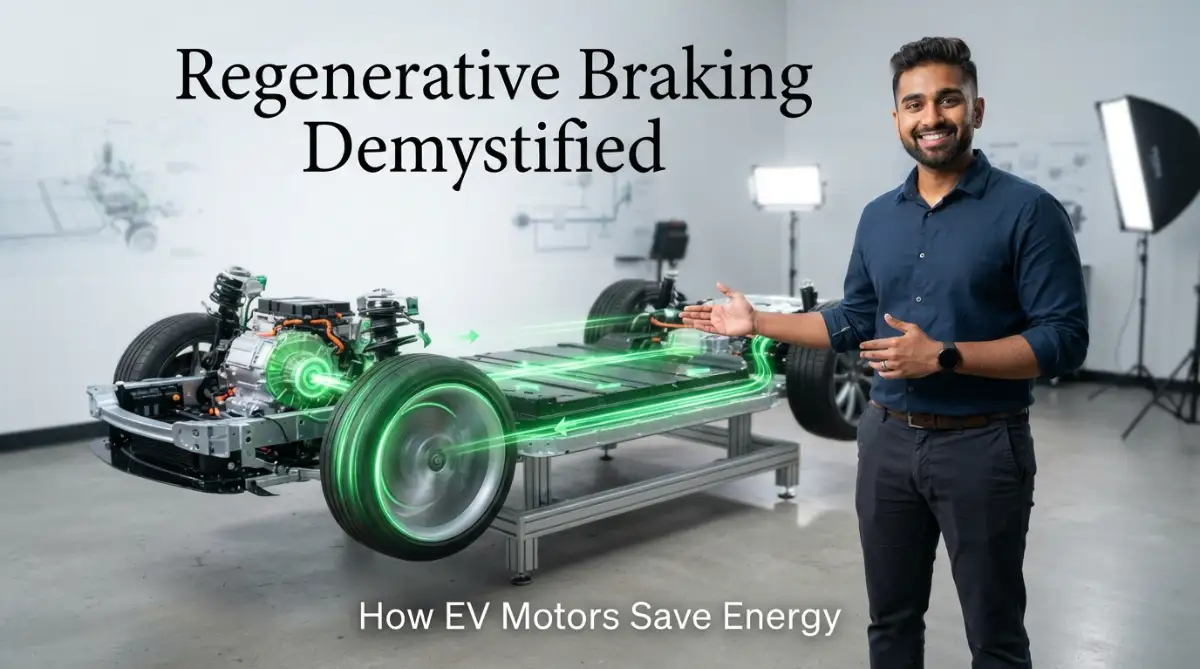
"If you drive an electric car, you have probably noticed that the way it slows down feels very different from a gas car. Lift your foot off the pedal, and the car immediately starts braking on its own, sending power back into the battery. This is called regenerative braking, and it is easily one of the best features of an EV once you know how to use it. When I first switched to an electric car, I had no idea how this worked, but learning a few simple driving habits helped me stop worrying about range and actually add miles back to my battery for free."
Fast Guide: Getting More Miles From Your Stops
- Magnets, Not Friction: Regenerative braking uses magnetic resistance inside your electric motor to slow you down. This process turns your motor into a generator, sending fresh electricity back into your battery.
- One-Pedal Driving: You can do almost all your driving using just the accelerator pedal. Lift your foot to slow down smoothly, and press it to speed up. It makes driving in traffic much less stressful.
- Watch the 100% Limit: If your battery is fully charged to 100%, regenerative braking will not work at first because there is no space to store the extra energy. Keep your daily charge limit to 80% to avoid this.
- Prevent Rotor Rust: Since your physical brakes are rarely used, they can easily rust and pit over time. Press your brakes firmly once a week on a safe, empty road to keep them clean and responsive."
The Great Braking Paradox: Friction Versus Electromagnetism
To understand how electric cars recover energy, we first need to look at how normal cars slow down. In a traditional gas-powered vehicle, stopping is all about friction.
When you press the brake pedal, hydraulic fluid pushes tough brake pads against spinning metal discs attached to your wheels. This intense rubbing creates a massive amount of heat.
This heat is actually your car's kinetic energy—the energy of motion—escaping into the atmosphere. Once that heat radiates into the air, it is gone forever, completely wasted.
Electric cars do things differently. While they still have traditional friction brakes for emergencies, they rarely need to use them.
Instead of rubbing two pieces of metal together to slow you down, your electric car uses magnetism. It turns the very force that drives the car forward into a system that slows it down.
This smart shift allows the vehicle to capture energy that would otherwise be lost as heat. Let us break down exactly how this process works in your daily drive.
How Your Car Motor Pulls Off a Magic Trick
The secret behind regenerative braking lies in a brilliant piece of engineering: the electric motor can run in two opposite directions.
When you press the accelerator pedal, electricity flows from the battery pack to the motor. This electricity creates powerful magnetic fields that spin the motor, which then spins your wheels and moves the car forward.
But when you lift your foot off the accelerator, the entire process reverses instantly.
Without electricity flowing from the battery, the spinning wheels begin to spin the motor instead. This action turns your electric motor into an electricity generator.
As the motor spins backward as a generator, it creates a strong magnetic resistance. This resistance makes it much harder for the wheels to turn, which naturally slows the vehicle down.
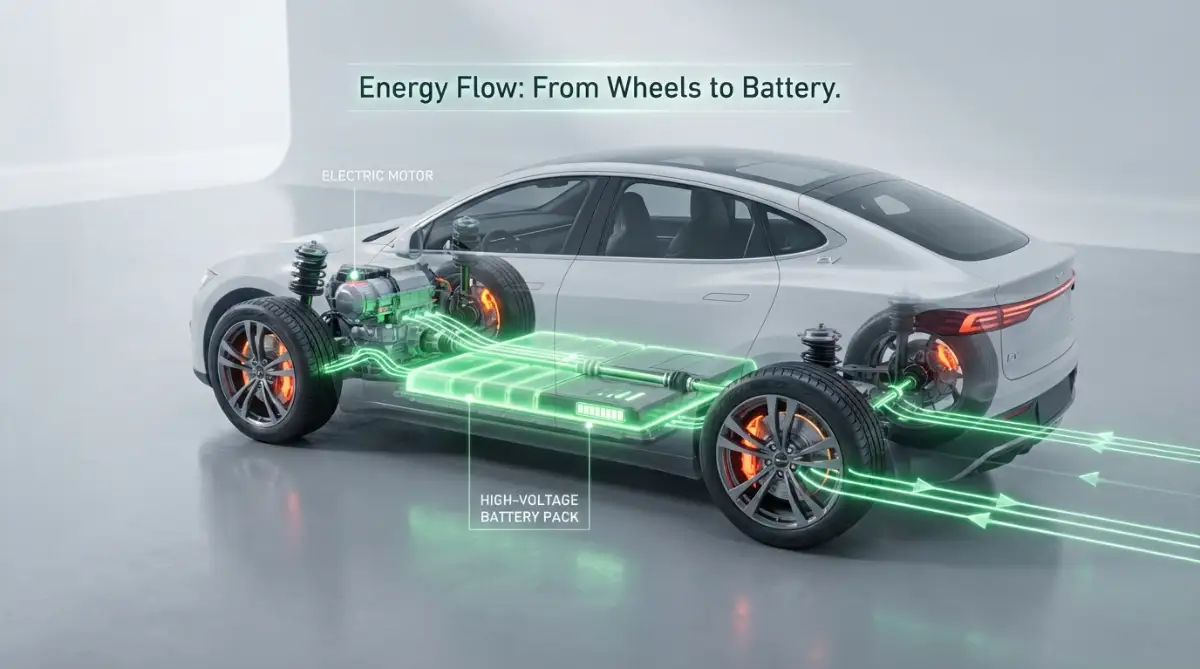
At the exact same time, the generator produces fresh electricity from that rolling motion. This newly created power is sent straight back through the wires and into your battery pack.
You are not using friction to stop; you are using magnetic resistance to capture energy.
Ever wonder how your car actually converts motion back into electricity? Watch this quick breakdown to see the magic of regenerative braking in action, then keep reading to learn how you can use these secrets to boost your daily range
Step-by-Step: The Journey of a Stopping Car
Let us look at a simple, step-by-step breakdown of what happens inside your vehicle when you decide to slow down.
The moment you lift your foot off the accelerator pedal, the car's computer stops sending electrical current to the motor. The car continues to roll forward under its own weight, carrying plenty of kinetic energy.
The physical momentum of the rolling wheels now forces the electric motor to spin. Because no power is coming from the battery, the motor automatically switches its behavior to act as an alternator.
The magnetic fields inside the generator fight against the rotation of the wheels. This magnetic drag acts like an invisible brake, smoothly reducing your speed without any physical parts rubbing together.
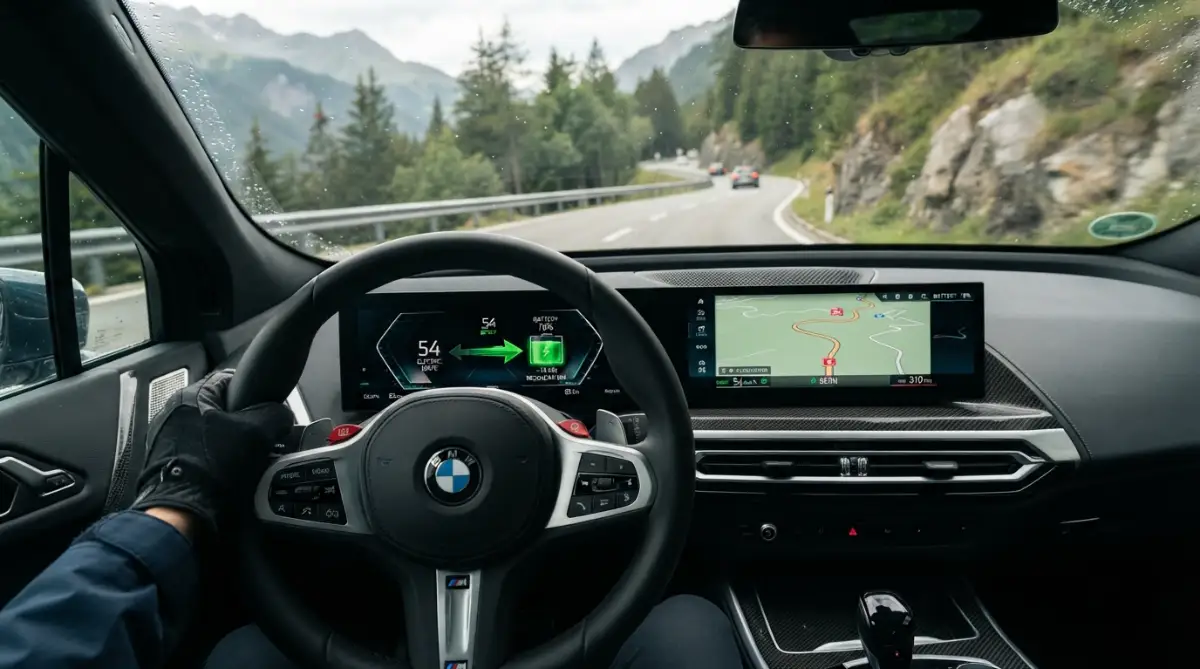
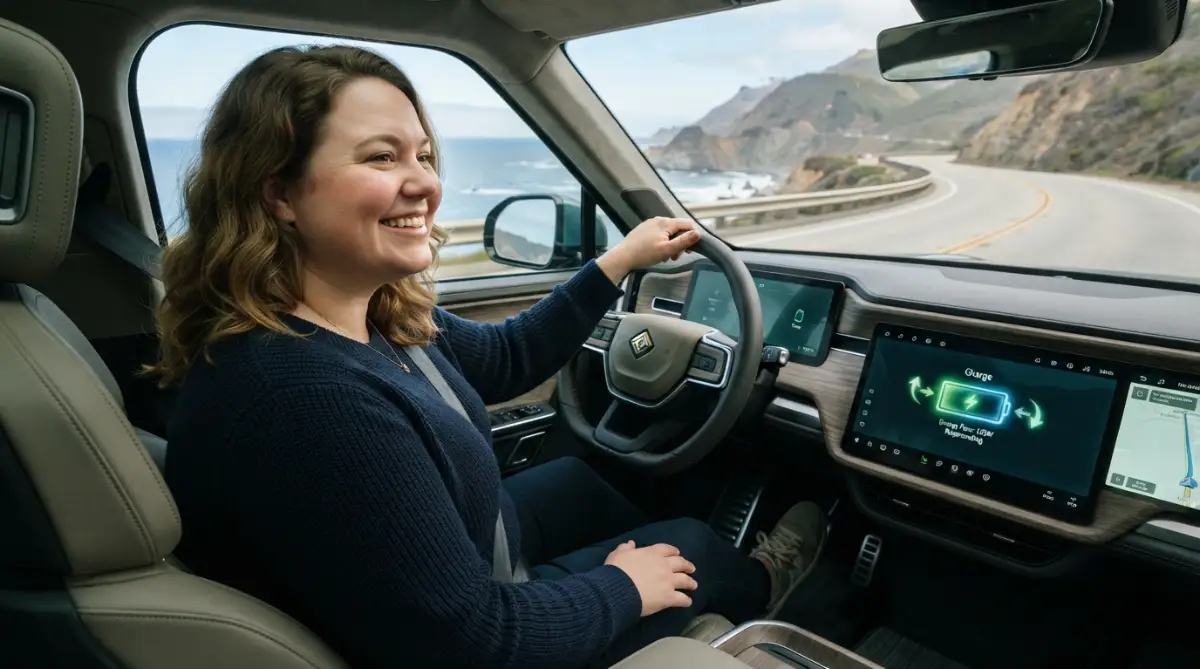
The generator sends the electricity created by this magnetic drag back to the main battery. If you look at your dashboard, you will see the energy bar turn green, showing that your battery is actively charging.
Traditional Brakes vs. Regenerative Brakes
To make this even clearer, let us compare the two different braking systems side-by-side:
FeatureTraditional Friction BrakesRegenerative Braking SystemPrimary MechanismPhysical brake pads pressing on metal rotorsMagnetic resistance inside the electric motorEnergy OutcomeConverted into waste heat and lostConverted into electricity and stored in batteryComponent WearHigh wear and tear (requires regular replacement)Extremely low wear (pads last for many years)Stopping PowerExcellent for sudden, emergency stopsBest for smooth, predictable decelerationDriving FeelRequires moving foot back and forthAllows for simple one-pedal driving
The Magic of One-Pedal Driving
One of the best practical benefits of this technology is a feature called one-pedal driving.
In a standard car, you constantly move your foot back and forth between the gas pedal and the brake pedal. This can get tiring, especially when you are stuck in heavy stop-and-go city traffic.
With an electric car, you can do almost all of your driving using only the accelerator pedal.
When you want to speed up, you press down on the pedal. When you want to slow down, you simply lift your foot off the pedal.
The car will slow down smoothly and can even come to a complete stop without you ever touching the actual brake pedal.
It feels incredibly natural once you try it for a few minutes. It also makes your daily commute much more relaxing because your right foot does not have to jump back and forth.
What People Think (The Myth) How It Actually Works (The Fact)
EVs do not have normal physical brakes anymore. My car still has regular disc brakes. They are always there for panic stops or emergency braking.
Regenerative braking is 100% efficient. No system is perfect. It usually recovers about 60% to 70% of the energy; some is still lost to heat and air resistance.
Regen works exactly the same in all weather. Freezing weather actually limits energy recovery because a cold battery cannot safely accept fast currents.
Real-World Limits on Energy Recovery
While this technology is fantastic, there are times when it cannot work at maximum capacity.
If your battery is already completely full, there is simply no place to put the extra electricity. In this scenario, your car will automatically use the standard friction brakes to slow you down until the battery level drops a bit.
Cold weather also plays a big role in how your system behaves.
Lithium-ion batteries do not like to receive fast charges when they are cold. If you start your car on a freezing winter morning, you might notice that the regenerative braking feels much weaker than usual.
Once the battery warms up during your drive, the normal braking strength will return. Many modern electric cars have smart heating systems to warm the battery pack before you even start driving.
Tips to Get the Most Out of Your EV Braking
If you want to maximize your driving range and get the most green bars on your dashboard, try these simple habits.
The key to high energy recovery is smooth, gradual deceleration. If you see a red light in the distance, lift your foot off the accelerator early instead of waiting until the last second to slam on the brakes.
Most electric cars allow you to adjust the strength of the regenerative braking. Go into your vehicle's settings menu and set it to the highest level, or use the steering wheel paddles to increase the resistance.
Turn on one-pedal driving if your car offers it. This setting ensures that the car always uses magnetic resistance to slow down to a complete stop, keeping your physical brake pads fresh and clean.
Correct tire pressure reduces rolling resistance and helps your car move efficiently. This allows the regenerative system to capture more clean kinetic energy when you lift your foot.
The Double Win: Saving Money and Your Brakes
Beyond saving battery power, this technology offers another massive financial benefit: it saves your physical brakes from wearing out.
Because the electric motor does most of the hard work to slow the vehicle down, your physical brake pads and rotors are rarely used.
In a traditional car, you might need to replace your brake pads every 30,000 to 50,000 miles.
In an electric car, your brake pads can easily last over 100,000 miles. Some EV owners drive their cars for years and find that their brakes still look almost brand new.
A Mechanic's Secret for EV Owners
Because your brake pads last so long, they can actually seize up from lack of use. During my yearly tire rotation, I always ask the shop to apply a small amount of brake grease to the caliper slider pins. This keeps the unused metal parts from rusting together and ensures my emergency brakes work perfectly when I actually need them.
This saves you hundreds of dollars in garage maintenance bills over the lifespan of your vehicle. It also means less brake dust is released into the air, which helps keep our city streets cleaner.
A Simpler Way to Move Forward
At its heart, regenerative braking is a beautiful example of smart engineering. It takes a problem—losing energy during a stop—and turns it into an elegant solution.
By understanding how your vehicle uses magnetism to recover energy, you can become a much more efficient driver.
You no longer have to watch your battery gauge with fear. Instead, you can look at every hill and traffic light as a great opportunity to recharge your battery for free.
The next time you lift your foot off the pedal and feel that gentle, smooth deceleration, you can smile knowing that your car is busy catching energy and turning it into clean miles for your journey ahead.
Professional Secrets to Master Energy Recovery
Squeezing every drop of efficiency out of your electric car is not just about keeping your foot steady. It requires a deeper look into how your driving habits connect with your vehicle's cooling and electrical systems. When you understand the tiny details of how energy travels back to your battery, you can easily increase your vehicle's range. Let us explore the advanced driving strategies that experienced electric vehicle owners use to maximize their energy savings.
The Art of the Coastal Glide
Many new electric car drivers make the mistake of using their accelerator like a simple on-and-off switch. They press it down to speed up, and then lift their foot completely to let the regenerative braking kick in hard. While this is simple, it is not always the most efficient way to travel on open roads.
The most efficient state for any moving vehicle is actually coasting, where you use momentum to glide forward without using any energy. Experienced drivers learn how to hold the accelerator pedal in a perfect middle position. In this sweet spot, the motor neither draws power from the battery nor applies regenerative resistance to the wheels. This allows you to coast down long, gentle hills naturally, which saves more total energy than constantly slowing down and speeding up again.
I used to treat my accelerator pedal like a simple on-off switch, constantly jumping between speeding up and slamming on the brakes. Once I realized that I was literally throwing away miles of range by driving this way, I started practicing "coastal gliding" instead. It changed my entire driving experience, turning my daily commute into a fun game of trying to reach my destination with as much battery power as possible
Speed Modulation and Predictive Road Management
To get the absolute best results from your vehicle, you must learn to read the road ahead of you like a book. If you see a traffic light turn red a quarter-mile away, you should immediately begin your gradual slowdown.
Slamming on the brakes at the last second forces your car to rely on its physical friction brakes. When this happens, the magnetic generator simply cannot handle the sudden, massive rush of kinetic energy. The extra power gets converted into waste heat, and that potential electricity is gone forever. By spreading your deceleration over a longer distance, you give your generator the time it needs to channel almost all that energy safely back into your battery pack.
You can study detailed research papers on this topic, such as the Clemson Vehicular Electronics Laboratory guide on regenerative systems, which explains how torque coordinators manage this delicate balance.
Thermal Management and Predictive Preconditioning
Your car's battery pack behaves very similarly to a human body. It does not perform well when it is freezing cold or when it is dangerously hot. If you try to feed a cold battery a sudden burst of regenerative electricity, the internal resistance will block most of it.
To bypass this issue, you should use your car's built-in cabin preconditioning feature before you start your trip. This preheats the battery pack using wall power while your car is still plugged in at home. A warm battery is much more receptive to regenerative currents, allowing you to capture maximum energy right from the very first mile of your drive.
If you are looking for more ways to protect your power source, you can read about easy ways to keep your electric car battery healthy for years to ensure your system stays in top shape.
Leveraging Your Environment and Route Selection
The path you choose to take to work or your local store has a massive impact on your energy recovery. Highways are great for saving time, but they are actually the worst places for regenerative systems because you rarely slow down.
If you have the option, choose routes that feature rolling hills or mild city traffic. These environments act like natural charging stations for your vehicle, allowing you to constantly harvest kinetic energy. Moving up a hill takes a lot of power, but you can recover a massive portion of that energy on your way back down if you manage your speed carefully.
This careful energy planning also extends to how you charge your vehicle before you leave the house. If you are interested in optimizing your home setup, you should learn about setting up your first home EV charger without tripping your breaker to keep your utility bills low.
Common Pitfalls: Where EV Drivers Lose Power and Wear Out Brakes
Even the most well-meaning electric car drivers can easily fall into bad habits that hurt their efficiency. Many of these issues stem from old habits built during decades of driving traditional gas-powered cars. Let us shine a light on these hidden mistakes so you can protect both your physical brakes and your battery's health.
The Danger of the Over-Charged Battery
It is a common habit to plug your car in and charge it all the way to 100% every single night. While this feels like the safest option for long trips, it actually disables your regenerative braking system entirely for the first few miles of your drive.
A battery that is completely stuffed with electricity has no physical space to store newly generated regenerative power. When you lift your foot off the accelerator, the car will not slow down with its usual magnetic drag. You will be forced to use your physical brake pads to stop, which wastes energy and can catch you off guard if you are expecting the car to slow down on its own.
To avoid this, set your daily vehicle charge limit to 80%, which leaves plenty of empty storage space for regenerative energy. For a deeper understanding of these charge-related challenges, explore the details on common charging mistakes that degrade battery capacity.
The Icy Road Slip Hazard
Regen braking is an amazing tool, but it can become a safety hazard when driving on slippery surfaces like ice, snow, or wet leaves. When your car uses magnetic resistance to slow down, it applies a steady braking force primarily to the drive wheels.
On slick roads, this sudden deceleration force can cause your tires to lose their grip and slide. Traditional anti-lock braking systems (ABS) are highly advanced, but they work best when you use your physical brake pedal.
When winter weather strikes, it is highly recommended to go into your car's settings and turn your regenerative braking down to its lowest setting. This gives you manual control over your vehicle's stopping power and prevents unexpected slides. You can read the official safety advisories from the U.S. National Highway Traffic Safety Administration (NHTSA) regarding how cold temperatures and icy roads alter vehicle traction and braking systems.
The Irony of the Rusting Brake Pad
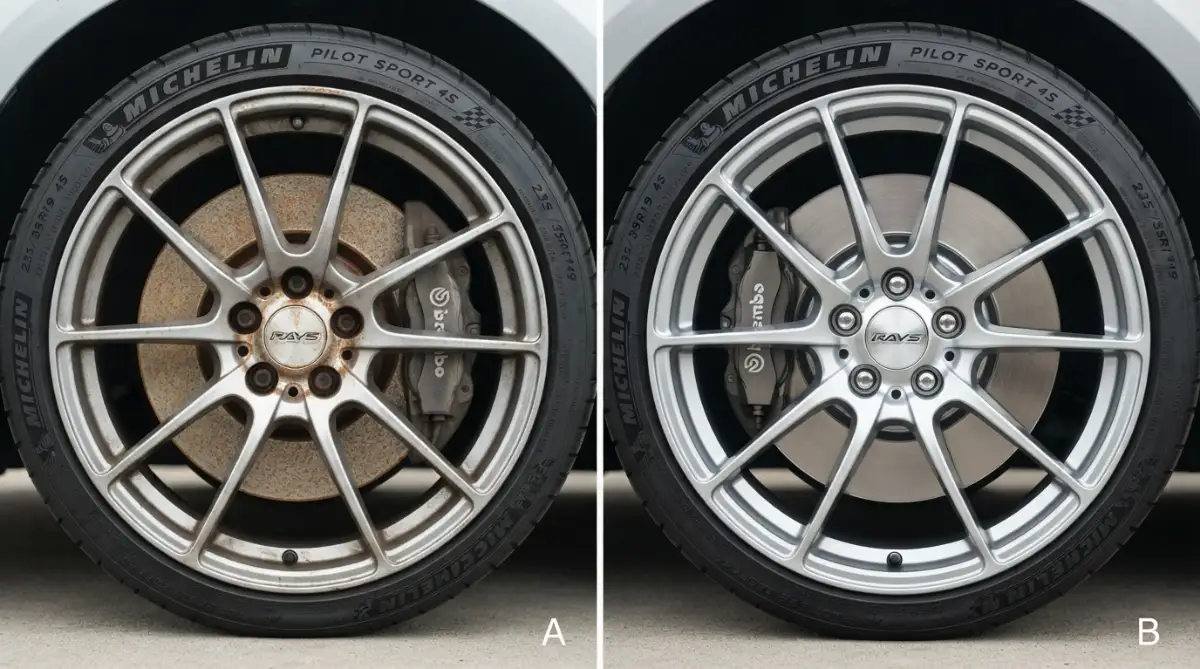
Because electric cars are so good at stopping with magnets, drivers rarely use their actual physical brakes. While this is great for saving your brake pads from wearing down, it introduces a highly unusual problem: brake rust and rot.
Your car's brake rotors are made of raw cast iron. When it rains, a thin layer of rust forms on these metal discs almost overnight. In a traditional car, this rust is scraped off the very first time you slow down at the end of your driveway.
But in an electric car, that rust can sit on the rotors for months because the physical brake pads never touch them.
Over time, this moisture can cause your brake calipers to seize up or your rotors to pit and warp. To prevent this expensive damage, you should perform what mechanics call a "brake burnish" once a week. Simply find a safe, empty road, speed up slightly, and press the brake pedal firmly to force the physical brake pads to rub the rust off the rotors.
Action Plan: Your Daily Blueprint for Maximum Energy Savings
We have covered a lot of advanced science and driving strategies, but how do you put this knowledge into action starting tomorrow morning? Let us break down a simple, easy-to-follow daily checklist to help you build these highly efficient habits naturally.
our Morning Route Preparation
Before you even step out of your front door, open your car's mobile app and start the cabin climate control. This simple action uses grid electricity to bring your battery pack to the perfect operating temperature. When you drive away, your car will immediately be ready to capture every single bit of slowing-down energy.
The Conscious Driver Mindset
As you drive down your street, make a conscious effort to keep your eyes focused far down the road. Instead of looking only at the car directly in front of you, look three or four vehicles ahead. If you see brake lights appearing in the distance, slowly release your accelerator pedal immediately to let your magnets do all the stopping work.
The Weekly Mechanical Health Check
Once a week, make sure to give your physical brakes a quick workout to keep them clean and responsive. A single firm press of the pedal on an empty road is all it takes to keep your rotors shiny, rust-free, and ready for any emergency stop.
By making these small adjustments to your driving style, you will quickly notice your average energy usage dropping. You will get more miles out of every single charge, spend less money at public charging stations, and protect your vehicle's mechanical components for years to come.
Changing how I drive didn't just save me money at the charger; it actually made me feel much more connected to my car and the road. If you start using these simple techniques today, you will be surprised at how much further your battery can take you on a single charge. Give these tips a try on your next trip, and start enjoying the peace of mind that comes with knowing exactly how your car works.
Safety & Operational Disclaimer
The information provided in this article is for educational and informational purposes only. Regenerative braking performance can vary widely depending on your specific vehicle make, model, battery condition, and weather. Always prioritize road safety, local traffic conditions, and your vehicle manufacturer's official guidelines over efficiency strategies. Never attempt to adjust vehicle settings or engage in one-pedal driving in hazardous weather conditions if you do not feel comfortable doing so.