The Sinking Feeling of an Empty Wallet
A few years ago, I fell for a fake NFT airdrop and watched half my savings vanish from my wallet in less than ten seconds. I was so embarrassed that I didn't even want to tell my family what happened, and I almost quit the web3 space altogether. But that painful day taught me that keeping your crypto safe isn't about luck; it is about building simple habits that protect you from your own mistakes.
Imagine waking up, pouring yourself a warm cup of coffee, and opening your crypto wallet on your phone just to check the market. You expect to see your hard-earned digital assets exactly where you left them.
Instead, your heart drops to your stomach. Your balance reads zero.
Panic sets in immediately. Your hands start shaking as you refresh the app again and again, hoping it is just a network glitch. But deep down, you know the truth. You interacted with a decentralized application (DApp) the night before, clicked "Confirm" on a transaction you did not fully understand, and gave a malicious smart contract full access to your funds.
This is not just a nightmare scenario from a sci-fi movie. It is a harsh reality that happens to hundreds of regular, hard-working people every single day. The mental toll of losing your investments in the blink of an eye is devastating.
It leaves people feeling helpless, embarrassed, and completely defeated. The stress spills over into their family lives, their sleep patterns, and their overall mental peace. We often think of blockchain as a highly secure technology, and mathematically, it is.
However, the way we connect our wallets to various platforms creates invisible open doors. When you interact with a smart contract blindly, you are essentially handing over the keys to your financial house to a complete stranger.
I know how overwhelming this technology can feel. You just want to trade, stake, or collect digital assets without needing a degree in computer science. But ignoring the hidden dangers is a risk you simply cannot afford to take.
The good news is that you do not have to be a coding genius to protect yourself. You just need to understand a few basic rules of the road. Let us look at how you can lock those digital doors and browse the decentralized web with absolute peace of mind.

The Invisible Mechanics: Why DApps Can Be Dangerous
To fix a problem, we first need to understand how the machine works. Think of a smart contract like a digital vending machine. You put your money in, select a product, and the machine automatically gives you what you paid for.
There is no human cashier involved. The rules are written in code, and the execution is automatic.
But what happens if the vending machine has a broken latch? A clever thief might realize they can pull the latch twice and empty the entire machine. This is exactly what happens with smart contract vulnerabilities.
Hackers spend their days looking for "broken latches" in the code of decentralized applications. They are not hacking the blockchain itself. They are exploiting poorly written rules inside the specific DApp you are using.
When you connect your wallet to a decentralized exchange or a staking platform, the app asks for your permission to do things. Most people are in a hurry. They just click "Approve" without reading the fine print.
This is the exact moment things go wrong. Let us break down the specific ways your assets get compromised and how you can stop it.
The Infinite Approval Trap
This is by far the most common way everyday users lose their funds. When you want to swap a token on a decentralized exchange, the smart contract needs permission to move your tokens.
To save you time and network fees in the future, many DApps ask for "Infinite Approval."
Think of this like giving a mechanic a blank check to fix your car. You trust the mechanic today, so you sign the check. But what if the mechanic gets robbed tomorrow?
The robber now has your blank check. In the web3 world, if a DApp asks for unlimited access to your tokens and that DApp later gets hacked, the hacker can drain your wallet directly.
You do not even have to be online. Your funds will simply disappear while you sleep.
The Fix: Never give unlimited approvals. Always set a custom spending limit. If you want to trade 50 tokens, approve exactly 50 tokens. It might cost a few extra cents in network fees next time, but it will save your entire portfolio from being drained.
Understanding the "Reentrancy" Attack
Let us use a real-life analogy to understand this technical threat. Imagine you go to an ATM to withdraw $100.
You insert your card, request the money, and the machine hands you the cash. Then, the machine updates your account balance to reflect the withdrawal.
Now, imagine if you could confuse the ATM. What if you could ask for another $100 right before it updates your balance? You could keep looping this request until the ATM is completely empty.
This is known as a Reentrancy attack in the blockchain world. A hacker creates a malicious contract that repeatedly calls the DApp to withdraw funds before the DApp can update its internal balance sheet.
While you cannot fix the code of a DApp yourself, knowing this exists changes how you should evaluate platforms. You should only use applications that have been thoroughly tested and battle-hardened over time.
Myth vs. Reality: The Truth About Audits
There is a massive misconception in the crypto space regarding security audits. Let us clear the air right now.
The Myth: "This DApp has been audited by a top security firm, so my money is 100% safe here."
The Reality: An audit is just a professional review of the code at a specific point in time. It is like a home inspection before you buy a house.
The inspector might say the roof looks great today. But that does not mean a massive hurricane cannot tear it off tomorrow.
Furthermore, some developers change their code after the audit is completed. Others only get a partial audit. Never treat an audit badge as a magical shield against losing your funds.
It is a good sign, yes. But it should never replace your own personal security habits.
The Burner Wallet Strategy: Your First Line of Defense
If there is only one habit you adopt from reading this guide, make it this one. Never use your main storage wallet to interact with everyday decentralized applications.
You need to compartmentalize your digital life. Think of how you handle cash in the physical world.
You have a savings account in a secure bank, and you carry a small amount of cash in your physical wallet for daily expenses. You would never walk into a busy market carrying your entire life savings in your pocket.
Your crypto should be handled the exact same way. Set up a dedicated "Burner Wallet."
This is a completely separate web3 wallet that you use exclusively for interacting with new or risky DApps. Only keep the exact amount of funds you need for the transaction you are about to do.
If you accidentally click a malicious link or approve a bad smart contract on your burner wallet, the damage is contained. The hacker might get the $50 you left in there, but your main holdings remain completely untouched.
My absolute favorite rule is to never keep more than fifty dollars in my burner wallet at any time. Whenever I want to try a new app, I transfer the exact amount I need, do the trade, and then move any leftovers back to my secure storage right away. This simple step has saved me thousands of dollars when a platform I used got hacked a week later.
Reading the Matrix: Decoding Transaction Prompts
Most users treat transaction pop-ups like the "Terms and Conditions" on a software update. They just blindly scroll down and hit accept.
Hackers rely heavily on this lazy behavior. They design malicious contracts that look like normal login requests or standard airdrop claims.
When your wallet pops up, you need to stop and read exactly what is being requested. What are you actually signing?
1. Check the Contract Address: Always verify that the address you are interacting with matches the official project. You can usually find the official contract address on the project’s main website or documentation.
2. Look at the Data Tab: Most modern wallets have a "Details" or "Data" tab when a transaction pops up. If you see the function SetApprovalForAll, alarm bells should be ringing in your head.
This function literally gives the contract the right to transfer every single NFT or token in your wallet. Unless you are using a highly trusted marketplace and understand exactly what you are doing, you should reject this immediately.
3. Watch out for Zero-Value Transactions: Sometimes hackers send you a tiny fraction of a token or a random NFT. When you try to sell or move it, the contract executes a hidden script that drains your account.
If a random token appears in your wallet, ignore it. Do not interact with it. Do not try to sell it.
The Web2 vs Web3 Security Shift
To truly protect yourself, you need to understand the fundamental shift in responsibility when moving from traditional web applications (Web2) to decentralized applications (Web3).
FeatureWeb2 (Traditional Tech)Web3 (Decentralized Tech)Password LossClick "Forgot Password" to reset.Lose your seed phrase, lose everything forever.Hacked AccountCall customer support to freeze funds.No customer support. Transactions are irreversible.Data ControlThe company controls your data.You have complete control and total responsibility.Scam ProtectionBanks monitor and block suspicious activity.The blockchain executes exactly what you sign, instantly.
This table clearly shows why your mindset needs to change. In the decentralized world, you are your own bank.
There is no manager to complain to if you make a mistake. You must be proactive about your safety before you click a single button.
The Hardware Wallet Shield
If you are holding a significant amount of digital assets, a software wallet on your phone or computer is simply not enough. Software wallets are connected to the internet, making them vulnerable to malware, keyloggers, and remote hacks.
You need to introduce an air-gap into your security system. This is where hardware wallets come into play.
A hardware wallet is a physical device that stores your private keys offline. When you want to interact with a DApp, you still connect through a software interface, but the actual mathematical signature must be approved by physically pressing a button on the device.
Even if your computer is completely infected with a virus, the hacker cannot steal your crypto because they cannot physically press the button on the device sitting on your desk.
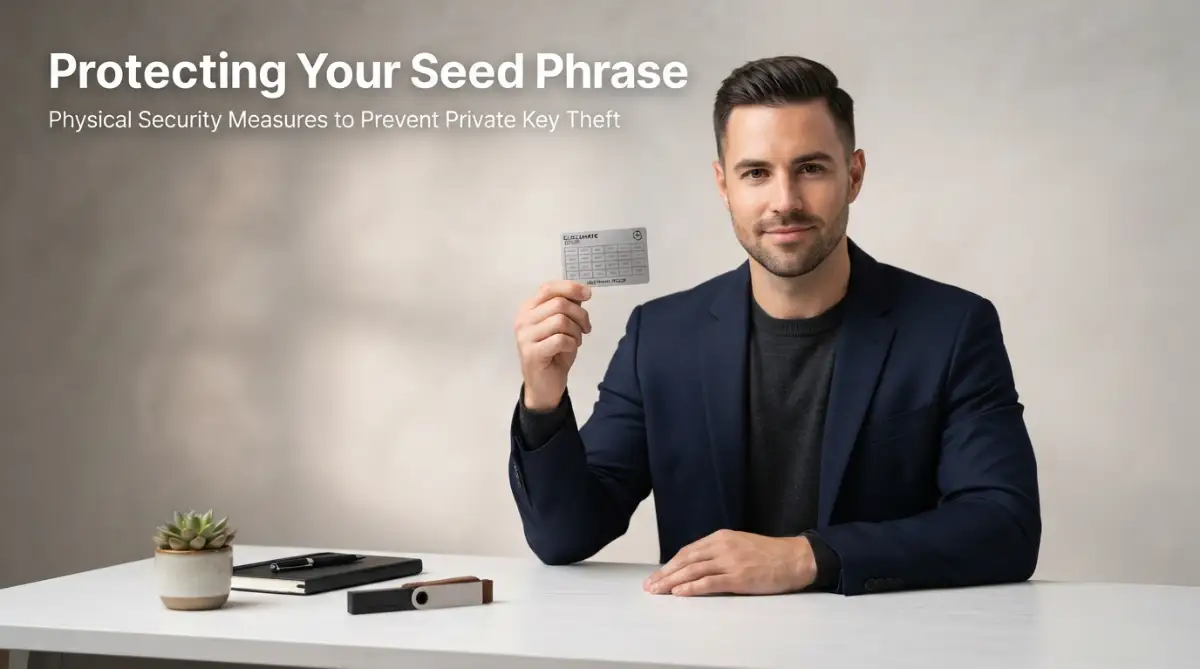
Pro Tip for Hardware Wallets: Never type your hardware wallet’s 24-word recovery phrase into your computer or phone. The only place that phrase should ever exist is on the physical piece of paper you wrote it on, locked away in a fireproof safe.
Routine Maintenance: Closing the Backdoors
Let us say you have been using decentralized applications for a few months. You have bought some NFTs, traded on decentralized exchanges, and maybe staked some coins.
Over time, you have likely built up a massive list of smart contract approvals. Every single one of those approvals is an open door to your wallet.
You need to practice good digital hygiene by regularly revoking these permissions. It is like changing the locks on your house every few months.
There are several trusted tools available online that allow you to scan your wallet address and see exactly which smart contracts have access to your funds. Make it a habit to check this list at least once a month.
If you see an approval for a DApp you no longer use, revoke it immediately. If you see a contract you do not recognize at all, revoke it without hesitation.
It might cost a small network fee to execute the revoke transaction, but think of it as an insurance premium. Paying a few cents today is much better than losing thousands of dollars tomorrow.
Want to see exactly how to find and revoke these hidden smart contract permissions in real-time? Watch this quick video walkthrough to clean up your wallet before reading the detailed steps below!
Identifying Phishing Lures and Fake Airdrops
Phishing is one of the oldest tricks in the digital playbook, but it has evolved into something deeply sinister in the web3 space. Hackers know that crypto users are constantly looking for the next big opportunity.
They prey on this greed by creating incredibly realistic fake websites.
You might get a direct message on a social platform telling you that you are eligible for a massive token airdrop. The message will include a link to a website that looks exactly like a popular decentralized exchange.
The logo is perfect, the colors match, and the site even has fake live trading data. But the URL might have one tiny spelling mistake.
Instead of an "m", they use an "rn". If you do not look closely, you will completely miss it.
When you connect your wallet to this fake site and click "Claim Airdrop," you are actually signing a transaction that drains your wallet.
How to stay safe:
Never click on links sent to you in direct messages by strangers. Always use bookmarks for the DApps you frequently use.
If you hear about an exciting new project, type the name into a reputable tracking site and find the official link from there. Slow down and verify everything.
In the world of decentralized finance, speed is often your worst enemy. Taking an extra sixty seconds to verify a URL or read a transaction prompt can be the difference between a successful trade and absolute disaster.
Security is not a one-time setup. It is a continuous practice, a mindset that you must carry with you every single time you open your digital wallet. Treat every interaction with a healthy dose of skepticism, and your digital assets will remain safely in your control.
Stepping Up Your Game: Pro-Level Security Habits
Now that we have covered the basics of wallet protection, it is time to look at how the experts operate. When you manage serious digital assets, basic habits are simply not enough.
You need layers of protection that act as a safety net when your human judgment fails.
The most successful investors in the web3 space do not rely on luck. They rely on strict, unbreakable personal systems. Let us explore the advanced strategies you can implement right now to keep your funds completely out of reach from malicious actors.
Enter the Transaction Simulator
Imagine you are a king in ancient times, and a stranger hands you a beautiful plate of food. Would you eat it right away? Of course not.
You would have a royal food taster try it first. If the taster is fine, you eat the meal. If the taster gets sick, you throw the plate away.
In the decentralized world, a transaction simulator is your royal food taster.
These are powerful browser extensions that read a smart contract before you actually sign the transaction. When you click a button on a decentralized application, the simulator intercepts the request.
It then runs a fake, internal test to see exactly what will happen to your wallet if you approve the real thing. The simulator will clearly show you a message like, "If you click confirm, you will lose 500 USDC and receive 1 scam token."
Having this tool actively running on your browser changes everything. It completely removes the guesswork from reading complex computer code. By utilizing these tools, alongside protecting your assets with cold storage, you create a massive wall of defense around your hard-earned money.
The Multi-Signature Wallet Vault
If you are managing a large amount of money, a standard single-signature wallet is a single point of failure. If someone gets your seed phrase, your money is gone instantly.
This is where Multi-Signature (Multi-Sig) Wallets become incredibly useful.
Think of a multi-sig wallet like a nuclear submarine or a highly secure bank vault. To open the vault, you need two separate bank managers to turn their keys at the exact same time. One person cannot open it alone.
A multi-sig wallet works the exact same way. You can set it up so that it requires three different hardware wallets to approve a transaction before any funds can move.
You could keep one key at your house, one at a bank safety deposit box, and one at a trusted family member's home. Even if a thief breaks into your house and forces you to hand over one hardware device, they cannot steal your funds.
They would still need to travel across town to get the second key, which gives you plenty of time to move your assets to safety. According to extensive analysis of smart contract vulnerabilities by top security researchers, removing single points of failure is the most effective way to secure large holdings.
The "Test Transaction" Discipline
This is a very simple habit, but it is incredibly powerful. When people get comfortable with blockchain technology, they get lazy.
They will try to send thousands of dollars across a new network in a single transaction. If they paste the wrong address, or if the smart contract has a hidden bug, that money is lost forever in empty digital space.
Professionals never do this. They always use the Test Transaction Rule.
If you want to stake 10,000 tokens in a new decentralized finance protocol, you start by sending exactly 5 tokens.
You wait for the transaction to clear. You verify that the 5 tokens arrived safely in the staking pool. You even try to withdraw 1 token just to make sure the withdrawal function actually works.
Only after the entire path is proven safe do you send the remaining 9,995 tokens. Yes, it costs a little bit more in transaction fees to do things twice. But paying a few extra dollars to guarantee the safety of your entire portfolio is the smartest investment you will ever make.

The Heartbreaking Traps: Where Smart People Lose Everything
The saddest part about digital asset theft is that it rarely happens because of complex, movie-style hacking. It almost always happens because of human emotion.
Hackers are master manipulators. They do not just target your computer; they target your psychology.
They understand greed, panic, and exhaustion better than anyone else. If you do not learn to recognize these emotional traps, all the technical security in the world will not save you. Let us look at the most common behavioral mistakes that lead to empty wallets.
The FOMO Blindfold
"Fear Of Missing Out" (FOMO) is the absolute biggest killer of wealth in the digital space.
Imagine you are browsing social media, and you see an announcement for a highly anticipated NFT collection or a massive token drop. The post says, "Only 100 spots left! Minting closes in 5 minutes!"
Your heart rate spikes. You feel a sudden rush of adrenaline. You rush to the website, connect your wallet, and wildly click the "Approve" button without reading a single line of text.
This is exactly what the scammer wants you to do.
They create an artificial sense of extreme urgency so you turn off your logical brain. You stop checking URLs. You ignore your security checklist.
You basically put a blindfold on and hand over your wallet. If you ever feel your heart racing before making a transaction, step away from the computer.
Take a deep breath and drink a glass of water. A missed financial opportunity is infinitely better than having your entire savings drained by a malicious script. This calm mindset is essential for staying safe during market downturns and avoiding sudden, emotional errors.
The "Dusting Attack" Curiosity
Have you ever checked your wallet balance and noticed a completely random token sitting there? Maybe it is worth a few thousand dollars according to the app interface.
You think to yourself, "Wow, I must have gotten lucky with a secret airdrop!"
Your curiosity takes over. You decide to go to a decentralized exchange to swap this mystery token for a stablecoin.
This is known as a Dusting Attack, and it is a very clever trap. The token itself is worthless. The actual trap is hidden in the smart contract you have to approve to sell the token.
When you click "Approve" to swap this mystery dust, the contract executes a hidden line of code that drains your real assets, like your Ethereum or Bitcoin.
Never interact with tokens you did not buy or officially claim. Do not try to sell them. Do not try to move them to another wallet.
Simply pretend they do not exist. In the decentralized world, if something looks too good to be true, it is almost certainly a trap designed to rob you. Major reports on decentralized finance exploits consistently show that fake airdrops remain one of the most profitable methods for cybercriminals.
Trusting the Direct Message
This mistake happens on platforms like Discord, Telegram, and X (formerly Twitter) every single hour.
You might be having an issue with a transaction, so you ask a question in a project's public chat room. Suddenly, someone sends you a direct message.
Their profile picture is the official project logo. Their name says "Admin Support." They are incredibly polite, very helpful, and they offer to guide you through a fix.
They will send you a link to a "support portal" and ask you to connect your wallet to verify your identity. The moment you connect and sign that transaction, they take everything.
Real project administrators will never send you a direct message first.
They will never ask you to connect your wallet to a random support site. They will never ask for your recovery phrase. Always turn off direct messages from strangers on your social platforms to cut off this threat completely.
Your Action Plan for a Fortified Digital Life
We have covered a lot of ground today. You now understand how smart contracts work, why hidden approvals are dangerous, and how human emotion can be your worst enemy.
But reading about security is only the first step. You must actively put these habits into practice.
You have the power to completely secure your financial future. It does not require a degree in computer science. It just requires patience, discipline, and a commitment to slowing down.
Here is your exact action plan to build an unbreakable digital fortress starting today.
Immediate Steps to Take Right Now
1. Clean Your Current Wallet:
Do not wait until tomorrow. Go find a reputable token approval checker right now. Connect your wallet and scan your history.
Look at all the decentralized applications you have interacted with over the past few months. Revoke any unlimited spending permissions immediately.
2. Setup a Burner Wallet:
Download a fresh, entirely separate browser extension wallet. Name it "Danger Zone" or "Burner."
Only transfer small amounts of funds into this wallet when you want to try out a brand new decentralized application. Keep your main savings entirely disconnected from everyday browsing.
Weekly Habits for Long-Term Safety
1. Update Your Software:
Always make sure your wallet application and your browser are completely up to date. Security teams are constantly patching newly discovered vulnerabilities.
Running old software is like leaving the front door of your house wide open.
2. Bookmark Official Sites:
Stop using search engines to find the trading platforms you use every day. Scammers regularly buy sponsored ads at the top of search results to trick you into clicking fake links.
Find the official website once, verify it through multiple official channels, and save it as a permanent bookmark.
By integrating these simple but highly effective routines, you will be in a perfect position for safely expanding your crypto portfolio without the constant fear of being hacked.
Security in the decentralized world is not about being a tech genius. It is about building a system of good habits and sticking to them, no matter how much of a hurry you are in.
Take a deep breath, trust your new systems, and navigate the incredible world of digital assets with absolute confidence. You are now fully equipped to protect what is yours.
Taking control of your own security can feel like a lot of work at first, but once you build these simple steps into your weekly routine, the stress completely disappears. You do not have to be afraid of using cool new web3 tools if you have a strong shield in place. Pick just one tip from this guide today, clean up your permissions, and protect your hard-earned money.
Disclaimer
This article is provided strictly for educational and informational purposes. The security practices, wallet configurations, and technical tools discussed regarding smart contract interactions, DApp approvals, and asset protection do not constitute professional financial, technical, or cybersecurity advice. Interacting with decentralized protocols, blockchain software, and digital assets carries inherent and substantial risk of permanent capital loss; therefore, we make no guarantees that following these guidelines will prevent hacks, smart contract exploits, or asset theft.
While we make every effort to provide accurate and practical security concepts, we make no representations or warranties regarding the completeness, reliability, or timeliness of this information. The threat landscape, malware techniques, and smart contract functionalities change rapidly. Readers should consult qualified security professionals or blockchain experts before implementing high-value asset storage architectures. Any actions taken based on this content are entirely at your own discretion and risk.
The website, author, and publisher disclaim all responsibility for any direct, indirect, or consequential loss, damage, or financial impact resulting from the use of this content. Any outbound links to security tools, hardware manufacturers, or third-party platforms are for convenience only and do not imply endorsement, and some may be affiliate links through which we earn a commission at no additional cost to you.