The Hidden Stress of Yield Farming: Why My First Crypto Investment Failed
I still remember the night I lost sleep over my crypto wallet. I had some extra coins sitting idle and wanted to make them work for me. That was when I first heard about decentralized finance and liquidity pools.
It sounded so easy on paper. I thought I would just deposit my funds, sit back, and watch the fees roll in. Instead, I woke up the next morning to see my balance drop unexpectedly.
The confusion was overwhelming. I felt like I was playing a game where everyone else knew the secret rules except me. It felt terrible to see my hard-earned savings shrink because of a term I did not even understand.
Many people go through this exact same stressful loop every single day. They want to beat inflation and grow their digital assets safely. But they end up losing money to complex mechanisms they do not understand.
This constant worry can easily ruin your mental peace. You check your phone every five minutes, hoping the charts will move in your favor. It turns what should be a helpful tool into a source of daily anxiety.
That is why I want to make this simple for you today. You do not need a degree in finance to understand how these pools operate. Let us look at the real way this works without any of the confusing tech talk.

Breaking Down the Basics: What is a Liquidity Pool?
To understand this concept, we must first look at how traditional systems work. In a standard stock market, you need a buyer and a seller to agree on a price. If you want to sell your asset, someone else must be standing there ready to buy it from you.
This traditional setup is called an order book. If there are no buyers at your price, you are stuck holding your assets. This is where decentralized finance offers a completely different approach.
Instead of waiting for a person, you trade with a smart contract. A smart contract is simply a self-executing digital agreement on the blockchain. This contract holds a large reserve of tokens that anyone can access at any time.
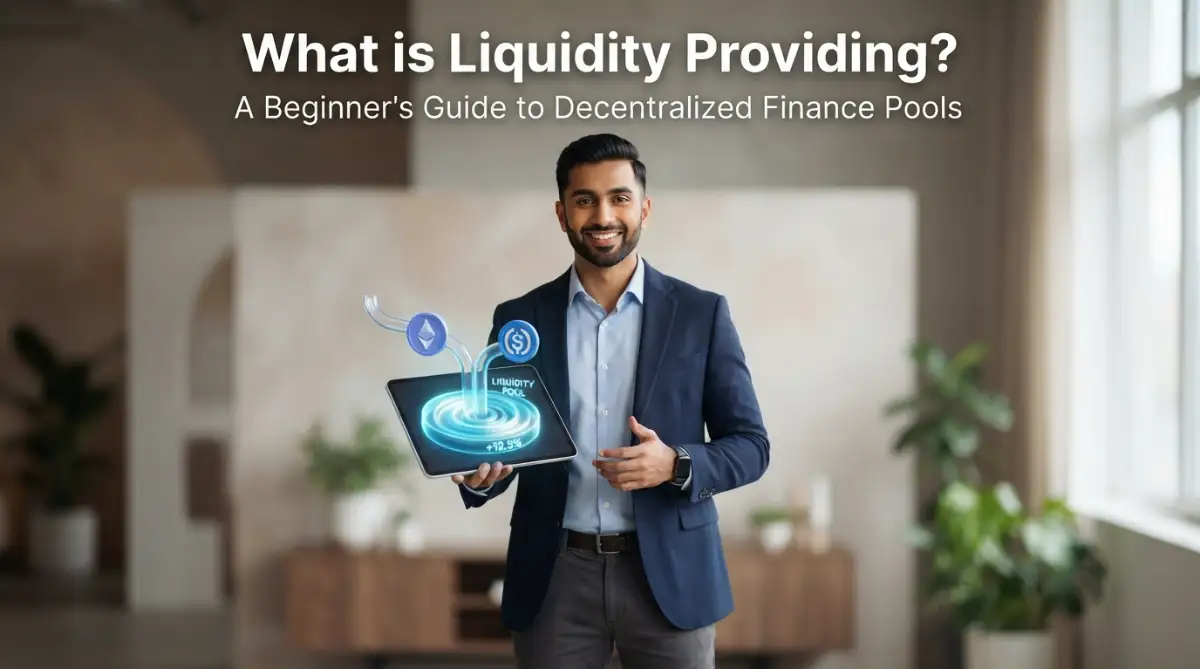
This digital reserve is what we call a liquidity pool. It acts like a giant shared bucket filled with two different types of tokens. Because the bucket is always full, traders can swap their tokens instantly.
They do not have to wait for an individual matching seller to appear. The pool itself provides the assets for the trade. This constant availability makes trading smooth and efficient for everyone involved.
The Simple Vending Machine Analogy
Think of a liquidity pool as an automated vending machine in a busy school. If you want a soda, you do not look for a human soda seller. You simply put your money into the machine, and it gives you a drink.
The machine can only do this because someone stocked it with sodas and change beforehand. In this scenario, the person who stocked the machine is the liquidity provider.
Without the stock, the vending machine is completely useless. In the crypto space, users who put their tokens into the pool keep the machine running. They make sure there is always enough stock for traders to swap their coins.
How Do You Actually Earn Money Here?
Now you might wonder why anyone would put their tokens into these pools. The answer is simple: they want to earn a share of the fees. Every time a trader uses the pool to swap tokens, they pay a small fee.
This fee does not go to a central bank or a massive corporation. Instead, it is distributed among the people who provided the tokens. Your share of the fees depends on how much money you put into the pool.
If you provide ten percent of the total pool, you get ten percent of all trading fees. This creates a steady flow of rewards that can accumulate over time. Many people use this method to build a stream of digital earnings.
The Role of Liquidity Provider (LP) Tokens
When you deposit your tokens into a pool, you receive something in return. The platform gives you special tokens called LP tokens. These tokens act like a digital receipt.
They prove exactly how much money you contributed to the shared bucket. When you decide to withdraw your funds, you hand these receipts back. The platform then returns your original assets along with your earned fees.
The Hidden Engine: Automated Market Makers (AMM)
To understand this system fully, we need to look at how prices are set. Traditional markets rely on human brokers to adjust prices based on supply and demand. In decentralized finance, we use a math formula instead.
This mathematical system is called an Automated Market Maker, or AMM. The AMM ensures that the total value of both token types in the pool stays balanced. It uses a simple formula to adjust prices automatically after every single trade.
If a trader buys a large amount of Token A, the pool now has less of Token A. The AMM instantly raises the price of Token A to reflect this shortage. At the same time, it lowers the price of Token B because there is now more of it.
This constant balancing act happens without any human intervention. It ensures that the pool remains stable and self-sustaining. Anyone can trade with the pool at any time of day or night.
Myth vs. Reality in Decentralized Pools
There are many misconceptions about this space that can lead to costly mistakes. Let us clear up some of the most common myths so you can proceed with confidence.
- Myth: Liquidity providing is a guaranteed way to make risk-free profit.
- Reality: It carries real risks, especially when token prices are highly volatile.
- Myth: You can withdraw your exact original number of tokens at any time.
- Reality: The ratio of your tokens will change based on market trading activity.
- Myth: Only rich investors can participate in these financial pools.
- Reality: Anyone with a digital wallet and a few dollars can join a pool.
Understanding these truths helps you avoid the common traps that catch beginners off guard. It allows you to make decisions based on logic rather than hype.
The Real Danger: Understanding Impermanent Loss
We cannot talk about liquidity providing without discussing its biggest risk. This risk is known as impermanent loss. It is the main reason why many beginners lose money without realizing it.
Impermanent loss happens when the price ratio of your deposited tokens changes. If one token shoots up in value while the other stays flat, the pool must adjust. Traders will buy the cheaper token from the pool until the values balance out.
Looking to see a real-world example of how these price shifts affect your wallet? Watch this excellent video explaining the math behind impermanent loss in simple terms.
When you withdraw your funds, you might find you have fewer of the expensive tokens than you started with. If you had just held your tokens in your private wallet, you would have made more money.
The loss is called "impermanent" because it only becomes permanent when you withdraw your funds. If the price ratio returns to its original state, the loss disappears. However, if you withdraw while the prices are unbalanced, the loss becomes very real.
My Personal Realization:
I used to think I could outsmart the market by chasing pools with massive reward rates. I once joined a pool offering huge returns, only to watch one token crash by ninety percent. My earned fees could not cover the massive drop in token value, which taught me to always value stability over high percentages.
Traditional Savings vs. Liquidity Pools
It can be helpful to compare this modern system to traditional banking methods. This helps you decide which path aligns best with your financial goals.
Traditional accounts offer safety but very low returns that rarely beat inflation. Liquidity pools offer much higher earning potential but come with technological and market risks. You must decide how much risk you are comfortable taking with your capital.
A Step-by-Step Roadmap to Joining a Pool Safely
If you want to try this out, you should follow a careful, step-by-step approach. Do not rush into the first high-paying pool you see on social media.
You need a non-custodial wallet to interact with decentralized applications. This means you hold the private keys and have full control over your funds. Popular choices include MetaMask, Trust Wallet, or Coinbase Wallet.
Stick to well-established decentralized exchanges with high trading volumes. Platforms like Uniswap, PancakeSwap, or Curve have been thoroughly tested by the community. They are generally safer than brand-new, unpolished platforms.
For your very first try, choose a pair of stablecoins. Stablecoins are pegged to the value of fiat currencies like the US dollar. Since their prices rarely change, your risk of impermanent loss is extremely low.
Most traditional pools require you to deposit equal dollar values of both assets. For example, if you deposit fifty dollars of Token A, you must also deposit fifty dollars of Token B. Once deposited, you will receive your LP tokens automatically.
Do not just deposit your funds and forget about them for months. Check on your pool's performance and the general health of the project weekly. If market conditions change drastically, you may want to withdraw your funds to protect your capital.
Essential Tips for Managing Your Risk
To succeed in this space, you must focus on protecting your digital assets. Here are a few practical tips to keep in mind as you begin your journey.
First, never invest money that you cannot afford to lose. The cryptocurrency space is known for sudden price shifts and unexpected events. Starting small allows you to learn the ropes without risking your financial stability.
Second, research the smart contract history of the platform you choose. Look for projects that have undergone official security audits by trusted third-party firms. While audits do not make a platform completely bulletproof, they do reduce the chance of code errors.
Finally, keep a close eye on gas fees. Gas fees are the transaction costs you pay to write data to the blockchain. If these fees are too high, they can easily consume all your earned trading rewards. Try to perform your transactions when the network is less busy to save money.
Master-Level Strategies for Navigating Decentralized Liquidity Pools
Once you understand the basic mechanics, you can start exploring advanced methods to manage your assets. These techniques help you get the best possible results from your digital funds over the long run.
Many experienced providers do not simply dump their tokens into any random pool they find. Instead, they use specific rules to maximize their earnings while keeping their risks as low as possible.
Concentrated Liquidity and the Art of Range-Bound Trading
In older decentralized platforms, your deposited funds were spread across all price ranges from zero to infinity. This meant much of your capital sat completely idle, never being used to facilitate trades.
Modern platforms allow you to choose a custom price range for your assets inside the pool. For example, you can decide to only provide liquidity when the price of an asset is between one dollar and two dollars.
This concentrates your funds where most of the trading actually happens, which boosts your fee earnings. According to academic research published on arXiv studies on liquidity, concentrated positions can dramatically improve capital efficiency[1].
However, this strategy requires you to monitor the market closely. If the market price moves outside your selected range, your pool stops earning any trading fees until the price moves back.
Utilizing Stablecoin Swaps for Minimal Volatility
If you prefer a safer and more conservative experience, you can provide assets to pools that contain only stablecoins. Since stablecoins are tied to steady currencies like the US dollar, their prices do not fluctuate wildly.
This strategy almost entirely eliminates the threat of impermanent loss. You can explore the list of top DeFi applications on Ethereum to find trusted stablecoin pools with steady trading volumes[2].
It is an excellent way for beginners to earn steady fee rewards without worrying about sudden market crashes. Over time, these small trading fees can build up into a respectable stream of passive earnings.
The Importance of Secure Digital Environments
Your safety while interacting with decentralized finance platforms relies on more than just math. You also need a secure and stable home network to track your assets and avoid malicious digital attacks.
If you are setting up your desk for crypto tracking, you should ensure your internet connection is always solid. You can read this simple guide on fixing older smart home devices dropping Wi-Fi to make sure your workspace connection remains steady.
A sudden drop in network connectivity during a highly volatile market event can prevent you from exiting a pool in time. This delay can lead to unexpected losses that could have easily been avoided.
In addition, keeping your primary home network safe from intruders is highly important. Many users make basic mistakes when setting up their home internet, so it is wise to learn how to avoid hidden router setup mistakes to protect your wallet from digital thieves.
Finding the Sweet Spot for Capital Efficiency
To keep your rewards healthy over several months, you must balance your pool deposits. Some pools offer incredibly high reward rates, but they often belong to unstable and risky projects.
You should aim for pools that have a high trading volume compared to their total locked value. This ratio is a strong indicator of how active the pool is.
More trades mean more fee distributions in your pocket, even if the reward percentage looks small on paper. This approach ensures your capital is always working hard to generate returns.
Just as a physical setup can lose power if not configured correctly, an underperforming pool can drain your capital over time. To understand how small setup errors lead to bad results, read about why solar panels underperform to see a similar real-world example of passive systems losing efficiency.
Managing Transaction Costs in the Decentralized Space
Trading fees are not the only costs you will face as an active liquidity provider. You also have to pay network transaction costs, often called gas fees, to deposit and withdraw your tokens.
If you are working with smaller amounts of money, high gas costs can easily wipe out your profits. It is often best to queue your transactions during times when the network is less busy.
This careful planning ensures that more of your earnings stay inside your digital wallet. It is also important to maintain your devices to prevent any unexpected shutdowns during critical transactions.
If you are tracking your pool late at night on your phone, you might wonder about your hardware health. You can find useful tips in this study on whether overnight smartphone charging is safe to keep your devices running optimally.
When your devices are healthy and secure, you can focus entirely on optimizing your decentralized finance activities. This systematic approach is what separates professional liquidity providers from casual hobbyists.

Costly Traps: Mistakes That Can Drain Your Digital Wallet
Stepping into the world of decentralized pools without a clear plan is like walking into a storm without an umbrella. Many people let their excitement blind them to the real dangers of the market.
They see massive reward percentages flashing on their screens and immediately transfer their entire savings. This emotional decision-making often leads to deep regret and severe financial pain.
Chasing Unrealistic Yield Percentages
One of the biggest mistakes you can make is chasing unrealistic yield percentages. These super-high rates are usually offered by new, unverified projects with highly unstable tokens.
When the price of those unstable tokens inevitably collapses, you are left with a bag of worthless assets. The pain of watching your hard-earned money vanish in a matter of hours is incredibly difficult to handle.
Always remember that if an opportunity looks too good to be true, it almost always is. Stick to assets that have a proven history of utility and community trust.
Failing to Value Private Key Safety
Another major trap is neglecting the physical and digital safety of your private keys and seed phrases. Your wallet is the only line of defense protecting your capital from professional online thieves.
If you store your recovery phrase in a simple text file on your computer, you are inviting trouble. Hackers can easily find these files if your system is ever compromised by malware.
To prevent this nightmare, you must adopt strict physical safety measures for your backup phrases. You can learn the best ways to protect your digital assets in this guide on protecting your seed phrase safely.
Keeping your backup offline and physically secure is the most reliable way to protect your financial future. This simple habit can save you from the devastating experience of a drained wallet.
Ignoring Network Stability During High Volatility
Many traders lose control of their assets because of basic connection issues during critical market events. When prices start dropping rapidly, every second counts if you want to withdraw your liquidity.
If your network is laggy, you might not be able to send your transaction before the price hits bottom. This lag can be caused by physical blockages in your home.
If you suffer from spotty coverage, look into why your Wi-Fi drops in specific rooms to fix the issue before the next market emergency. Having a reliable connection is just as important as having a solid investment strategy.
Falling for Fake Trading Pools and Scams
Finally, many beginners fall victim to sophisticated phishing websites that mimic real trading platforms. They connect their wallets to these fake portals and authorize transactions without reading the terms.
In an instant, malicious smart contracts can drain every single coin from their balances. This loss is irreversible because blockchain transactions cannot be undone by any bank or authority.
You should always double-check the website address before linking your wallet. You can find trusted advice on technology and secure digital practices by visiting Trust Picks HQ.
Taking those extra few seconds to verify a link can save you from a lifetime of regret. According to arXiv research papers on risk, many standard pools fail to outpace simple holding because of these basic user mistakes[3].
Being aware of these pitfalls is the first step toward keeping your assets safe. It allows you to build a secure foundation for your long-term crypto journey.
Your Roadmap to Smart and Steady Wealth Growth
The world of decentralized finance offers a completely new way to interact with money. You no longer have to rely on traditional banks to grow your digital assets.
By acting as a liquidity provider, you become the market maker and collect fees directly. This puts you in the driver's seat of your financial journey.
While the risks like impermanent loss are real, they can be managed with patience and knowledge. Start with stablecoins, keep your digital environment secure, and always verify your links.
With the right tools and a careful mindset, you can navigate this space safely. The future of finance is open to everyone, and you are now equipped to take your first steps.
A Final Thought from My Journey
I spent many stressful nights worrying about my early crypto mistakes until I took the time to study how the math actually worked. My journey taught me that slow and steady moves always win against overnight hype. I encourage you to set up a secure wallet today, start small, and experience the power of decentralized finance for yourself.
Clear Answers to Common Questions About Liquidity Providing
Can I lose all my money by providing liquidity?
While a complete loss is rare in established pools, it is still possible if one of the tokens drops to zero. You also face smart contract risks where hackers exploit bugs in the platform's code. To minimize this, only use platforms that have been heavily audited and tested by the community.
How often are trading fee rewards paid out?
Your trading fee rewards accumulate in real-time as swaps occur inside your chosen pool. You can see these earnings grow directly on your platform dashboard. You can claim these rewards whenever you decide to withdraw your assets from the pool.
What is the difference between staking and liquidity providing?
Staking involves locking up a single type of token to support a network's security and validate transactions. Liquidity providing requires you to deposit a pair of tokens into a pool to enable decentralized trading swaps. Staking is generally simpler, while providing liquidity can offer higher fee rewards at the cost of higher risk.
Can I withdraw my tokens from a liquidity pool at any time?
Yes, most decentralized platforms allow you to withdraw your assets whenever you want. There are usually no lock-up periods, meaning you have complete freedom over your capital. However, you will have to pay a small network transaction fee to process the withdrawal.
Financial Disclaimer
This article is for educational purposes only and does not constitute financial, investment, or legal advice. Cryptocurrencies and decentralized finance pools involve high market risks and volatility. Always conduct your own research and consult with a certified financial advisor before investing any funds.