
When Your Internal Battery Hits Zero: The Silent Struggle
There was a time when my alarm would go off, and I would just stare at the ceiling, feeling a cold weight of dread in my chest before my feet even touched the floor. I was constantly checking off my daily to-do lists, trying to convince myself I was fine, while secretly feeling completely empty inside. It took a quiet breakdown over a misplaced set of car keys for me to admit that my drive to keep pushing was actually destroying my spirit.
Have you ever woken up after eight hours of sleep and still felt like you haven't rested at all? You stare at your coffee mug, wondering how you will make it through the next hour, let alone the whole day.
This is not just simple tiredness. It feels like a heavy fog has settled over your mind, making every small task feel like climbing a mountain.
I talk to many people who feel this way. They tell me they feel "crispy" or "done."
They are doing their best to keep up with work, family, and social lives. But inside, they are crumbling.
One person told me, "I feel like a ghost in my own life. I am moving, but I am not really there."
This is the reality of mental burnout. It steals your joy and replaces it with a cold sense of numbness.
You might find yourself getting angry at small things. Maybe you cry for no reason.
You might even start to pull away from the people you love because talking feels like too much work.
Your peace is gone. Your spark is flickering.
It is a lonely place to be. But I want you to know that you are not alone.
We are going to look at why this happens and how you can find your way back to the light.
It starts with listening to what your mind and body are trying to tell you.
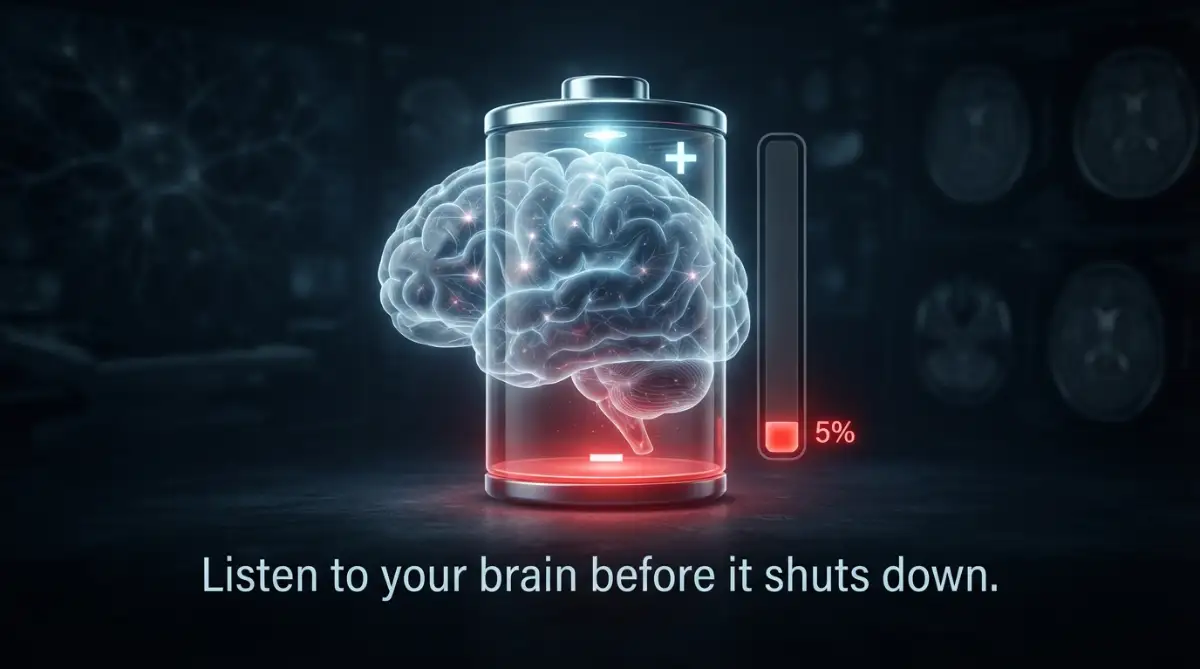
The Hidden Language of a Tired Mind
Your brain does not just stop working overnight. It sends you small signals long before the total crash happens.
Think of these as "check engine" lights for your soul. If you ignore them, the engine will eventually fail.
Most of us are taught to push through the pain. We think that being "busy" is a badge of honor.
But there is a big difference between being productive and being pushed to the edge.
Why You Can’t Focus Anymore
One of the first signs of mental fatigue is a sudden drop in focus. You might read the same sentence five times and still not understand it.
Your brain feels like it is full of cotton wool. This is often called "brain fog."
It happens because your mind is trying to save energy. It shuts down complex thinking to focus on basic survival.
You might forget where you put your keys. You might forget an important meeting.
This is not "getting old." It is your brain saying it needs a break.
The Loss of Emotional Control
When you are burned out, your emotions become very thin. You lose the "buffer" that helps you handle daily stress.
A small spill on the floor might make you want to scream. A polite question from a coworker might make you feel annoyed.
You might also feel a strange sense of detachment. It is like you are watching your life through a window.
Things that used to make you happy now feel like chores. This is a major warning sign that your emotional well-being is at risk.
Physical Echoes: How Your Body Shows Burnout
Mental burnout is not just in your head. It shows up in your physical body in very real ways.
The mind and body are connected. When one suffers, the other follows.
Constant Headaches and Muscle Tension
Do you have a dull ache in your temples? Is your neck always tight?
When you are mentally drained, your body stays in a state of "high alert." This keeps your muscles tensed up.
Over time, this leads to chronic pain. You might reach for painkillers every day.
But the real issue is the stress that is causing the tension.
Changes in Your Sleep Patterns
It sounds strange, but being "too tired" can actually stop you from sleeping. This is the "tired but wired" feeling.
You go to bed exhausted, but your mind starts racing. You think about everything you didn't do today.
Or you might sleep for ten hours and wake up feeling just as tired.
This happens because the quality of your sleep is poor. Your brain isn't entering the deep rest phases it needs to heal.
Digestive Issues and Appetite Changes
Your gut is often called your "second brain." It is very sensitive to mental stress.
Many people with burnout notice they have stomach aches or bloating. Some people stop feeling hungry.
Others might start "stress eating" sugary foods to get a quick energy boost.
None of these things help in the long run. They are just signs that your system is out of balance.
The Myth vs. Reality of Mental Fatigue
FeatureRegular TirednessMental BurnoutRecoveryGoes away with a good night's sleep.Lasts even after resting or weekends.MoodYou might be grumpy but still feel "yourself."You feel cynical, hopeless, or numb.PerformanceYou can still focus when needed.Tasks take twice as long to finish.InterestYou still enjoy your hobbies.You have lost interest in things you loved.
Simple Steps to Start Reclaiming Your Energy
You do not have to fix everything at once. Small shifts can make a massive difference.
The goal is to stop the drain and start refilling your tank.
Step 1: Create a "Digital Sunset"
Our phones are a huge source of mental fatigue. They keep our brains constantly active.
The blue light and the endless stream of news are exhausting.
Try to put your phone away one hour before bed. Do not check emails or social media.
Instead, read a physical book or listen to calm music. This tells your brain that the workday is officially over.
This simple habit can improve your sleep quality almost immediately.
Step 2: The Power of "Micro-Breaks"
You don't need a month-long vacation to start feeling better. You need small moments of peace throughout the day.
Every 90 minutes, stop what you are doing. Stand up and stretch.
Look out of a window for two minutes. Take five deep breaths.
These micro-breaks prevent stress from building up to a breaking point.
Think of it like clearing the "cache" on your computer. It keeps things running smoothly.
Step 3: Set Boundaries with "No"
One of the biggest causes of burnout is saying "yes" to too many things.
We want to help others. We want to be seen as hard workers.
But every "yes" to someone else is often a "no" to yourself.
Start setting small boundaries. If you are already overwhelmed, do not take on a new project.
It is okay to say, "I would love to help, but I don't have the capacity right now."
Protecting your time is a form of self-respect. It is not selfish; it is necessary.
The Science of Why You Feel This Way
When you are under constant stress, your body produces a hormone called cortisol.
In small amounts, cortisol is helpful. It helps you react to danger.
But when you are burned out, your cortisol levels stay high for too long.
This high level of cortisol is like acid for your brain. it wears down your ability to regulate emotions.
It also hurts your memory center. This is why you feel so forgetful.
Understanding the science helps you realize that burnout is a physical condition.
It is not a character flaw. It is not because you are "weak."
Your biology is simply reacting to a situation that is too much to handle.
Recognizing Social Withdrawal Signs
Another big indicator is how you act with friends and family.
Do you see a call coming in and feel a sense of dread?
Do you cancel plans because you just don't have the energy to talk?
Social interaction takes a lot of mental energy. When you are low on fuel, you try to save it.
You might start to feel like no one understands you. This can lead to a cycle of loneliness.
Isolation makes burnout worse. It is important to stay connected, even in small ways.
A simple text to a friend can be enough. You don't have to go to a big party.
The Importance of Self-Compassion
We are often our own harshest critics. We tell ourselves to "get over it" or "work harder."
But you cannot heal a burned-out mind with more pressure.
Imagine a friend was feeling this way. What would you say to them?
You would likely tell them to rest. You would be kind to them.
Try to give yourself that same kindness. Acknowledge that you are going through a hard time.
It is okay to not be okay. It is okay to take a step back.
Kindness is the first step toward recovery.
Evaluating Your "Mental Load"
"Mental load" is the invisible list of things you have to remember.
It’s not just the work you do. It’s remembering to buy milk. It’s worrying about a friend’s birthday.
It’s thinking about the laundry and the bills.
When your mental load is too heavy, your brain becomes exhausted.
Try writing everything down on a piece of paper. Get it out of your head.
Once it is on paper, your brain can stop trying to remember it all.
This provides instant relief for your mind. It makes the world feel a little smaller and more manageable.
When to Seek Professional Help
Recognizing the signs is the first step. But sometimes, we need a little extra help.
If you feel like you can’t get out of bed, it might be time to talk to a doctor.
If you feel hopeless or have no interest in anything, a therapist can help.
There is no shame in getting support. Just like you would go to a doctor for a broken leg, you should go for a tired mind.
The sooner you get help, the faster you can get back to feeling like yourself.
Finding Meaning Again
Burnout often happens when we lose the "why" behind what we do.
We get stuck in a routine that feels empty.
To recover, we need to reconnect with things that give us meaning.
This doesn't have to be a big life change. It could be something small.
Maybe it’s spending ten minutes in nature. Maybe it’s a hobby you used to love.
Finding even a small spark of joy can help break the cycle of fatigue.
It reminds your brain that life is more than just a list of tasks.
You are a human being, not a machine. You deserve to live a life that feels good.
Mastering the Art of Long-Term Mental Resilience
Recovery is not just about stopping work for a few hours. It is about deeply changing how your nervous system reacts to the world.
Many people think that sitting on the couch watching TV is the best way to rest. However, true recovery requires a more active approach to "unplugging" your brain.
One of the most effective secrets experts use is called Cognitive Offloading. This is the practice of moving every single "to-do" item out of your head and onto a physical medium.
When you keep your tasks in your mind, your brain uses a huge amount of energy just to keep them from being forgotten. This creates a background level of stress that never goes away.
By writing everything down, you tell your brain it can finally stop working on those items. This allows your "mental RAM" to clear up, giving you instant relief from that heavy, foggy feeling.
The Seven Layers of True Rest
Most people only focus on physical rest, but there are actually several layers you need to address to beat burnout for good. According to research on human performance, you need to balance different types of energy.
Sensory Rest is a big one that many forget. We live in a world of bright lights, loud noises, and constant notifications.
Try spending thirty minutes in a completely dark and quiet room. This helps your sensory system reset and lowers your cortisol levels naturally.
Then there is Emotional Rest. This means having the space to be authentic and stop pretending everything is fine.
If you are always the "strong one" for everyone else, you are draining your emotional battery. Find someone you trust and tell them, "I am actually struggling right now."
This honesty is a powerful tool for long-term health. It prevents the internal pressure from building up until you explode.
Rebuilding Your Morning Momentum
How you start your day often dictates how your brain handles stress six hours later. If the first thing you do is check your phone, you are putting your brain into a reactive state.
You are letting other people's needs and world news control your peace. Instead, try to own the first fifteen minutes of your day.
Drinking a glass of water and doing a few light movements can signal to your body that it is safe. For those who feel physically stiff from sitting at a desk all day, focusing on your body is key.
Small wins matter here. Even something as basic as how to build a simple daily skincare routine that actually works can provide a sense of structure and self-care that builds mental strength.
The Power of Nervous System Regulation
Your brain and your spine are a two-way street. When your mind is stressed, your back and neck tighten up.
When your body is in pain, your brain stays in a state of high alarm. This cycle makes burnout much harder to escape.
To break this loop, you must address the physical tension. Taking a few moments for 7 gentle home stretches for instant relief can actually lower your mental anxiety.
As your muscles relax, your brain receives a signal that there is no immediate threat. This allows you to move from a "fight or flight" mode into a "rest and digest" mode.
Expert Secret: The "Shutdown Ritual"
Successful people who avoid burnout often use a "Shutdown Ritual" at the end of their workday. This is a specific set of actions that tell the brain, "Work is over now."
It could be closing your laptop, tidying your desk, and saying out loud, "I am done for today." This might sound silly, but it creates a psychological boundary.
It prevents your work thoughts from "bleeding" into your family time. Without this boundary, your brain stays halfway at work all night long.
When we ignore these boundaries, our bodies pay the price. You might be surprised at why your brain never forgets a night of lost sleep and how it impacts your mental clarity the next day.
Sleep is not just a luxury; it is the time when your brain literally "washes" itself of toxins. According to the National Institute of Neurological Disorders and Stroke, sleep is essential for maintaining cognitive function and overall brain health.

Dangerous Traps on the Path to Recovery
When we feel desperate to feel better, we often make mistakes that actually make the fatigue worse. These are common traps that feel like solutions but are really just "band-aids."
The "Weekend Warrior" Fallacy
One of the most common mistakes is thinking a two-day weekend can fix a three-month burnout. You might spend all Saturday sleeping, hoping to wake up refreshed.
But when Monday morning comes, you feel just as exhausted. This happens because burnout is a systemic issue, not a simple lack of sleep.
Trying to "cram" your rest into forty-eight hours creates more pressure. It makes you feel like a failure when the rest doesn't "work."
True recovery is a slow process of daily habits, not a weekend event. You have to be patient with your mind as it heals.
Relying on "False Fuel"
When we are tired, we reach for caffeine, sugar, or energy drinks. This gives us a quick spike of energy, but it comes at a high price.
These substances put extra stress on your adrenal glands. It is like whipping a tired horse to make it run faster.
Eventually, the horse will collapse. If you are using coffee to mask your burnout, you are only digging a deeper hole.
The crash that follows false fuel is often much worse than the original tiredness. It leads to a cycle of highs and lows that wrecks your mood.
I used to drink four mugs of strong coffee by noon just to mask my mental fatigue, which only made my heart race and kept me awake at night. When I finally cut my caffeine intake down to just one cup early in the morning, my afternoon jitters stopped, and my body actually began to enter the deep, natural rest it was starving for.
Performative Self-Care
We often see "self-care" as buying expensive products or going to fancy spas. This can become another chore on your list.
If you are forcing yourself to do a "relaxing" activity that you don't actually enjoy, you are not resting. You are performing.
True self-care might be doing nothing at all. It might be saying "no" to a social event even if you feel guilty.
Don't let the pressure to "look" like you are recovering stop you from actually recovering. Listen to what your soul needs, not what a social media post tells you to do.
The Trap of "Just One More Thing"
Many of us live with the lie that "I will rest once this project is done." The problem is that there is always another project.
Life does not stop for your recovery. If you wait for the perfect time to rest, you will never find it.
This mindset keeps your brain in a state of constant "waiting." It prevents you from ever fully relaxing into the present moment.
You must learn to rest during the work, not just after it. This is a difficult shift, but it is the only way to stay healthy long-term.
Ignoring the Social Burnout
Sometimes the people around us are the source of our fatigue. If you are surrounded by "emotional vampires," no amount of sleep will help.
People who constantly complain or demand your energy without giving anything back are exhausting. Many people feel guilty about setting boundaries with friends or family.
But if you don't protect your energy, you will have nothing left for anyone. Social withdrawal is a sign of burnout, but it is also sometimes a necessary defense.
It is okay to take a "people break" while you find your feet again. True friends will understand and be there when you are ready to return.
Taking Your First Step Toward a Refreshed Life
The journey back from mental burnout is not a race. It is a slow, beautiful walk back to yourself.
You did not get this tired in a single day, and you won't fix it in a single day. But you can start today.
Right now, take one deep breath. Feel the air enter your lungs and leave your body.
That one breath is a small victory. It is a moment where you chose yourself over your stress.
Your Action Plan for Tomorrow
Start small. Tomorrow morning, don't look at your phone for the first ten minutes.
At lunch, go outside and feel the sun on your skin for five minutes. Write down three things that are worrying you and then leave that paper on your desk.
These small acts of rebellion against "busy culture" will add up. Over time, you will feel the fog start to lift.
You will notice the colors of the world looking a bit brighter. You will find your laugh again.
A Message of Hope
You are more than your productivity. Your value is not measured by how much you get done in a day.
You deserve to feel peaceful. You deserve to have energy for the things you love.
The symptoms you are feeling are not a sign of weakness. They are a sign that you have been strong for far too long.
It is time to put the heavy bags down. It is time to let yourself heal.
Trust the process. Trust your body's ability to recover.
You have the power to reclaim your life. And it starts with a single, quiet choice to rest.
Rebuilding my mental energy was a slow and quiet path, but taking those tiny pauses each day saved me from completely losing myself. You do not have to carry the weight of the entire world on your shoulders, so please give yourself permission to step back and breathe tonight.
Disclaimer:
The information provided in this article is for educational and informational purposes only and is not intended as medical advice. Mental burnout can sometimes be linked to serious clinical conditions like depression or anxiety. If you are experiencing thoughts of self-harm, extreme hopelessness, or physical symptoms that interfere with your daily life, please consult a licensed medical professional or mental health expert immediately.